Bluecollarjobs.com Brand

8 High-Paying Plumbing Jobs That Can Reach $100K+ (2026)

8 High-Paying Plumbing Jobs That Can Reach $100K+ (2026)

Plumbing isn’t just a stable career, it’s one where high paying plumbing jobs regularly cross the six-figure mark without requiring a four-year degree. While the national average for plumbers sits around $60K–$65K, certain specializations and career paths push well beyond $100,000 annually, especially for those who pursue the right licenses and niche expertise.

The difference between a $50K salary and a $120K salary in plumbing often comes down to what you specialize in and where you work. Roles in industrial piping, medical gas installation, and underwater welding pay significantly more than residential service calls, and demand for these specialists is only growing as infrastructure projects ramp up across the country.

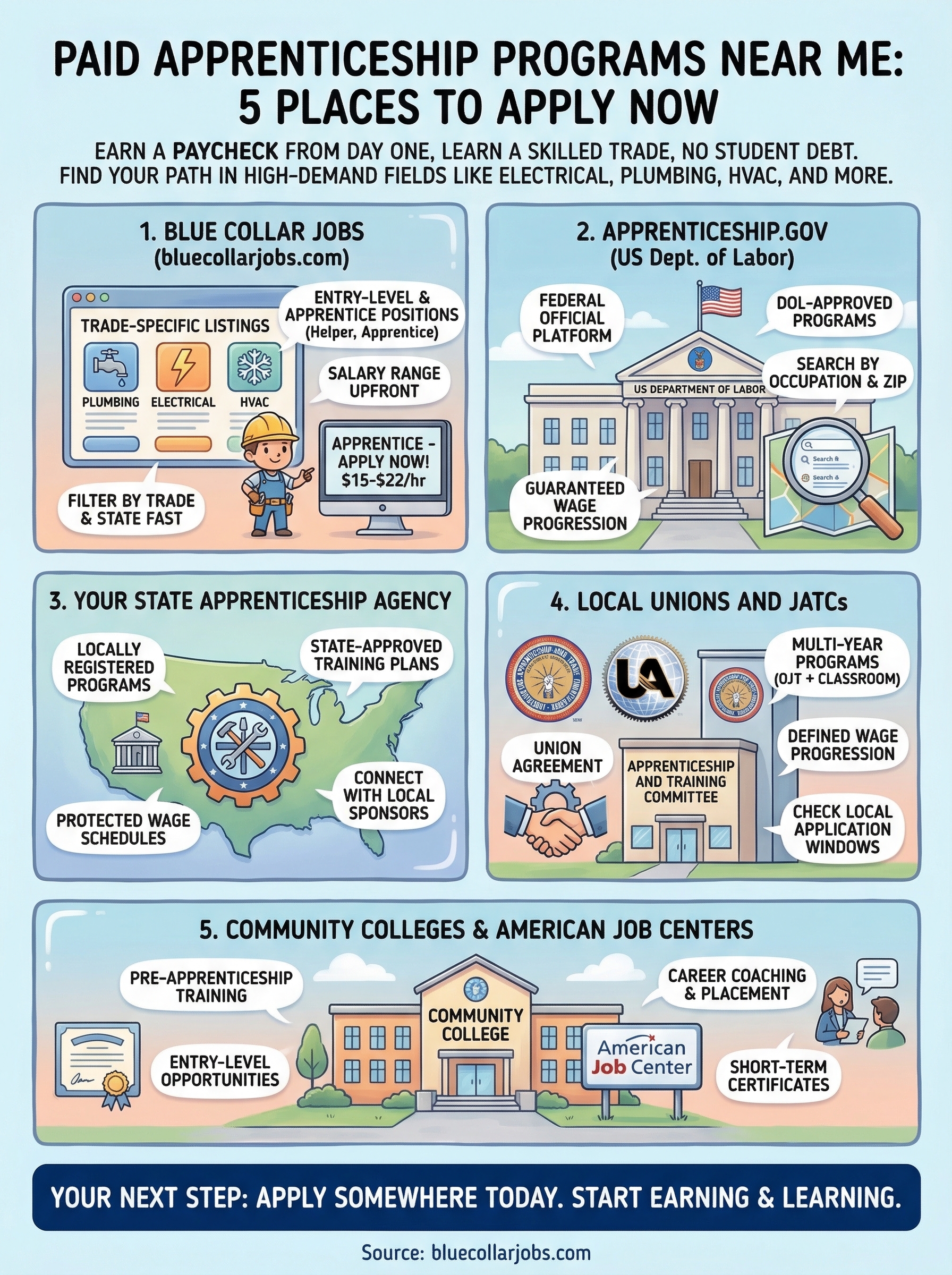
We built bluecollarjobs.com to help skilled trade professionals find exactly these kinds of opportunities, filtered by trade, experience level, and location, without wading through irrelevant white-collar listings. Below, we break down eight plumbing career paths that can realistically get you to $100K or more, including what each role pays, what qualifications you need, and where the jobs are right now.

1. Blue Collar Jobs Plumbing Listings

bluecollarjobs.com is a dedicated trade job board built to connect skilled professionals with plumbing-specific roles across every US state. Instead of wading through general job sites packed with unrelated listings, you get a filtered view of opportunities matched to your trade, experience level, and location from the moment you land on the site.

What it is

Blue Collar Jobs is a specialized recruitment platform built exclusively for skilled trades, including plumbing, HVAC, electrical, and mechanical work. Every listing targets manual and technical roles, which means plumbing jobs are never buried under office or retail postings. You can sort by state, seniority, and trade to narrow results down to exactly what fits your current career stage and license level.

Why it can reach $100K+

The platform actively features high paying plumbing jobs at the Master, Journeyman, and Foreman levels, where six-figure salaries are common. Employers post here specifically because they need licensed, certified professionals capable of handling commercial, industrial, or specialty work, not general labor with no trade credentials.

The roles that consistently reach $100K on the platform are tied to specific licenses and niche certifications, not just years of experience.

Typical pay range and pay structure

Pay on listed roles varies by seniority and region. Apprentice and Helper roles typically start between $18 and $28 per hour, while Journeyman and Master positions often show salary ranges from $65,000 up to $130,000 or more annually. Most listings display the pay range directly in search results, so you know what a role pays before you spend time reading the full description or writing a cover letter.

Requirements that employers ask for

Employers posting on the site regularly require a state-issued Journeyman or Master plumber license, proof of relevant certifications, and in many cases two or more years of documented field experience. Commercial and industrial listings frequently add requirements like backflow prevention certification, OSHA 10 or 30, or medical gas endorsements depending on the type of facility.

Where to find openings and how to apply

Visit bluecollarjobs.com and use the trade and state filters to pull current plumbing listings in your area. Each posting includes direct employer contact details and application instructions, so you apply without going through a third-party recruiter or paying any fees to access the listing.

2. Plumbing Engineer

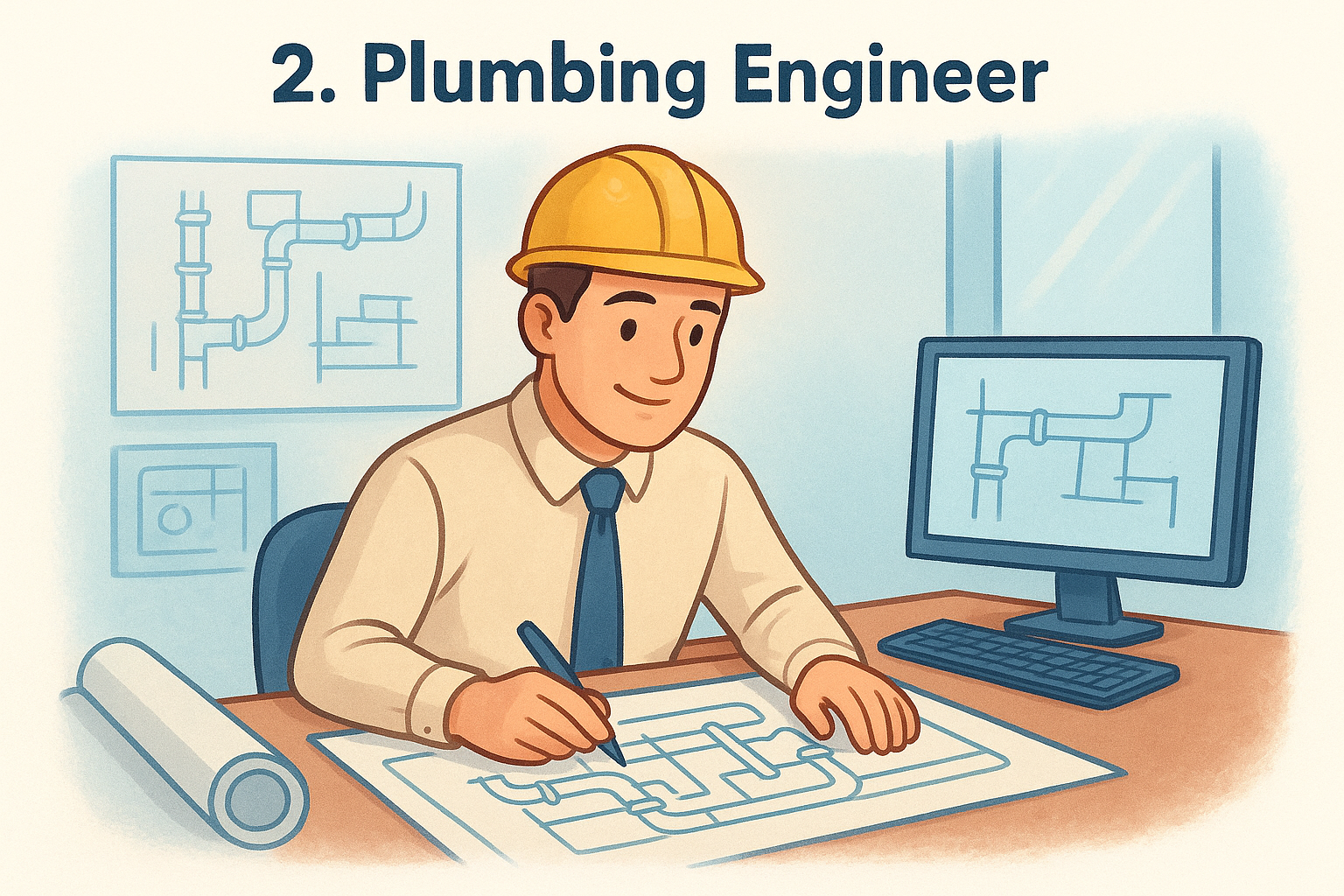
A plumbing engineer sits at the intersection of technical field knowledge and engineering design principles, making it one of the most demanding roles in the trade. Unlike a working plumber, a plumbing engineer focuses on designing and specifying piping systems for large-scale projects, from hospitals and skyscrapers to industrial facilities.
2. Plumbing Engineer

What it is

Plumbing engineers design complete water supply, drainage, and gas distribution systems for commercial and institutional buildings. They work alongside architects and structural engineers during the planning phase, producing technical drawings and specifications that field crews follow during installation.

Why it can reach $100K+

The role demands both an engineering background and deep plumbing knowledge, which narrows the talent pool significantly. Employers on large commercial or government contracts pay a premium for someone who can design systems that meet code, safety, and efficiency standards without costly revisions.

Plumbing engineers who specialize in healthcare or industrial facilities consistently command the highest salaries in this category.

Typical pay range and pay structure

Most plumbing engineers earn between $85,000 and $130,000 annually, with senior engineers at large firms or those handling federal projects often exceeding that range. Compensation is typically salaried with full benefits, though some work as independent consultants on project-based contracts.

Requirements that employers ask for

Employers typically require a bachelor’s degree in mechanical or civil engineering, a Professional Engineer (PE) license, and several years of hands-on plumbing or MEP design experience. AutoCAD or Revit proficiency is standard, so make sure your portfolio clearly reflects those skills.

Where to find openings and how to apply

Search for these high paying plumbing jobs through engineering firms and MEP consultancies. Target companies working on commercial construction or government infrastructure projects, as those consistently offer the strongest compensation packages for your experience level.

3. Plumbing Designer

A plumbing designer works one step below a full plumbing engineer but handles many of the same technical drafting and specification tasks on commercial and multi-family residential projects. This role focuses on translating engineering concepts into detailed construction documents that installation crews follow on-site.

What it is

Plumbing designers produce CAD drawings, pipe routing plans, and fixture schedules for new construction and renovation projects. They collaborate with architects, general contractors, and plumbing engineers to ensure every system fits within the building’s physical constraints and meets local code requirements.

Why it can reach $100K+

Designers with strong BIM and Revit skills and experience on large commercial projects are in short supply, which drives salaries up. Firms working on multi-story commercial buildings or institutional campuses consistently pay a premium for designers who can handle complex systems without constant supervision.

Plumbing designers who specialize in healthcare facility standards tend to land at the top of the salary range in this role.

Typical pay range and pay structure

Most plumbing designers earn between $70,000 and $115,000 annually, depending on project complexity and region. High-cost markets like California, New York, and Texas push your compensation toward the higher end of that range if you bring proven MEP design experience.

Requirements that employers ask for

Employers typically look for the following qualifications:

  • Proficiency in AutoCAD and Revit MEP
  • An associate’s or bachelor’s degree in drafting or engineering technology
  • Two to three years of MEP design experience
  • A Certified in Plumbing Design (CPD) credential from the American Society of Plumbing Engineers, which strengthens your application considerably

Where to find openings and how to apply

Target MEP engineering consultancies and large general contractors that handle commercial or institutional construction. These firms post high paying plumbing jobs for designers regularly, and a portfolio of completed project drawings gives your application a clear, concrete edge.

4. Plumbing Project Manager

A plumbing project manager combines field expertise and business operations, overseeing everything from bid estimation to final inspection on commercial and industrial projects. This role sits above the tools but requires a deep understanding of how plumbing systems work at every phase.

What it is

Plumbing project managers coordinate crews, subcontractors, and material schedules across large-scale construction or retrofit jobs. They manage budgets, client communications, and contractor relationships to make sure each phase hits its deadline without costly overruns.

Why it can reach $100K+

Managing a large commercial plumbing contract requires both technical knowledge and business judgment, which very few people can deliver reliably. Contractors pay significantly above the field average to keep projects on schedule and protect profit margins on multi-million-dollar jobs.

A single cost overrun on a large commercial job can erase a contractor’s profit entirely, so companies invest heavily in project managers who prevent that.

Typical pay range and pay structure

Most plumbing project managers earn between $85,000 and $130,000 annually, with bonuses tied to project profitability in many firms. Larger companies handling multi-site or federal contracts often reach above that range depending on project volume.

Requirements that employers ask for

Employers consistently look for a Journeyman or Master plumber license, several years of field experience, and a track record of delivering projects on time and within budget. Proficiency in project management software like Procore or Buildertrend adds real weight to your application.

Where to find openings and how to apply

Target mechanical and plumbing contractors that handle commercial construction, property management, or institutional facilities. These employers post high paying plumbing jobs for project managers regularly, and a documented history of on-budget project delivery is your strongest selling point when you apply.

5. Master Plumber

The Master plumber license represents the highest credential in the trade, and employers treat it as proof that you can design, install, and supervise plumbing systems without oversight. This role is one of the clearest paths to high paying plumbing jobs at the six-figure level because the license itself filters out most of the competition.

What it is

A Master plumber holds the top-tier state-issued license in the plumbing trade and typically operates as the lead technician or business owner on a job. Masters can pull permits, design systems, and legally supervise Journeymen and Apprentices, which makes them the most versatile and high-value hire on any commercial or residential project.

Why it can reach $100K+

The Master license requires years of documented field experience and a demanding exam, so licensed Masters are genuinely scarce in most markets. Contractors who need someone to pull permits and run a crew cannot legally operate without one, which gives you significant negotiating leverage when setting your rate.

Master plumbers who work independently or run their own crews consistently earn more than those who take salaried positions with a single employer.

Typical pay range and pay structure

Most Master plumbers earn between $80,000 and $130,000 annually, with self-employed Masters often exceeding that through contract work and service call revenue. Hourly billing rates in high-demand metro areas frequently reach $90 to $120 per hour for independent operators.

Requirements that employers ask for

  • Active state-issued Master plumber license
  • A minimum of four to six years of Journeyman-level field experience
  • Strong knowledge of local building codes and permit processes

Where to find openings and how to apply

Search trade-specific job boards and target mechanical contractors and property management companies that run active commercial service divisions. Your license is your application, so lead with it clearly in every submission.

6. Plumbing Foreman

A plumbing foreman leads a crew on active job sites while holding hands-on technical accountability for installation quality and schedule. This role is a direct step up for experienced Journeymen ready to take on crew leadership without leaving the field entirely.

What it is

Foremen manage day-to-day crew operations on commercial or industrial sites, handling labor scheduling, material coordination, and quality control. You communicate directly with the project manager above you while supervising Journeymen and apprentices throughout each phase of the job.

Why it can reach $100K+

Foremen carry direct responsibility for crew output and site safety, which puts real business risk on their shoulders. Contractors running large commercial projects pay above Journeyman rates to keep someone reliable on-site who can prevent schedule delays and labor budget overruns without needing constant direction.

Foremen with a consistent track record of on-schedule delivery become the highest-compensated field employees in most contracting operations.

Typical pay range and pay structure

Most plumbing foremen earn between $75,000 and $115,000 annually, with compensation tied to crew size, project scope, and region. High-demand markets like Texas and California consistently push your earnings toward the upper end of that range when you bring documented experience managing large crews.

Requirements that employers ask for

Employers require an active Journeyman or Master plumber license, several years of field experience, and a proven ability to direct a crew without constant oversight. Knowledge of OSHA safety standards and basic project scheduling tools makes your application noticeably stronger against other candidates.

Where to find openings and how to apply

Search for high paying plumbing jobs at the foreman level through trade-specific boards that filter listings by experience tier. Target commercial and industrial plumbing contractors, where crew leadership roles consistently carry the strongest pay packages and give you the most complex, resume-building project experience.

7. Commercial Service Plumber

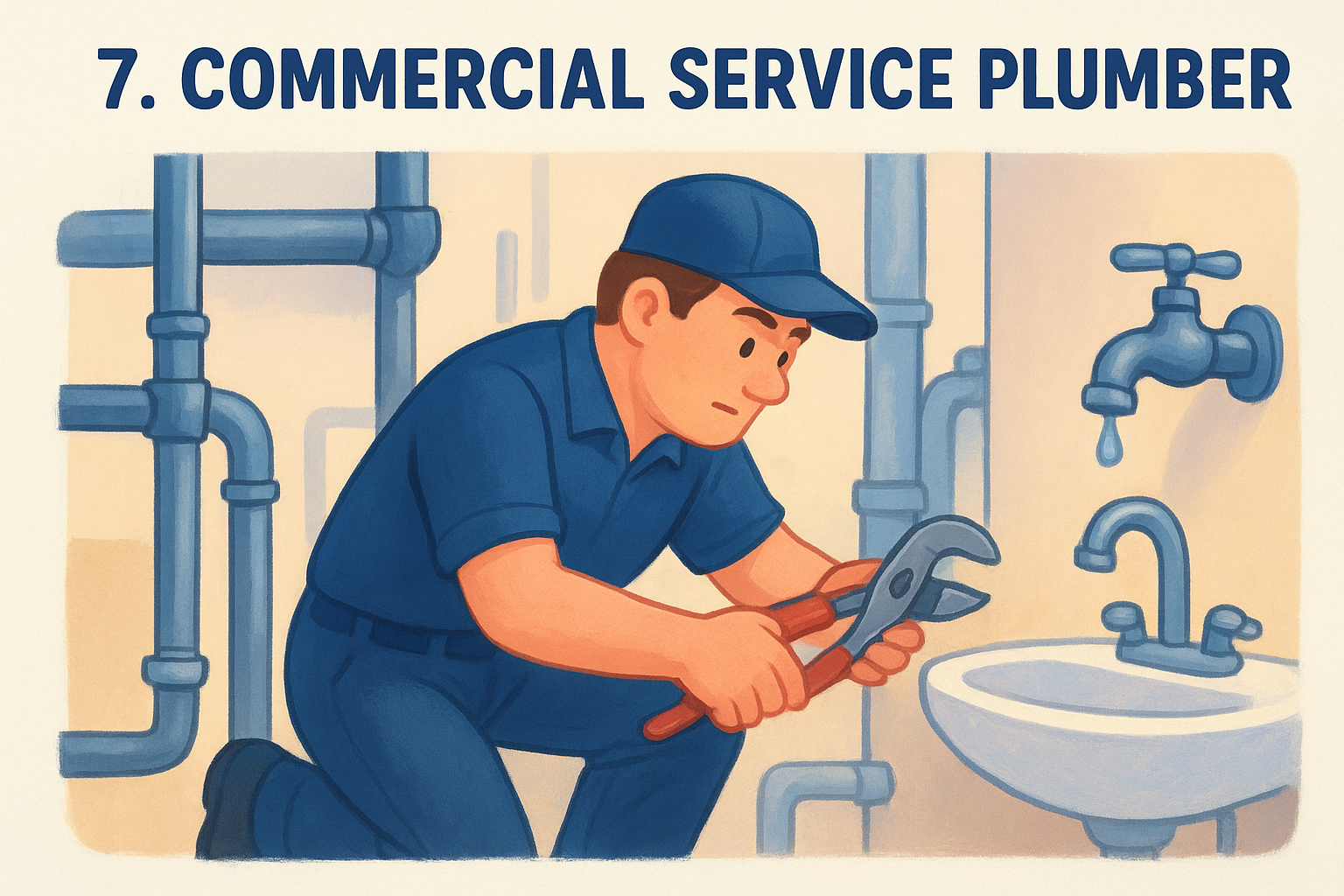
A commercial service plumber handles repair, maintenance, and emergency calls for businesses, property management companies, hospitals, schools, and large institutional facilities. Unlike residential work, commercial service calls involve complex building systems that require a broader technical range and faster diagnostic ability to keep operations running without costly downtime.
7. Commercial Service Plumber

What it is

Commercial service plumbers troubleshoot and repair water supply, drain, gas, and fixture systems in active commercial environments. You respond to service calls, diagnose failures in aging infrastructure, and execute repairs under real time pressure while tenants or facility staff remain on-site.

Why it can reach $100K+

Commercial clients pay a significant premium for fast, reliable service because a broken system in a restaurant, hospital, or office building disrupts revenue directly. Plumbers who build a reputation for quick diagnostics and clean repairs in high-stakes commercial environments become indispensable to facility managers who keep calling the same person back.

Commercial service plumbers who carry backflow certification and gas line experience consistently land at the top of the pay range for this role.

Typical pay range and pay structure

Most commercial service plumbers earn between $70,000 and $115,000 annually, with overtime and emergency call premiums pushing top earners well above that figure. Many employers structure pay as a base salary plus service incentives tied to completed call volume and customer retention.

Requirements that employers ask for

Employers consistently require an active Journeyman plumber license, experience diagnosing commercial systems, and familiarity with local code requirements for commercial properties. Backflow prevention certification and OSHA 10 training are standard additions that strengthen your application.

Where to find openings and how to apply

Search trade-specific boards for high paying plumbing jobs at the commercial service level, filtering by your state and experience tier. Target plumbing contractors and facility management companies that service multi-tenant properties or institutional clients, where service volume and call complexity are both consistently high.

8. Industrial Pipefitter and Steamfitter

Industrial pipefitters and steamfitters install and maintain high-pressure piping systems in power plants, refineries, chemical processing facilities, and large manufacturing operations. This work demands a technical depth that goes well beyond standard residential or commercial plumbing, which is the core reason it pays so well.

What it is

Pipefitters and steamfitters fabricate, assemble, and install steam lines, hydraulic systems, and high-pressure gas and liquid piping that keep industrial plants running safely. You work directly from engineering blueprints and isometric drawings in environments where an installation error on a pressurized line carries real safety consequences for the entire facility.

Your scope also includes pressure testing, system startup support, and ongoing maintenance during scheduled plant shutdowns, which is where a large portion of overtime earnings accumulate.

Why it can reach $100K+

Industrial employers cannot afford production stoppages caused by faulty piping, so they pay a serious premium for certified pipefitters who deliver accurate work on high-stakes systems. The combination of technical depth, physical demands, and genuine safety responsibility narrows the qualified candidate pool significantly.

Pipefitters working in power generation and petroleum refining consistently reach the upper end of the pay scale in this specialization.

Typical pay range and pay structure

Most industrial pipefitters and steamfitters earn between $78,000 and $130,000 annually, with union members receiving strong benefits packages on top of base wages. Turnaround and shutdown cycles generate substantial overtime that regularly pushes total annual earnings above the base figure.

Requirements that employers ask for

Employers require completed apprenticeship training through a union or accredited trade program, OSHA 30 certification, and documented experience with the specific systems used at their facility. Pipe welding credentials and working knowledge of pressure testing procedures give your application a clear, concrete advantage over other candidates.

Where to find openings and how to apply

Search trade-specific boards for high paying plumbing jobs at the industrial level filtered by your state. Target energy companies, petrochemical plants, and large mechanical contractors that run active maintenance and capital construction programs throughout the year, as those operations hire pipefitters consistently rather than seasonally.
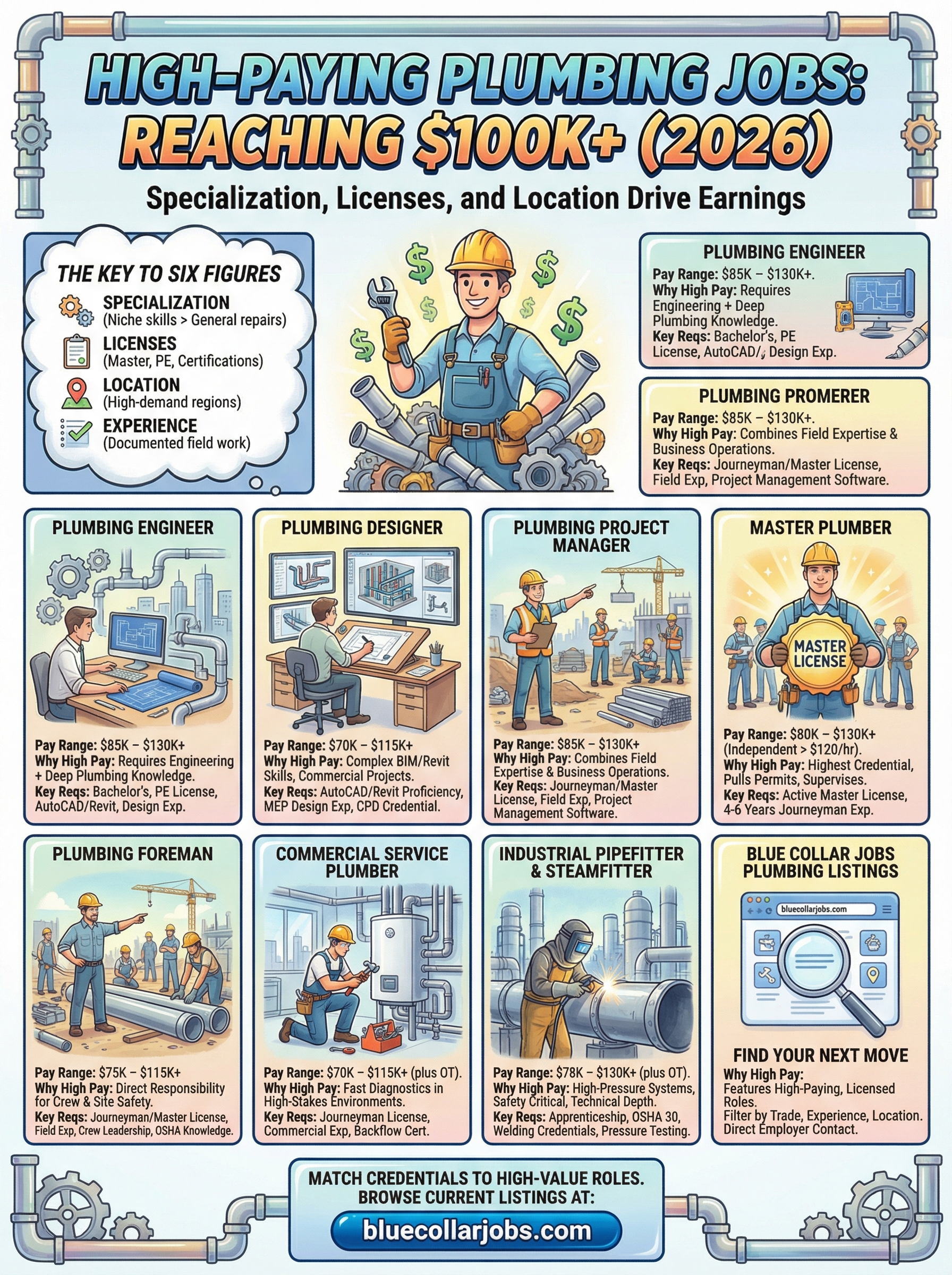
high paying plumbing jobs infographic

Your Next Move

Every role on this list proves that high paying plumbing jobs are not rare exceptions. They are the direct result of pursuing the right license, specialization, or career path within the trade. Whether you are working toward your Master license, building commercial service experience, or targeting industrial pipefitting work, the common thread is matching your credentials to the roles where employers pay a significant premium over the field average.

Your next step is straightforward: find openings that fit your current experience level and start applying. BlueCollarJobs.com filters listings by trade, state, and seniority level, so you skip irrelevant postings and get directly to plumbing roles that match where you stand right now. The pay ranges outlined above are real, and employers are actively filling these positions. Browse current plumbing job listings on BlueCollarJobs.com and apply to the positions that align with your license and career goals today.
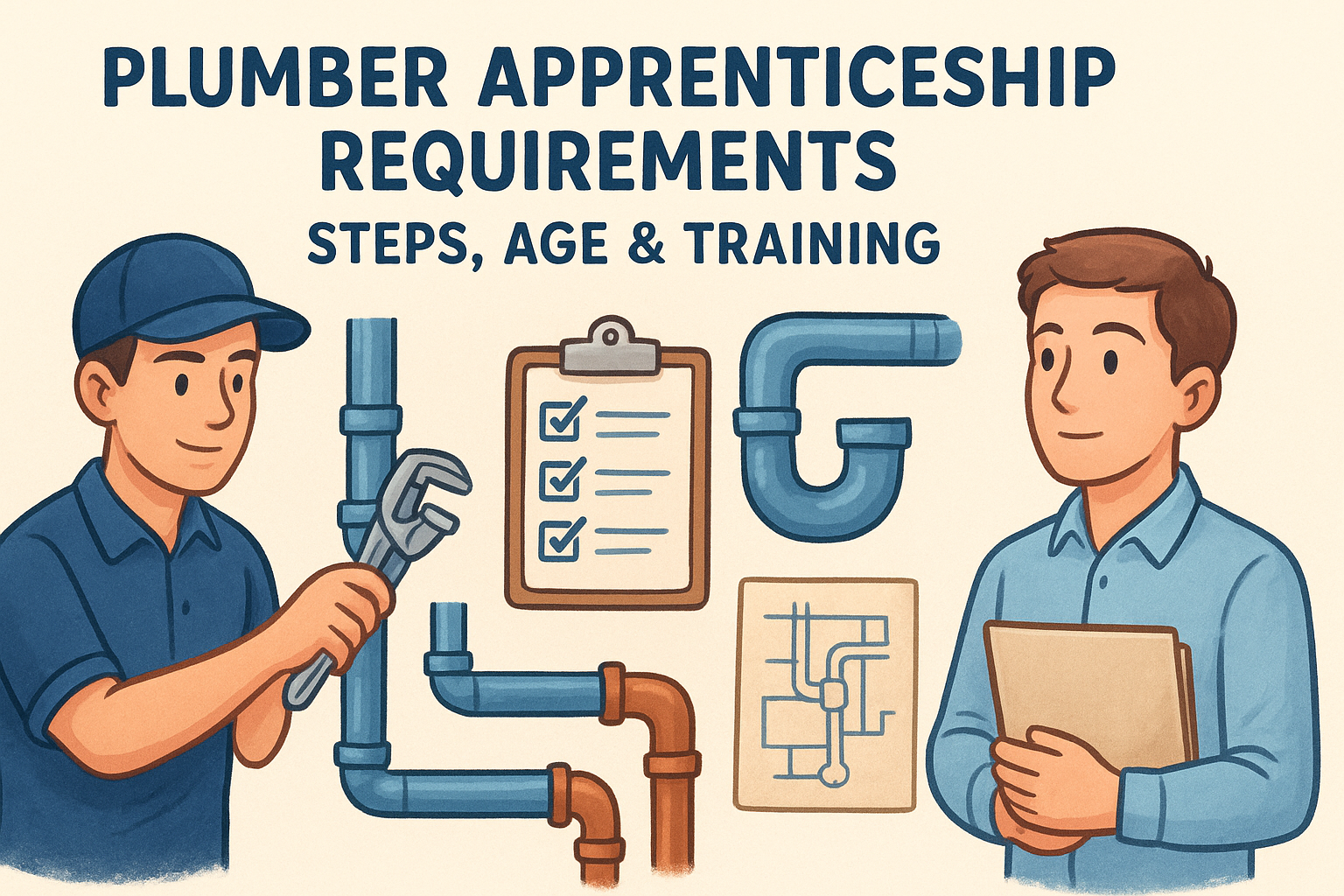
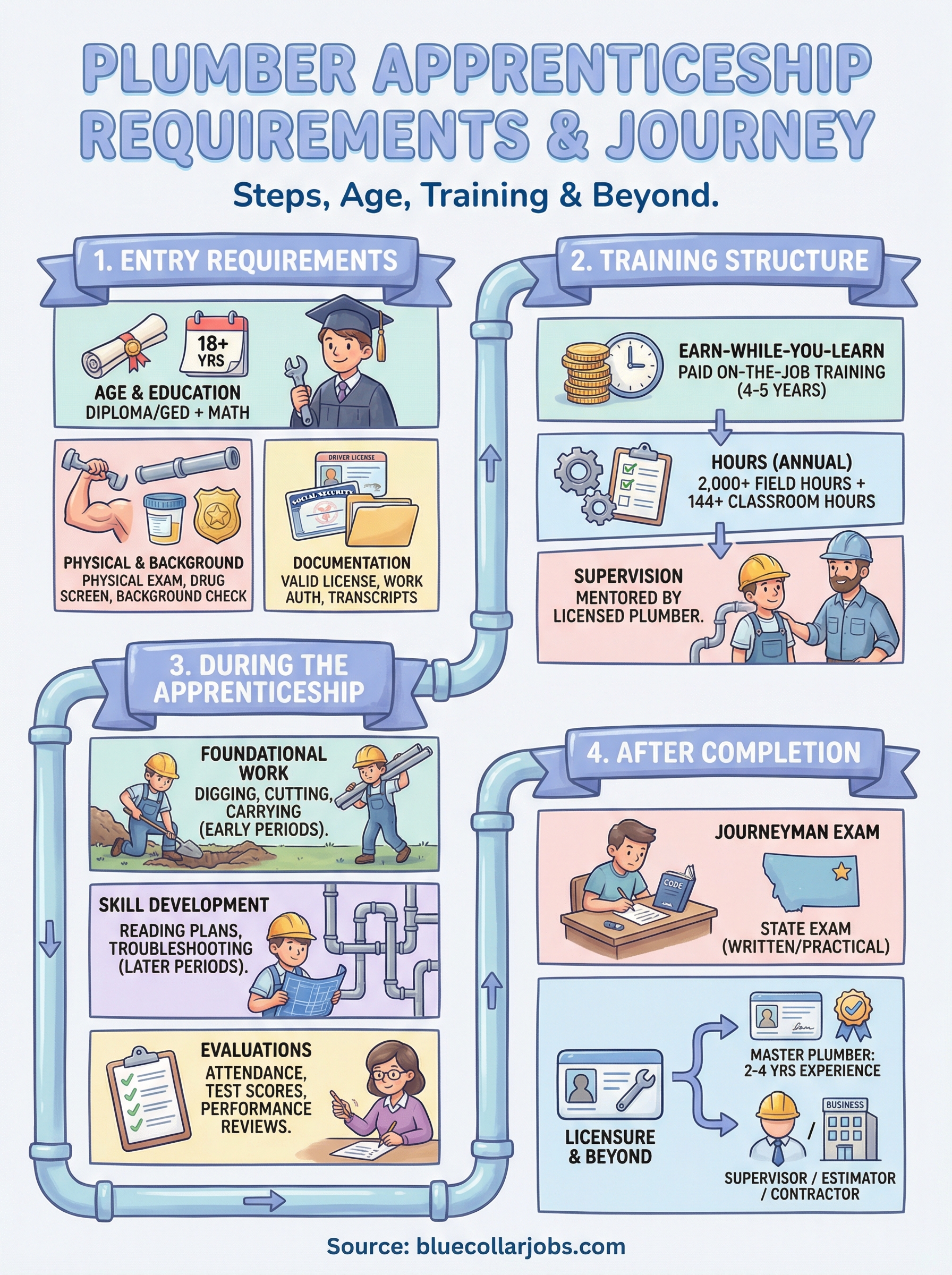
Plumber Apprenticeship Requirements: Steps, Age & Training

Plumber Apprenticeship Requirements: Steps, Age & Training

Getting into the plumbing trade starts with one critical step: understanding the plumber apprenticeship requirements before you apply. Every state sets its own rules around age minimums, education, and registration, and missing even one box can delay your start by months. Whether you’re fresh out of high school or switching careers, knowing exactly what’s expected of you upfront saves real time and frustration.

A plumbing apprenticeship typically lasts four to five years and combines paid on-the-job training with classroom instruction. You’ll work under a licensed plumber, learn local building codes, and build the hours needed to eventually sit for your journeyman exam. It’s a structured path with clear milestones, but the entry requirements, things like minimum age, high school diploma or GED, and physical fitness standards, vary depending on the program and state.

This guide breaks down every requirement you need to meet, step by step, so you can move forward with a plan. At bluecollarjobs, we connect trade professionals with employers across the country, and we regularly see apprentice-level plumbing positions posted by companies actively looking to train new talent. If you’re serious about starting this career, understanding the requirements covered below is your first real move.

What a plumbing apprenticeship is

A plumbing apprenticeship is a formal, earn-while-you-learn training program that takes you from zero experience to a fully qualified plumber over four to five years. You spend the majority of that time working on actual job sites under the supervision of a licensed journeyman or master plumber, and you supplement that hands-on work with classroom instruction covering theory, codes, and safety. Unlike a trade school program where you pay tuition and then look for work, an apprenticeship pays you a wage from day one while you build the skills and documented hours required to sit for your journeyman license exam.

How the program is structured

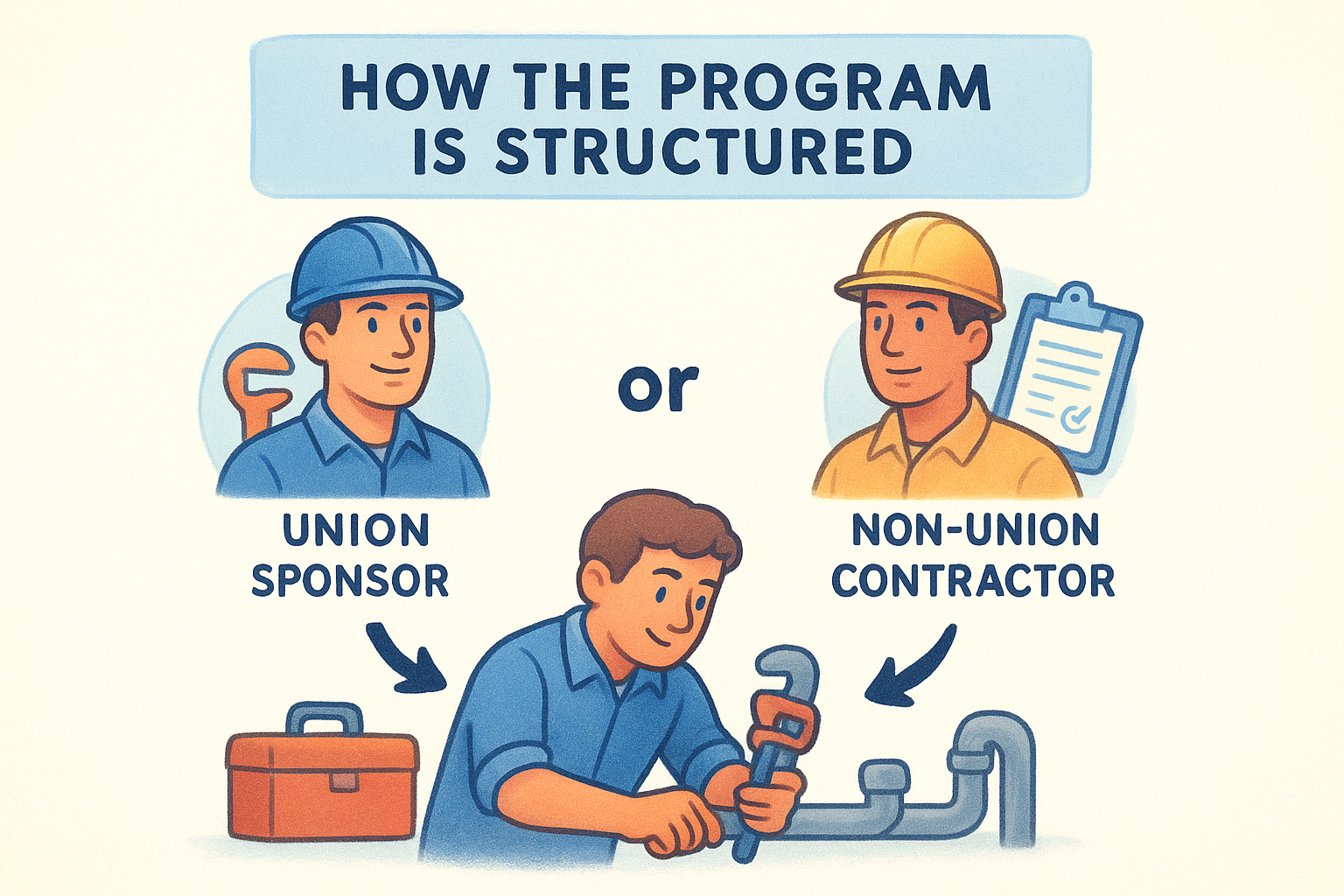
Most apprenticeship programs in the United States are sponsored by one of two types of organizations: a local union affiliate (typically through the United Association of Plumbers and Pipefitters) or an independent, non-union contractor group. Both formats follow a similar structure. You sign up as an apprentice, get placed with a sponsoring employer, and work under a licensed plumber while completing a set number of hours each year. Alongside the field work, you attend technical classes, usually evenings or weekends, that cover pipe systems, hydraulics, local building codes, and blueprint reading.

How the program is structured

The key distinction between a union and non-union apprenticeship is not the quality of training but the wage scale, benefits structure, and contractor relationships that come with each path.

The programs are typically broken into one-year segments, called periods, and your pay rate increases at each step. By the time you complete all periods and pass your final competency reviews, you will have logged 2,000 hours or more per year in field training and hundreds of classroom hours on top of that.

What you actually do during an apprenticeship

During the early periods, your work is foundational. You’ll be digging trenches, cutting and threading pipe, and carrying materials while you watch experienced plumbers handle the more complex tasks. As your skills develop, your responsibilities grow. By your third or fourth year, you’ll be reading plans, running your own sections of a job, and troubleshooting systems with minimal supervision.

The plumber apprenticeship requirements you’ll encounter throughout this process are not just about showing up. Program sponsors evaluate your attendance, your test scores, and your on-the-job performance at every period review. If you miss too many class sessions or fall behind on your hour documentation, you can be held back or removed from the program entirely. Taking the administrative side seriously from the beginning keeps you on track and moving forward on schedule.

Plumber apprenticeship entry requirements

Before you submit your application, you need to confirm that you meet the baseline plumber apprenticeship requirements set by the sponsoring organization and your state. Most programs share a common set of minimum standards, and missing even one can get your application rejected before anyone reviews your experience or background.

Age and education

Most programs require you to be at least 18 years old at the time of application. Some states allow 16-year-olds to enter pre-apprenticeship tracks, but the standard registered apprenticeship almost universally starts at 18. On the education side, you’ll need a high school diploma or a GED in every case. Programs also frequently ask for proof of one completed semester of algebra or an equivalent math assessment, since pipe sizing, pressure calculations, and layout work all rely on basic math skills.

Age and education

If you don’t have a math credit on your transcript, many community colleges offer a short algebra course that satisfies this requirement at minimal cost.

Physical and background requirements

Plumbing is physically demanding, and most programs require you to pass a physical examination confirming you can lift heavy materials, work in confined spaces, and stay on your feet for extended shifts. You’ll also need to pass a drug screening before your placement begins. Some programs run a background check as well, though a prior record doesn’t automatically disqualify you. The program typically reviews the nature and timing of any offenses on a case-by-case basis.

Beyond the health and background checks, you’ll need a valid driver’s license and reliable transportation, since job sites are rarely accessible by public transit. Bring your Social Security card, proof of legal work authorization, and your diploma or GED certificate to your interview. Having these documents organized before you apply shows the program coordinator that you’re ready to start without delays.

How to find and apply for an apprenticeship

Once you’ve confirmed you meet the plumber apprenticeship requirements, your next move is finding a program that’s actively accepting applicants. Two primary sources cover the majority of registered apprenticeship opportunities in the United States: union-affiliated programs and non-union contractor associations. Knowing where to look cuts your search time significantly.

Where to look for programs

The U.S. Department of Labor’s ApprenticeshipUSA website lists registered apprenticeship programs by trade and state, and it’s the most reliable starting point for any candidate. You can filter by plumbing, check which sponsors are currently enrolling, and pull contact information and enrollment timelines directly from the site. Local union halls affiliated with the United Association of Plumbers and Pipefitters are another strong option, particularly if you want a structured wage progression and benefits package from day one.

If a program isn’t listed on a government or union site, verify its credentials with your state’s apprenticeship agency before you apply.

Independent contractor associations, such as the Plumbing-Heating-Cooling Contractors Association, also run their own accredited training programs. These non-union paths work well if you prefer flexibility in employer placement or live in a region where union programs carry long waitlists.

What the application process looks like

Most programs open applications on a fixed schedule, often once or twice per year, so timing matters. You’ll typically submit a completed application form, your high school diploma or GED transcript, and proof of your math credit. Some programs add an aptitude test covering basic math and reading comprehension before they invite you to an interview.

Your interview is straightforward. The committee wants to confirm you understand the commitment you’re making, that you can communicate clearly, and that you’ve gathered the required documents in advance. Showing up with organized paperwork and a direct answer on why you want to work in the trade puts you ahead of candidates who treat the interview as a formality.

Training hours, classroom work, and supervision

The training structure is one of the most concrete parts of the plumber apprenticeship requirements you’ll work through. Most registered programs require 2,000 field hours per year, which adds up to 8,000 to 10,000 total hours across the full four-to-five-year program. Every hour needs to be documented by your supervising journeyman or master plumber and submitted to your program sponsor on a regular schedule.

Field hours and what counts

Your field hours must be earned on active job sites under direct supervision of a licensed plumber. Time spent commuting, attending general safety briefings unrelated to your trade, or working outside your classification typically does not count toward your documented total. Your sponsor will give you a timesheet or an online logging system to record your hours, and both you and your supervisor need to sign off on each entry.

Keep your own copy of every signed hour log. Disputes over missing documentation can delay your advancement to the next period.

Classroom instruction

Alongside your field work, you’ll complete 144 or more classroom hours per year through your program’s technical training component. These sessions cover pipe materials, water pressure calculations, drainage systems, local and national plumbing codes, and blueprint and isometric drawing interpretation. Some programs deliver these classes in person at a union hall or training center, while others use hybrid formats with online coursework and in-person labs.

Test scores in these classes carry real weight. Program coordinators track your academic performance alongside your field hours, and falling below passing thresholds can hold you back from advancing to the next period. Treating the classroom work with the same seriousness you give your on-site shifts keeps both components on track, since your sponsor reviews both before signing off on your progression to the following year.

Licensing, exams, and moving up after apprenticeship

Completing every hour and classroom credit in the plumber apprenticeship requirements gets you to the finish line of your training, but it doesn’t automatically make you a licensed plumber. Once your program sponsor confirms you’ve satisfied all documented hours and passed your final period reviews, the next step is sitting for your journeyman plumber exam in the state where you intend to work.

The journeyman exam

Every state administers its own licensing exam, and the format varies. Most tests include a written component covering local plumbing codes, pipe sizing calculations, drainage principles, and safety regulations. Some states also require a practical skills demonstration. You’ll need to submit your completed training records and proof of program completion along with your exam application, so keeping your hour logs organized throughout your apprenticeship directly affects how quickly you can apply.

Check your state’s licensing board website for the exact exam format, fees, and scheduling windows before your final apprenticeship period ends.

Study materials aligned to your state’s adopted plumbing code are your best preparation resource. Many journeyman candidates use the codebook itself as an open-reference tool during the exam, which means familiarity with how the code is organized matters as much as memorizing specific rules.

What comes after journeyman

Earning your journeyman license lets you work independently on most plumbing systems without constant supervision. From there, career advancement typically follows one of two tracks: accumulating additional years of field experience to qualify for a master plumber license, or moving into supervisory and estimating roles within a plumbing contractor. A master plumber license requires passing a more advanced exam and, in most states, two to four years of journeyman-level work experience after you pass your initial exam. Some plumbers also pursue business licensing to run their own contracting operation, which adds a separate layer of state registration requirements depending on your location.

plumber apprenticeship requirements infographic

Next steps

You now have a complete picture of what plumber apprenticeship requirements involve, from the age and education minimums at the front end to the journeyman exam and master license path at the far end. Every piece of this process has a specific sequence, and understanding that sequence before you apply puts you ahead of most first-time candidates. Gather your documents early, confirm your state’s registration rules, and identify the programs in your area that are currently accepting applications.

Finding the right employer to sponsor your training is a practical next step you can take today. Apprentice-level plumbing positions are listed regularly by contractors and companies looking to bring on new talent and train them directly. Browse current openings and filter by trade and location at BlueCollarJobs.com to find employers actively hiring in your area. The job posting is already out there. Your move is to apply.
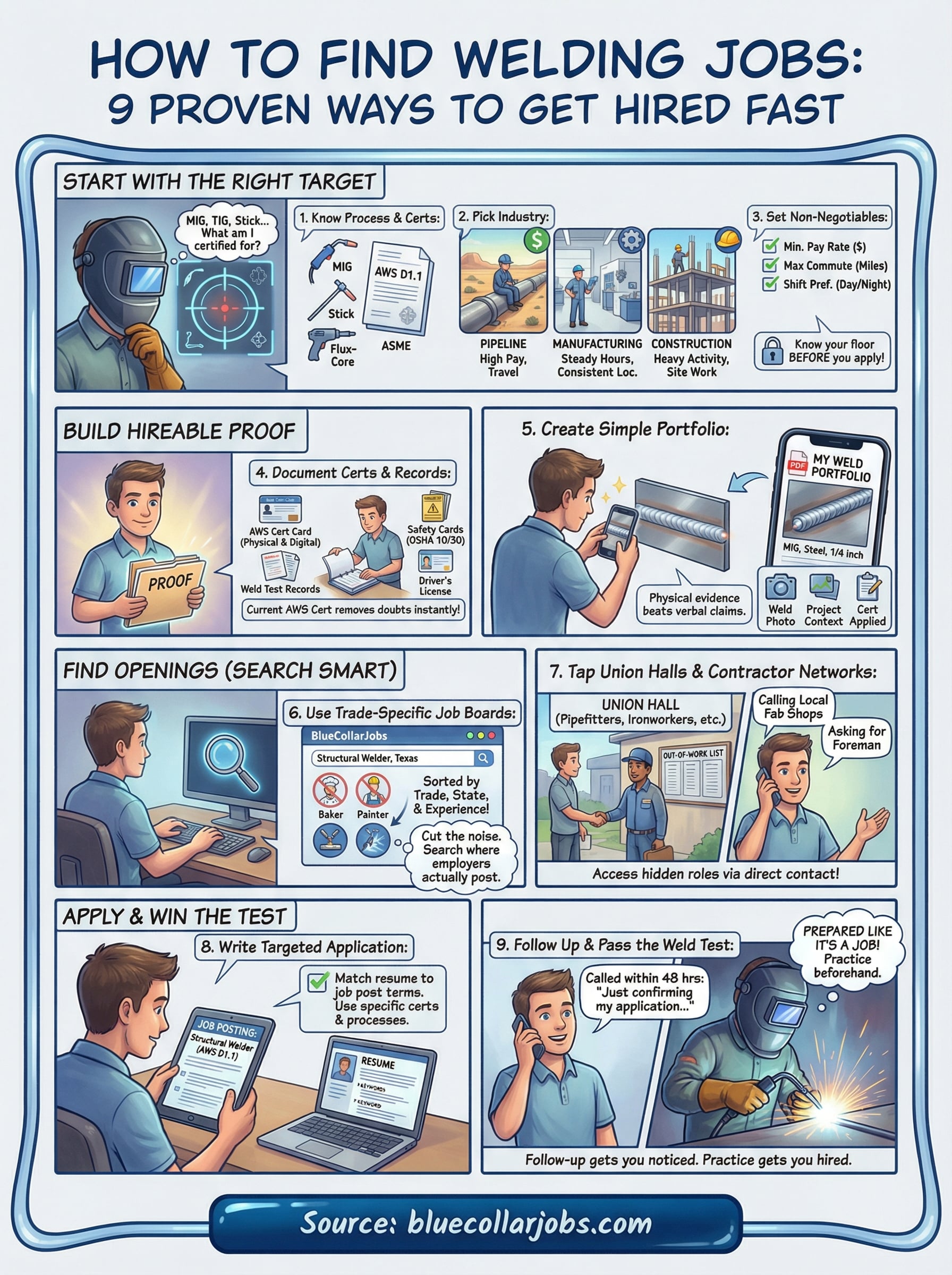
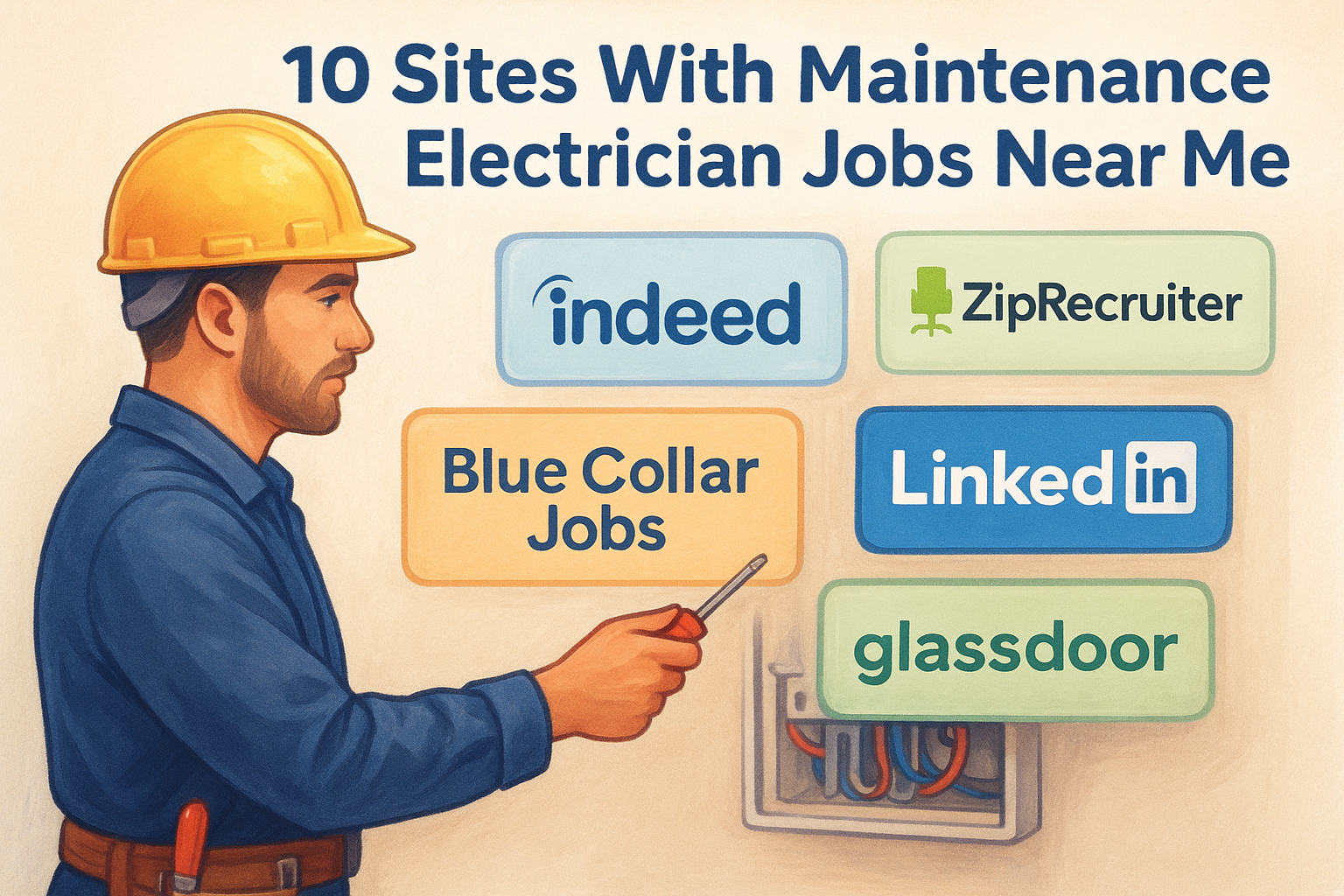
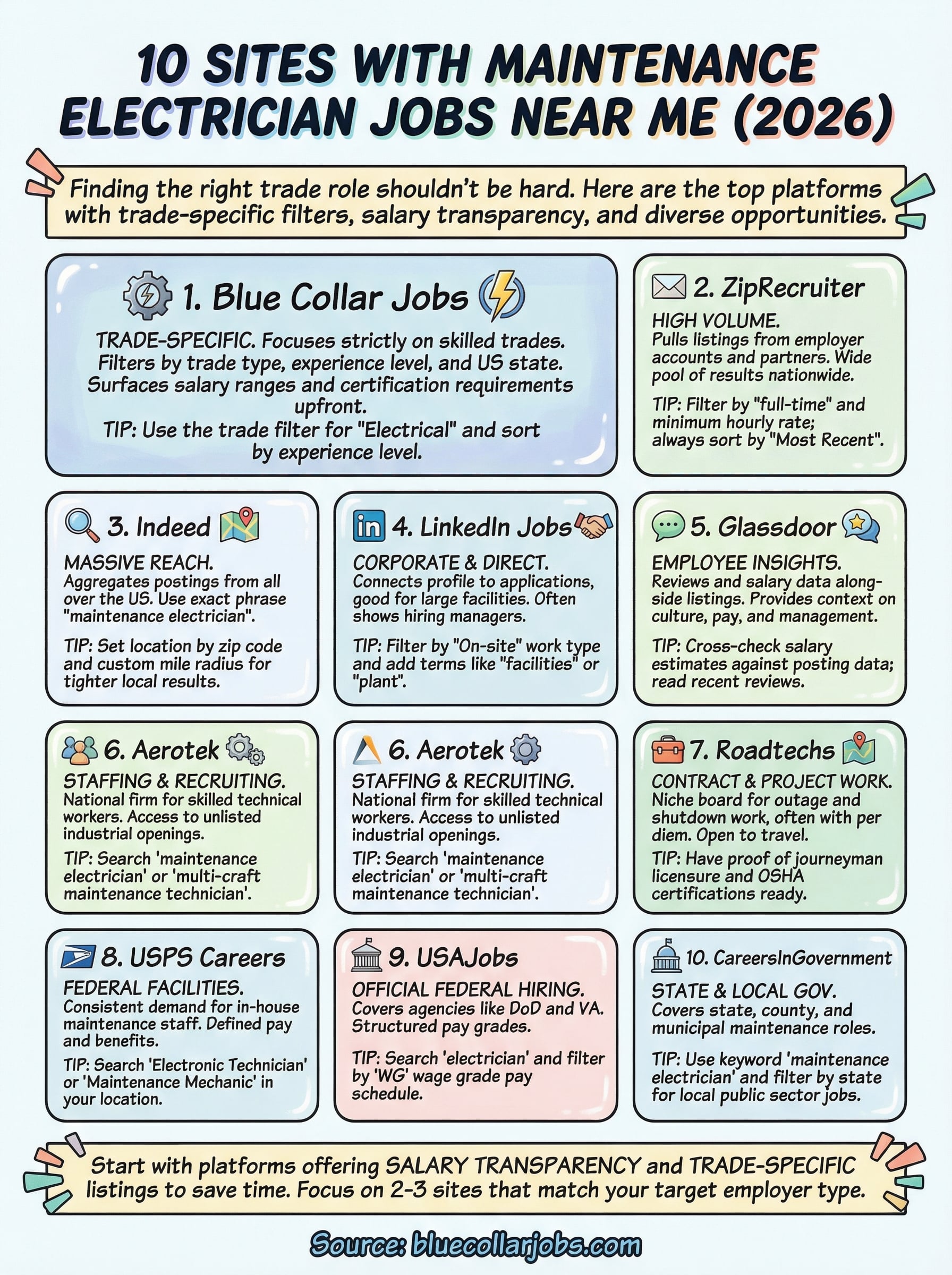
10 Sites With Maintenance Electrician Jobs Near Me (2026)

10 Sites With Maintenance Electrician Jobs Near Me (2026)

Maintenance electricians keep facilities running, factories, hospitals, office buildings, you name it. Demand for these roles hasn’t slowed down, and if you’re searching for maintenance electrician jobs near me, you’ve probably noticed that listings are scattered across dozens of platforms. Some sites bury trade jobs under piles of unrelated white-collar postings. Others lack basic details like pay ranges or shift schedules, leaving you guessing before you even apply.

That’s exactly the problem we built bluecollarjobs to solve. Our platform focuses strictly on skilled trade positions, including maintenance electrician roles, with salary transparency and trade-specific filters front and center. No wading through software engineer listings to find what you’re actually looking for.

But we also know we’re not the only option out there, and some sites do a solid job in their own right. In this article, we’ll break down 10 of the best platforms where you can find maintenance electrician openings right now, what each one does well, and how to make the most of your job search in 2026.

1. Blue Collar Jobs

Blue Collar Jobs (bluecollarjobs.com) is built specifically for skilled trades, which means you won’t find marketing coordinator postings cluttering your search results. Every listing on the platform targets manual and technical roles, from apprentice-level helpers to licensed journeymen and master electricians looking for their next full-time position.

What makes it useful for maintenance electricians

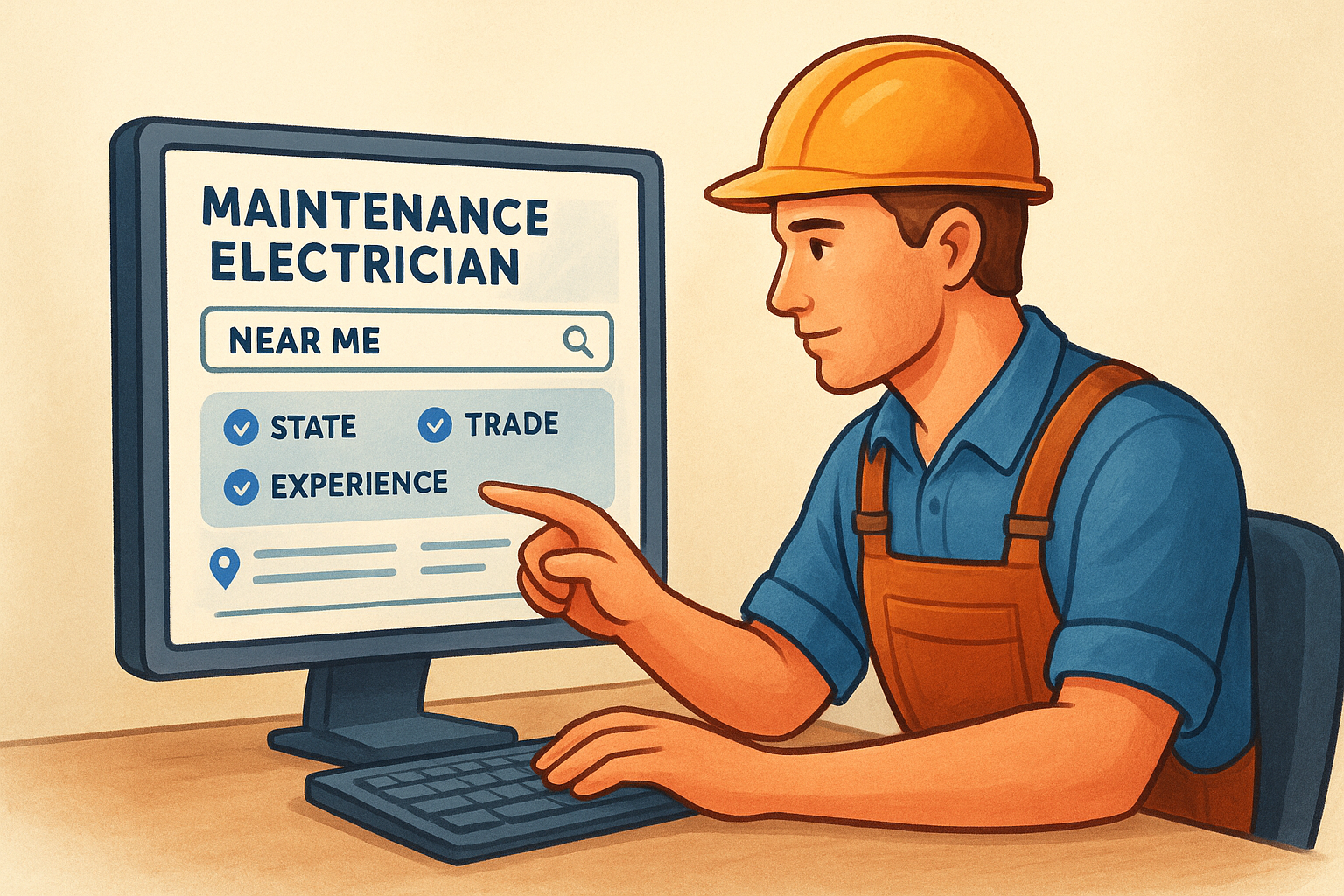
Most general job boards treat trade work as a subcategory. Blue Collar Jobs treats it as the whole point. The platform organizes listings by trade type, experience level, and US state, so you can zero in on maintenance electrician roles without sorting through unrelated noise. Employers who post here are specifically looking for skilled trade workers, which means the listings carry more signal from the start.

If you’re tired of filtering out irrelevant results, a trade-specific board saves you real time in a competitive search.

The platform also surfaces salary ranges and certification requirements directly in search results, so you can rule out a poor fit before you click through. That detail alone separates it from most general boards.

Best filters to find local maintenance roles fast

When you search for maintenance electrician jobs near me on Blue Collar Jobs, start by selecting your state, then use the trade filter to narrow down to electrical roles. From there, sort by experience level to skip past postings aimed at candidates with credentials you don’t have, or that underqualify you if you’re a licensed journeyman or master.

Best filters to find local maintenance roles fast

  • Select your state from the state-based directory
  • Filter by trade: Electrical
  • Sort by experience level: Apprentice, Journeyman, or Master
  • Check the salary range displayed in results before clicking through

What to look for in listings before you apply

Pay close attention to the certification requirements listed in each posting. Many maintenance electrician roles specify whether they need a journeyman license, a master license, or just documented hands-on experience. You’ll also want to confirm the shift schedule and employment type upfront, since maintenance work spans day shifts, nights, and rotating schedules depending on the facility type.

Look for postings that clearly state the hourly rate or annual salary, the facility category (commercial, industrial, or institutional), and whether the role is full-time or contract. Listings that leave these details vague often signal that the employer hasn’t fully scoped the position yet.

Cost and account setup

Creating a candidate profile on Blue Collar Jobs is free. You can browse listings without registering, but setting up an account lets you save searches and apply directly from the platform. Employers pay to post positions, which keeps the entire job seeker experience free with no hidden upgrade tiers or premium application features locked behind a paywall.

2. ZipRecruiter

ZipRecruiter pulls listings from employer accounts and partner job boards, giving it a wide pool of postings across the country. If you’re searching for maintenance electrician jobs near me, the volume of results here is genuinely useful, though you’ll need to apply filters quickly to avoid wading through unrelated postings.

How ZipRecruiter surfaces maintenance electrician roles

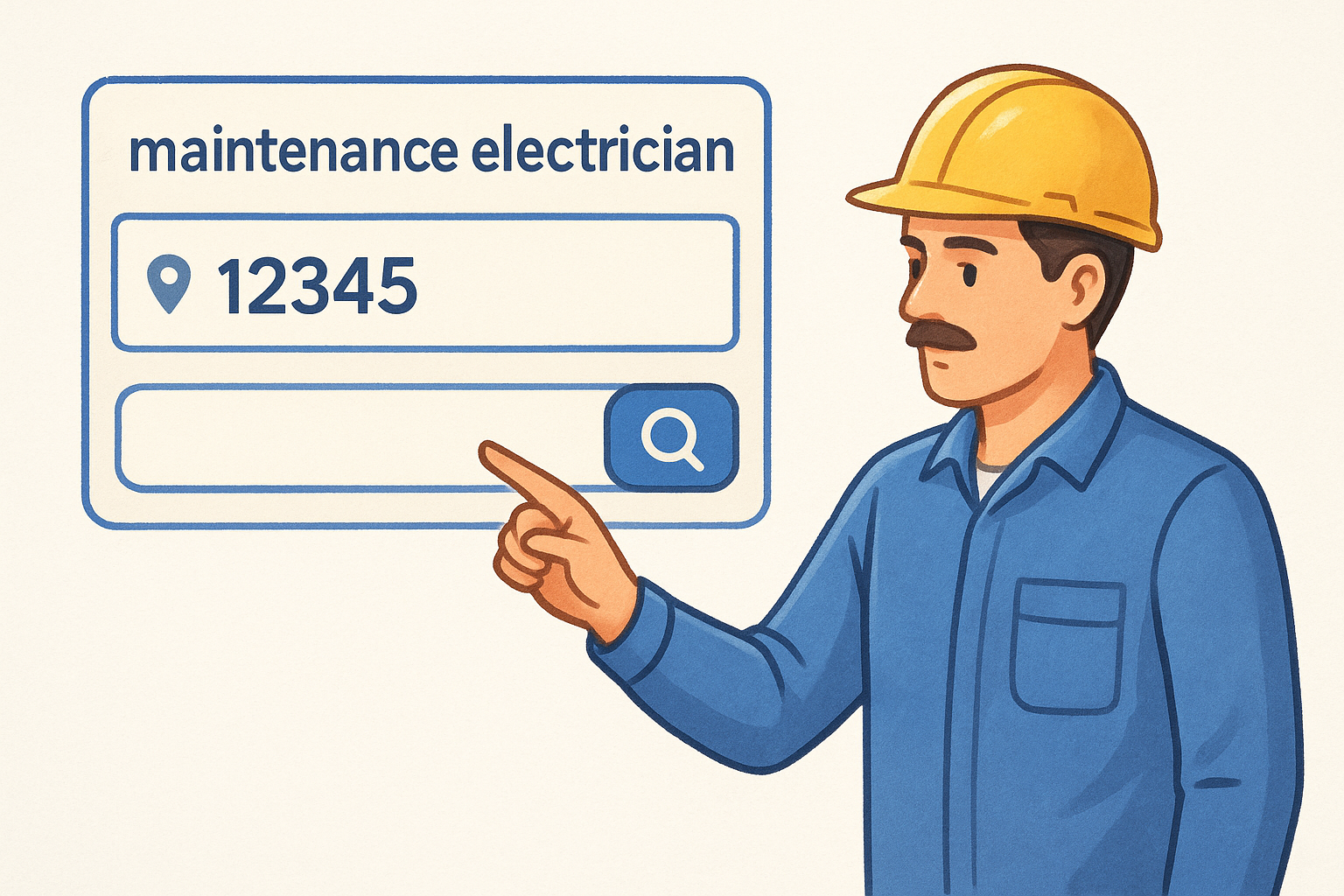
The platform uses a matching algorithm to push relevant roles to your profile based on your job title, location, and experience level. Searching "maintenance electrician" with a zip code or city gives you a solid starting list. It aggregates both direct employer postings and syndicated listings, so some duplicates appear, but the overall coverage of industrial and facilities-based roles is broad.

Filters that matter for shift, pay, and experience

Once you have results, use the filters on the left sidebar to narrow by date posted, pay range, and employment type. Shift information is not always standardized in the listing titles themselves, so check the job description body for those details. Filtering by "full-time" and a minimum hourly rate cuts the noise fast.

Always sort by "Most Recent" to avoid spending time on roles that have already been filled.

How to use job alerts without getting spammed

Set a specific alert using a precise job title like "maintenance electrician" rather than a broad term like "electrician." Add your target city or zip code to keep results local. Limit yourself to one or two saved searches so your inbox stays workable.

Cost and account setup

Creating a job seeker account on ZipRecruiter is free. You can apply to postings directly through the platform without upgrading. Employers pay for access, so the candidate side carries no cost at any level.

3. Indeed

Indeed pulls listings from employer career pages, staffing agencies, and direct postings across nearly every industry in the US. When you search for maintenance electrician jobs near me, the volume of results is hard to match, but you’ll need a few tactics to filter out the low-quality postings and focus on roles that are actually worth your time.

How to search for maintenance electrician work by location

Type the exact phrase "maintenance electrician" in the job title field rather than the general keyword box. Indeed’s search treats title matches as higher relevance, which brings more targeted results to the top. Then set your location by zip code with a custom mile radius so you’re not sorting through postings that are impractical to commute to.

How to search for maintenance electrician work by location

Searching by zip code instead of city name gives you tighter control over what shows up, especially in metro areas where "nearby" can mean very different things.

How to read pay, shift, and license requirements

Not every listing discloses salary information, but those that do display it near the top of the posting. When pay is missing, check the posting date and employer review count as quick signals of listing quality. Look for shift type and certification requirements in the first two paragraphs, since employers who need qualified applicants lead with those details.

Quick apply vs direct employer applications

Indeed’s "Easy Apply" option lets you submit in seconds, but many employer accounts receive high volumes and screen these submissions loosely. For roles at established facilities or companies, clicking through to the employer’s own career page and applying there puts your application in a more visible spot.

Cost and account setup

Creating a job seeker account on Indeed is free. You can upload your resume, set alerts, and apply without paying anything. Premium visibility features exist but are optional and not necessary to apply effectively.

4. LinkedIn Jobs

LinkedIn Jobs works differently from most job boards because it connects your profile and work history directly to your application. For maintenance electricians, this matters most when you’re targeting corporate facilities, manufacturing plants, or large institutional employers that post roles through their company pages rather than through staffing agencies.

When LinkedIn beats traditional job boards

LinkedIn has the edge when the hiring manager or HR contact is visible on the posting. Many industrial employers and facilities teams post directly here and respond faster to candidates who reach out alongside their application. If you’re targeting full-time, in-house maintenance roles at hospitals, universities, or large manufacturers, LinkedIn surfaces those opportunities better than most general boards.

Search tactics for plants, facilities, and contractors

Search using "maintenance electrician" as your job title and enter your city or zip code in the location field. Then filter by "On-site" work type to remove remote listings that don’t apply to trade work. Adding terms like "facilities" or "plant" to your search helps surface industrial roles that match what you’re actually looking for when browsing maintenance electrician jobs near me.

Filtering by company size helps you target employers with established maintenance departments rather than small single-crew operations.

How to spot legit roles and avoid low-signal posts

Check whether the posting includes a named recruiter or HR contact and whether the company page shows real employee counts and recent activity. Skip postings that list no pay range and no certification requirements, since those often signal a role that’s already been filled or is poorly scoped from the start.

Cost and account setup

A basic LinkedIn account is free and gives you full access to job search and direct applications. Premium subscriptions exist, but you do not need them to apply effectively to maintenance electrician roles.

5. Glassdoor

Glassdoor is best known for company reviews and salary data, but it also runs a full job board with solid trade and facilities postings. If you’re searching for maintenance electrician jobs near me and want context before you apply, Glassdoor gives you employer intelligence that most job boards skip entirely.

What Glassdoor adds beyond job listings

Most job boards show you the posting and nothing else. Glassdoor surfaces employee reviews and interview feedback alongside listings, so you can see what current and former workers say about management, pay, and working conditions before you commit to an application.

That context is especially useful for evaluating large facilities employers or manufacturers where work culture and overtime expectations vary significantly. Checking a company’s interview ratings also tells you how long the hiring process typically runs before you invest time in multiple rounds.

How to use pay ranges and employer details

Glassdoor displays salary estimates on most listings based on employee-reported data. Cross-check that number against the pay range listed in the posting itself. If the two figures are far apart, that gap tells you something about how the company handles compensation transparency before you ever speak to a recruiter.

Pay attention to the overall rating and the number of reviews behind it, since a small sample size can skew the picture in either direction.

Red flags to watch for in maintenance postings

Skip postings that leave out key details like shift schedule and certification requirements. On Glassdoor, also cross-reference the listing against recent employee reviews, which often flag patterns worth knowing before you apply:

  • Reviews mentioning high turnover in maintenance departments
  • Complaints about chronic understaffing or unplanned mandatory overtime

Cost and account setup

Creating a Glassdoor account is free for job seekers. You can browse listings and read employer reviews without paying anything, though the platform will prompt you to log in after viewing a few pages.

Glassdoor doesn’t charge candidates at any tier, and salary comparison tools are accessible through the standard free account without any upgrade required.

6. Aerotek

Aerotek is a national staffing firm that places skilled trade and technical workers across industrial, manufacturing, and facilities sectors. If you’re searching for maintenance electrician jobs near me and want someone actively working on your behalf, Aerotek’s recruiter network operates in a way that general job boards simply don’t.

Why staffing firms matter in industrial maintenance

Many industrial employers don’t post openings publicly. They fill positions through staffing agencies like Aerotek because it speeds up the screening process and reduces their internal HR load. That means a meaningful number of maintenance electrician openings never appear on standard job boards at all, and submitting your profile to Aerotek puts you in front of those roles.

Staffing agencies often have exclusive agreements with large industrial clients, so the only way to access those listings is through the agency itself.

How to find electrician and maintenance technician crossover roles

Search Aerotek’s site using "maintenance electrician" or "electrical maintenance technician" as your title. Many postings appear under both terms depending on how the employer categorized the role. Crossover titles like "multi-craft maintenance technician" can also include significant electrical responsibilities, so review those descriptions carefully before skipping them.

What to ask a recruiter before you accept an interview

Confirm the pay rate, shift schedule, and whether the role is contract-to-hire or direct placement before you agree to anything. Ask about the facility type, the size of the maintenance crew, and the expected duration of the assignment if it’s contract-based.

Cost and account setup

Submitting your profile to Aerotek is free for candidates. Recruiters earn their fees from the employers, not from you, so there are no costs at any stage of the process.

7. Roadtechs

Roadtechs is a niche job board built around contract and project-based work in industrial and power sectors. If you’re open to traveling for assignments, this platform surfaces a type of maintenance electrician opportunity you won’t find on standard boards.

Best fit roles on Roadtechs for electricians

Roadtechs focuses on outage, shutdown, and turnaround work at refineries, power plants, and industrial facilities. These aren’t permanent positions, but they pay well and move fast. If you’re searching for maintenance electrician jobs near me and coming up short locally, Roadtechs is worth checking because short-term contracts often convert into repeat work with the same employer once you’ve proven yourself on site.

How to filter for per diem, travel, and project work

Search using "electrician" or "electrical maintenance" as your keyword and filter by craft type in the left panel. Many postings specify per diem rates and estimated project duration in the listing body rather than in the filters, so read through the full description before deciding whether a role fits your availability and income expectations.

Per diem rates can significantly raise your effective pay on travel assignments, so factor that into your comparison against local permanent roles.

Paperwork and credentials to have ready

Most Roadtechs postings require proof of journeyman licensure and current OSHA certifications before you get to the interview stage. Have your license number, card copies, and any craft-specific certifications like NFPA 70E ready to submit with your profile.

Cost and account setup

Registering on Roadtechs is free for candidates. You can post your availability and credentials without paying, and employers contact you directly through the platform.

8. USPS careers

USPS operates one of the largest facility networks in the country, which means a consistent demand for in-house maintenance staff at processing and distribution centers. If your search for maintenance electrician jobs near me keeps returning the same private-sector results, federal employers like USPS offer a different path with defined pay grades and full benefits that most private companies don’t match.

Maintenance roles at USPS that fit electricians

USPS hires under the "Electronic Technician" and "Maintenance Mechanic" job titles, both of which involve significant electrical work on automated sorting equipment, conveyor systems, and facility power infrastructure. These are permanent, full-time positions with union representation through the American Postal Workers Union, which negotiates pay scales and working conditions on your behalf.

How the hiring process works at a high level

USPS hiring runs through a structured process that includes an online assessment and background check before any interview takes place. The timeline is longer than a standard private employer, often running several weeks from application to offer. Be prepared to document your work history and relevant certifications clearly in your application from the start.

Expect a skills assessment specific to the maintenance role you apply for, so review your core electrical knowledge before you submit.

How to search by facility and location

Go to usps.com/careers and use the keyword search with your city or zip code. Filter by the "Maintenance" job category to surface roles that match electrical and mechanical skill sets. Results update regularly, so check back weekly if nothing fits your location immediately.

Cost and account setup

Applying through USPS careers is completely free for all candidates. You create a profile, upload your work history and credentials, and track your application status through the same portal without paying anything at any stage.

9. USAJobs and CareersInGovernment

Both USAJobs and CareersInGovernment list federal and state government maintenance positions, but they serve different audiences. If your search for maintenance electrician jobs near me keeps returning the same private-sector options, these two platforms open up a separate hiring pipeline with structured pay and long-term stability.

Which one to use for your target employer

USAJobs is the official federal hiring portal, covering agencies like the Department of Defense, VA hospitals, and federal facilities operations. CareersInGovernment covers state, county, and municipal employers that don’t post on USAJobs, so use it when you’re targeting local government facilities, public utilities, or transit authorities in your area.

How to search by series, keyword, and location

On USAJobs, search using the keyword "electrician" and filter by the "WG" wage grade pay schedule, which applies to most federal trade and craft positions. Federal electrician roles often fall under the WG-2810 or WG-2800 series. On CareersInGovernment, use "maintenance electrician" as your keyword and filter by state to surface relevant municipal and county postings quickly.

How to search by series, keyword, and location

Saving your search and enabling email alerts on USAJobs lets you respond fast when new federal openings post, since these roles fill on strict timelines.

Typical requirements and what "qualified" means

Federal postings list specific journeyman license requirements and years of documented experience that the agency uses to screen applications. Meeting the minimum qualifications listed in the announcement does not guarantee an interview, since agencies rank candidates using a structured scoring process. Make sure your resume addresses each required skill directly using the same terminology the posting uses.

Cost and account setup

Creating accounts on both platforms is completely free for job seekers. You build your profile, upload your work history, and track application status at no cost through each portal.

maintenance electrician jobs near me infographic

Next Steps

The nine platforms above each serve a different part of the maintenance electrician market, from trade-specific boards to federal hiring portals. Your best move is to pick two or three that match your target employer type and work those consistently rather than spreading thin across all of them.

Start with a platform that prioritizes salary transparency and trade-specific listings so you spend less time filtering out irrelevant results. If your search for maintenance electrician jobs near me keeps returning the same stale postings, add a staffing agency or government portal to your rotation to open up options that never appear on standard boards.

Ready to narrow your search? Blue Collar Jobs keeps every listing focused on skilled trade roles so you find relevant openings fast. Browse the Blue Collar Jobs blog for more trade career resources and practical guidance on landing your next role.

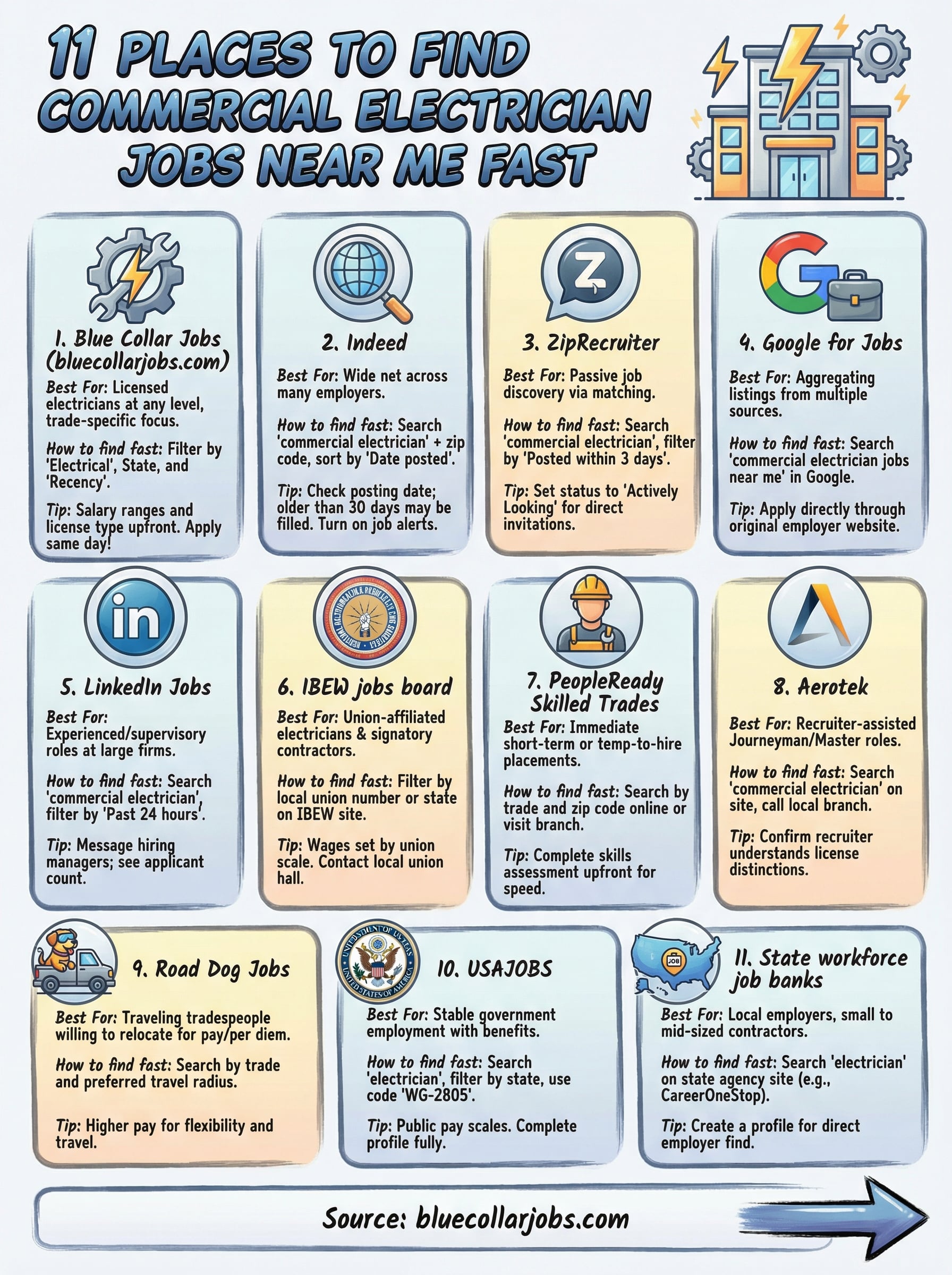
11 Places To Find Commercial Electrician Jobs Near Me Fast

11 Places To Find Commercial Electrician Jobs Near Me Fast

Commercial electrician positions are in high demand right now. Warehouses, office buildings, hospitals, and retail spaces all need licensed electricians to install, maintain, and repair their electrical systems. If you’ve been searching for commercial electrician jobs near me, you already know that the opportunities are out there, the challenge is figuring out where to look so you’re not wasting time scrolling through irrelevant listings.

The truth is, most general job boards bury trade-specific roles under thousands of unrelated postings. That’s exactly why we built bluecollarjobs.com, a job board built specifically for skilled trades, where every listing is relevant to workers like you. We organize jobs by trade, experience level, and location so you can find open positions fast without sorting through office gigs and tech roles.

But we’re not the only resource worth your time. Whether you’re a journeyman looking to switch employers or a freshly licensed electrician chasing your first commercial gig, having multiple reliable sources gives you a real edge. This article breaks down 11 proven places to find commercial electrician jobs in your area, including what each one does well and how to get the most out of it.

1. Blue Collar Jobs

Blue Collar Jobs (bluecollarjobs.com) is built specifically for skilled trades, which means every listing you find is relevant to your work. Unlike general job boards that bury trade roles under piles of office postings, this platform focuses entirely on manual and technical fields. Your search for commercial electrician jobs near me returns positions in wiring, panel work, conduit installation, and similar hands-on commercial roles, not customer service gigs or IT listings.

1. Blue Collar Jobs

What it’s best for

Blue Collar Jobs works best for licensed electricians at any experience level, whether you’re an apprentice looking for your first commercial placement or a master electrician pursuing a foreman role. The platform organizes listings by trade, location, and experience level, giving you a direct path to positions that actually match your credentials.

How to find jobs near you fast

Go to bluecollarjobs.com, select Electrical under the trade filter, and narrow results by your state. Listings sort by recency by default, which puts the most recently posted openings at the top so you’re always looking at active opportunities rather than stale ones.

What you’ll see in listings

Each listing displays the job title, employer name, location, and salary range alongside the experience level required. You’ll see whether a role needs a journeyman or master license directly in the search results, so you can assess fit before you even open the full posting.

Salary ranges displayed upfront give you real leverage going into pay discussions and eliminate wasted time on lowball offers.

Speed tips for getting responses

  • Subscribe to the monthly email newsletter to get top openings delivered to your inbox before you have to search.
  • Apply the same day a listing goes live. Employers posting on a trade-specific board are actively hiring, and early applicants stand out.
  • State your license type and years of commercial experience clearly at the top of every application you submit.

Watch-outs

Blue Collar Jobs covers the United States only, so international searches won’t produce results here. Because the platform is trade-specific rather than a general mega-board, the total listing volume is smaller than what you’d find on larger sites. That’s a reasonable trade-off, since a focused and relevant pool of openings beats thousands of mismatched results nearly every time.

2. Indeed

Indeed is one of the largest general job boards in the country, and its volume of listings makes it a practical stop when searching for commercial electrician jobs near me. Millions of employers post on Indeed regularly, which means new electrical positions appear across nearly every US market every day.

What it’s best for

Indeed works best for casting a wide net across many employers at once. You can compare what multiple contractors and facility managers are posting in your metro area without jumping between different sites.

How to find jobs near you fast

Type "commercial electrician" into the search bar, enter your zip code or city, and set the distance filter to 25 miles or less. Sort results by "Date posted" to surface the freshest listings immediately rather than sifting through older ones.

What you’ll see in listings

Listings vary a lot in quality. Some include full salary ranges and clear job descriptions, while others provide minimal detail on pay or certification requirements. Expect to click through several postings before you find ones with enough information to assess fit.

Always check the posting date before you apply. Listings older than 30 days are often already filled.

Speed tips for getting responses

Use both active and passive search methods to cover more ground:

  • Upload your resume so employers can contact you directly through Indeed’s resume search.
  • Turn on job alerts for "commercial electrician" in your location to receive new postings by email the same day they go live.

Watch-outs

Indeed mixes trade and non-trade roles in the same results, so you will see irrelevant listings alongside relevant ones. You will also run into duplicate postings where staffing agencies and direct employers advertise the same position separately.

3. ZipRecruiter

ZipRecruiter uses a matching algorithm to connect your profile with relevant open positions, which makes it a solid option when searching for commercial electrician jobs near me. Employers post roles and the platform automatically surfaces candidates it considers a strong fit, so hiring managers can reach out to you directly without you submitting an application first.

What it’s best for

ZipRecruiter works best for electricians who want passive job discovery running alongside their active search. The platform’s matching system means electrical contractors and facility management companies can find your profile and send direct invitations, cutting down the time you spend browsing listings.

How to find jobs near you fast

Search "commercial electrician" and enter your zip code to pull up local results. Set the date filter to "Posted within 3 days" to keep listings current, and turn on email alerts so new postings reach your inbox the same day employers submit them.

What you’ll see in listings

Most ZipRecruiter listings include pay ranges and basic certification requirements, though the level of detail varies by employer. Expect to see whether a role is direct hire or a staffing agency placement, which tells you upfront what kind of work relationship you’re entering.

A fully completed profile with your license type and years of commercial experience increases how often employers send you direct invitations.

Speed tips for getting responses

Acting early makes a measurable difference on this platform:

  • Set your status to "Actively Looking" so employers know you’re available immediately.
  • Apply within 24 hours of a posting going live to stay ahead of other applicants in your area.

Watch-outs

ZipRecruiter’s algorithm occasionally returns roles that don’t match your trade. General labor and low-voltage postings can appear alongside true commercial electrician listings, so read each job description carefully before you spend time on an application.

4. Google for Jobs

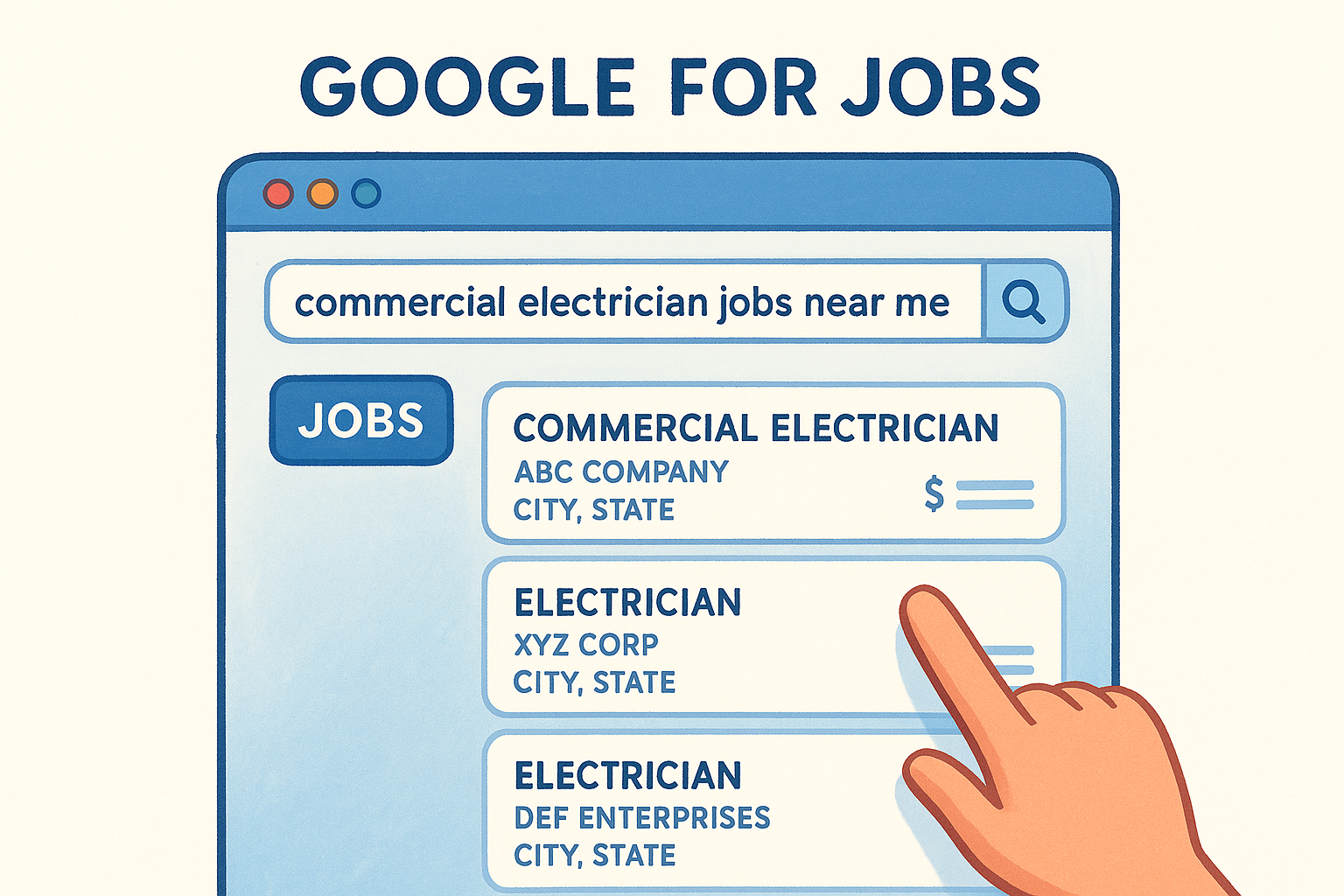
Google for Jobs pulls listings from multiple job boards and employer websites into a single panel directly in your search results. When you search commercial electrician jobs near me on Google, the Jobs panel appears near the top of the page and aggregates postings from Indeed, ZipRecruiter, company career pages, and other sources simultaneously.

4. Google for Jobs

What it’s best for

Google for Jobs is best for getting a broad snapshot of current openings across many platforms without logging into each one individually. It saves time by consolidating listings from different sources into one searchable panel.

How to find jobs near you fast

Type "commercial electrician jobs near me" directly into Google. Click the Jobs panel that appears, then filter by date posted and distance. Set the location to your city or zip code to pull the most relevant local results to the top.

What you’ll see in listings

Each listing shows the job title, employer name, location, and salary estimate when available. You can also see which platform is hosting the original posting, so you know exactly where to submit your application.

Google pulls data from multiple sources, which means you often see salary estimates even when the original posting does not include one.

Speed tips for getting responses

  • Set up a job alert directly in Google by clicking "Turn on" within the Jobs panel after running your search.
  • Apply through the original employer’s website when that option appears, since direct applications typically get reviewed faster than those routed through aggregators.

Watch-outs

Google for Jobs is an aggregator, not a job board, so you cannot apply within Google itself. Listings can also remain visible past their actual closing date, so confirm each posting is still active before you invest time in an application.

5. LinkedIn Jobs

LinkedIn Jobs connects you directly with hiring managers and electrical contractors who post commercial openings on the platform. While LinkedIn is often associated with white-collar hiring, facility management companies and large electrical contractors actively post commercial electrician jobs near me and similar trade roles, especially for foremen, supervisors, and project-level positions.

What it’s best for

LinkedIn works best for experienced electricians targeting larger employers, including commercial contractors, property management firms, and industrial facilities. If you hold a master license or are moving into a supervisory role, this platform tends to surface more senior-level openings than most trade-specific boards.

How to find jobs near you fast

Search "commercial electrician" under the Jobs tab, set your location to your city, and filter by "Past 24 hours" to see only the freshest postings. Turn on job alerts to get new listings sent directly to your email the moment employers post them.

What you’ll see in listings

Most listings include pay ranges, required certifications, and employer details, along with the number of applicants who have already applied. That applicant count gives you a real-time read on how competitive each opening is before you commit time to applying.

Applying within the first hour of a listing going live puts you near the top of the applicant list before volume builds up.

Speed tips for getting responses

  • Set your profile to "Open to Work" so recruiters can find you directly.
  • Message the hiring manager on LinkedIn after submitting your application to add a personal touchpoint.

Watch-outs

LinkedIn surfaces a mix of direct hire and staffing agency postings, and some listings lack the certification-specific detail that trade boards provide. Always read the full job description to confirm the role is a true commercial electrician position before applying.

6. IBEW jobs board

The International Brotherhood of Electrical Workers (IBEW) runs its own job board that connects union members with signatory contractors across the country. If you hold a union card and you’re searching for commercial electrician jobs near me, the IBEW board gives you access to positions that rarely show up on general job sites.

What it’s best for

The IBEW board works best for union-affiliated electricians who hold active membership in a local union. Most listings come from signatory contractors, meaning employers who have agreed to union wages, benefits, and working conditions, so the quality of postings here is consistently high.

How to find jobs near you fast

Visit the IBEW’s official website and navigate to the job board section. Filter by your local union number or state to pull listings for your area. New openings appear as contractors report work availability, so checking back every few days keeps your search current without much effort.

What you’ll see in listings

Listings typically include job classification, location, and the local union jurisdiction covering the work. Pay rates follow the union scale for that jurisdiction, so you already know the wage structure before you contact anyone.

Union scale wages are set through collective bargaining, which means the pay on IBEW listings reflects the full negotiated rate for your classification without any guesswork.

Speed tips for getting responses

  • Contact your local union hall directly after spotting a listing, since dispatchers control placements.
  • Keep your dues and certifications current so you stay dispatch-eligible without delays.

Watch-outs

The IBEW board is limited to union work, so non-union electricians won’t find opportunities here. Coverage also depends on how active your local is, with some locals updating the board regularly and others doing so infrequently.

7. PeopleReady Skilled Trades

PeopleReady Skilled Trades is a staffing agency that specializes in placing tradespeople with contractors and facility operators across the country. If you need commercial electrician jobs near me with fast placement, this agency connects you directly with employers who need workers on short notice.

What it’s best for

PeopleReady Skilled Trades works best for electricians who want immediate or short-term placements while keeping options open for permanent work. The agency serves commercial contractors, industrial facilities, and property management companies, all of which regularly need licensed electricians on a contract or temp-to-hire basis.

How to find jobs near you fast

Visit the PeopleReady website and search by your trade and zip code to see active local placements. You can also walk into a branch office near you to speak with a recruiter directly, which often speeds up the placement process significantly.

What you’ll see in listings

Listings through PeopleReady typically show pay rate, shift schedule, and project location. Because PeopleReady manages the employment relationship, you work under their payroll rather than the end client’s directly.

Temp-to-hire placements through staffing agencies can turn into full-time offers if you perform well, so treat every contract role as a working interview.

Speed tips for getting responses

  • Complete your skills assessment and documentation upfront so recruiters can place you without delays.
  • Tell your recruiter you are available immediately to get prioritized for urgent openings.

Watch-outs

Pay rates through staffing agencies can run lower than direct-hire positions since the agency takes a margin. Always clarify whether a role is contract-only or has a path to permanent hire before you accept an assignment.

8. Aerotek

Aerotek is a large staffing and recruiting firm with a dedicated trades division that places electricians with commercial contractors, industrial facilities, and construction companies. If you’re searching for commercial electrician jobs near me through a recruiter with national reach, Aerotek’s scale means active placements exist across most US markets at any given time.

What it’s best for

Aerotek works best for journeyman and master electricians who want recruiter-assisted placement rather than managing their own applications. The firm serves large commercial contractors and industrial clients, so roles here tend to involve bigger project scopes and longer contract terms than smaller agencies typically handle.

How to find jobs near you fast

Search for "commercial electrician" on Aerotek’s website and filter by your city or zip code. Calling a local branch directly often moves faster than applying online, since recruiters can match you to unpublished openings immediately.

What you’ll see in listings

Listings typically show pay rate, project type, and shift details. Some postings clarify whether the role is contract, contract-to-hire, or direct placement, so you know the employment structure before committing.

Contract-to-hire roles through Aerotek can become permanent positions, so treat every assignment as an extended interview with the end client.

Speed tips for getting responses

  • Submit your license documentation and resume before your recruiter call so placement moves without delays.
  • State your earliest available start date upfront to get prioritized for urgent openings.

Watch-outs

Aerotek places workers across multiple industries, so not every recruiter carries deep electrical trade knowledge. Always confirm your recruiter understands journeyman versus master license distinctions for the roles they present to you.

9. Road Dog Jobs

Road Dog Jobs is a niche job board built for traveling tradespeople willing to work away from home. If you’re open to relocating temporarily for better pay or project opportunities, this platform surfaces commercial electrician jobs near me and beyond that general boards rarely showcase.

What it’s best for

Road Dog Jobs works best for electricians who want per diem work or higher-paying commercial contracts in markets outside their home area. Employers posting here typically offer travel compensation, housing allowances, or per diem rates on top of base pay because they’re recruiting workers who have to leave home to fill the role.

How to find jobs near you fast

Search by your trade and preferred travel radius on the Road Dog Jobs site to pull relevant listings. Setting a wider radius intentionally is the point here, since the platform rewards flexibility with access to higher-paying opportunities.

Traveling electricians often earn significantly more per hour than local-only candidates because employers pay a premium to attract workers willing to relocate.

What you’ll see in listings

Most postings include pay rate, per diem details, and project duration, giving you a clear picture of total compensation before you apply. Expect to see contract lengths ranging from a few weeks to several months depending on the employer’s project scope.

Speed tips for getting responses

  • State your earliest available start date clearly in every application.
  • Confirm your travel and lodging flexibility upfront so employers prioritize your profile.

Watch-outs

Road Dog Jobs has a smaller listing volume than major boards, so check back regularly for new postings rather than relying on a single search.

10. USAJOBS

USAJOBS is the federal government’s official job board, listing commercial electrician positions with agencies that maintain military bases, federal buildings, and large government facilities. If you’re searching for commercial electrician jobs near me with stable long-term income and a full benefits package, this platform is worth adding to your search routine.

10. USAJOBS

What it’s best for

USAJOBS works best for electricians targeting stable government employment with structured pay scales and strong benefits. Federal agencies including the Department of Defense and the Department of Veterans Affairs post commercial electrician roles on a regular basis.

  • Full health insurance, pension, and paid leave
  • Publicly posted, predictable pay scales by grade level

How to find jobs near you fast

Go to usajobs.gov, type "electrician" in the keyword field, and filter by your state or city. Use the occupational series code "WG-2805" to narrow results directly to federal electrician roles and skip unrelated postings entirely.

What you’ll see in listings

Federal postings follow a standardized format that includes pay grade, required certifications, duties, and a firm application closing date on every listing.

Federal pay scales are public, so you can calculate your exact pay range before applying without any guessing or negotiating.

Speed tips for getting responses

Complete your USAJOBS profile fully before submitting applications, since federal screening systems score your application based on how precisely it matches the stated requirements.

  • List all licenses and certifications explicitly in your profile
  • Submit well before the closing date, since the system locks out late applications automatically

Watch-outs

Federal hiring moves considerably slower than private sector hiring, often spanning several weeks to several months from application to offer. Keep applying to other positions while you wait rather than putting your search on hold.

11. State workforce job banks

Every US state runs a publicly funded job board through its workforce development agency, and these sites regularly carry commercial electrician jobs near me posted by local contractors and employers who skip the national platforms entirely. Because state agencies often partner with employers on hiring incentives, you find listings here that appear nowhere else.

What it’s best for

State workforce job banks work best for electricians targeting local employers who hire within a specific region. These boards serve small to mid-sized contractors that lack the recruiting budget for major job boards but still need licensed tradespeople consistently.

How to find jobs near you fast

Visit your state’s workforce agency website and search for "electrician" or "commercial electrician" filtered by your county or city. Most states connect their listings to the CareerOneStop system at careeronestop.org, which lets you search across multiple state databases from one place.

CareerOneStop is sponsored by the US Department of Labor, making it a reliable and regularly updated starting point for localized trade searches.

What you’ll see in listings

Listings vary by state, but most include the employer name, pay range, and job location. Some states display certification requirements directly in search results, while others require you to open the full posting.

Speed tips for getting responses

  • Create a profile on your state’s workforce site so employers can find you directly.
  • Apply on the same day a listing posts, since smaller employers fill roles quickly without extended review cycles.

Watch-outs

Listing volume varies significantly by state, and some boards update less frequently than national platforms. Cross-reference your state board with other sources rather than relying on it as your only search method.

commercial electrician jobs near me infographic

Next Steps

You now have 11 concrete places to search for commercial electrician jobs near me, each with a different strength depending on your license level, location, and how fast you need to move. The most effective approach is to work several of these sources at the same time rather than exhausting one before trying another. Set up job alerts on two or three platforms, apply the same day listings go live, and keep your credentials clearly stated on every application you submit.

Your best starting point is a board built specifically for your trade. Blue Collar Jobs lists commercial electrician openings organized by state and experience level, so you spend your time on relevant positions instead of filtering out irrelevant noise. Every listing shows the salary range and certification requirements upfront, which saves you significant time. Search commercial electrician jobs on Blue Collar Jobs and apply to the roles that match your license before the day is out.

Hospital HVAC Jobs: How to Find Openings & Pay Info Near You

Hospital HVAC Jobs: How to Find Openings & Pay Info Near You

Hospitals run 24/7, and so do their HVAC systems. Operating rooms need precise temperature control. Pharmacies require strict humidity levels. Isolation rooms depend on negative air pressure to prevent contamination. When any of that fails, patient safety is on the line, which is exactly why hospital HVAC jobs pay more and offer stronger job security than most other HVAC roles in the field.

If you’re an HVAC technician or mechanic looking to move into healthcare facilities, you’re probably wondering what the pay looks like, what certifications you need, and where to actually find these openings. Good news: hospital HVAC positions are growing, and facilities across the country are actively hiring. The challenge is knowing where to look and how to stand out as a candidate.

That’s what this guide covers, and it’s exactly the kind of specialized trade work we focus on here at bluecollarjobs. We’ll walk you through real salary data, required qualifications, what the day-to-day work looks like, and how to land a hospital HVAC role near you. Whether you’re a journeyman ready to specialize or an apprentice planning your next move, this guide gives you a clear path forward.

What hospital HVAC jobs include

Hospital HVAC technicians do more than fix broken equipment. You’re responsible for maintaining the environmental conditions that keep patients alive and staff safe. That means working across a wide range of systems under strict operational requirements that don’t apply in most other commercial buildings. Understanding the full scope of this work is the first step to deciding whether hospital HVAC jobs are the right move for your career.

The systems you’ll maintain

A typical hospital runs a complex mix of mechanical systems, and you’ll be expected to know your way around most of them. Air handling units (AHUs) are the backbone of hospital HVAC, distributing conditioned air throughout each wing and department. Beyond those, you’ll also work with chillers, boilers, cooling towers, variable air volume (VAV) boxes, and direct digital controls (DDC) that monitor and automate building performance in real time.

The systems you'll maintain

Here’s a breakdown of the core systems you’ll encounter in a typical hospital setting:

  • Air handling units (AHUs): Regulate temperature, humidity, and filtration across departments
  • Chillers and cooling towers: Handle large-scale cooling loads, especially in surgical suites and server rooms
  • Boilers: Provide heat and hot water throughout the facility
  • VAV boxes: Control airflow volume to individual zones and rooms
  • DDC/BAS systems: Building automation systems that let you monitor and adjust conditions remotely
  • Exhaust and pressurization systems: Maintain negative or positive pressure in isolation rooms, operating rooms, and lab spaces

Regulatory standards that govern your work

Working in a hospital means your output is subject to regulations that carry real consequences if ignored. ASHRAE Standard 170 sets the minimum ventilation requirements for healthcare facilities, covering everything from air change rates per hour to filtration efficiency ratings. Hospitals also follow guidelines from the Joint Commission, which conducts regular facility inspections and can pull accreditation if mechanical systems fall short of standards.

ASHRAE 170 and Joint Commission standards aren’t optional guidelines; they’re the rules your work will be measured against every time an inspection happens.

You’ll also run into requirements from the Centers for Medicare and Medicaid Services (CMS) and local building codes that add another layer of compliance to your daily work. Knowing that an operating room requires a minimum of 20 air changes per hour, or that a positive-pressure room requires HEPA-level filtration, signals to employers that you’re already thinking at their level. Learning these standards before you apply is one of the fastest ways to separate yourself from other candidates.

How hospital HVAC differs from commercial work

Commercial HVAC work has downtime built in. You can shut down a system in an office building overnight, run your maintenance, and finish before anyone arrives the next morning. Hospitals never go offline, which means you’re often performing repairs and preventive maintenance on live systems without disrupting patient care. That requires a higher level of planning, direct coordination with nursing staff, and strong situational awareness on every job.

Infection control procedures add another layer that separates hospital work from everything else. Any time you open a ceiling, cut into ductwork, or disturb a space near a patient care area, you may be required to set up an infection control risk assessment (ICRA) barrier. These aren’t bureaucratic formalities. They protect immunocompromised patients from mold spores and airborne debris that could cause serious illness or death. If you haven’t worked under ICRA protocols before, expect formal training on this process during your hospital onboarding period.

Typical titles and what they pay

Before you start applying for hospital HVAC jobs, you need to know what titles to search for. Hospitals don’t always use the same terminology as commercial contractors, and if you search only for "HVAC technician," you’ll miss a large portion of open roles. Knowing the correct titles and their pay ranges helps you search smarter and negotiate from a stronger position.

Common job titles in healthcare HVAC

Facilities departments across hospitals and health systems use a range of titles depending on their size and structure. The most common ones you’ll encounter on job boards and hospital careers pages include:

Job Title Common Abbreviation Typical Focus
HVAC Technician HVAC Tech General maintenance and repair
HVAC Mechanic N/A Mechanical systems and equipment
Stationary Engineer SE Boilers, chillers, and central plant
Building Engineer BE Full facility systems oversight
Facilities Maintenance Technician FMT Multi-trade support including HVAC
HVAC Controls Technician Controls Tech DDC and building automation systems
Chief Engineer N/A Supervises all facilities staff

If a posting says "Building Engineer" or "Stationary Engineer," it almost always requires HVAC experience, even when the title doesn’t say so directly.

Larger health systems like university hospitals or multi-campus networks often post roles under a facilities or plant operations department, so filter your search by department when the platform allows it.

Pay ranges by title and experience

Pay in hospital HVAC scales based on your experience level, license type, and the size of the facility. Union hospitals in high-cost metro areas tend to pay at the top of these ranges, while smaller regional hospitals may land in the middle. Here’s a realistic breakdown based on current market data:

Pay ranges by title and experience

Title Entry-Level Mid-Career Senior/Lead
HVAC Technician $22 – $28/hr $28 – $38/hr $38 – $48/hr
HVAC Controls Technician $28 – $35/hr $35 – $48/hr $48 – $60/hr
Stationary Engineer $30 – $40/hr $40 – $52/hr $52 – $65/hr
Building Engineer $32 – $42/hr $42 – $55/hr $55 – $70/hr
Chief Engineer N/A $75,000/yr $95,000 – $120,000/yr

Your certifications and specialty knowledge directly move you up these ranges. A journeyman who also holds EPA 608, a CFC license, and experience with building automation systems can negotiate well above the mid-career median. When you’re reviewing postings, pay close attention to whether the salary listed is for a 40-hour week or includes overtime, since many hospital roles offer significant overtime pay on top of the base rate.

Credentials hospitals look for

Hospitals screen HVAC candidates more carefully than most commercial employers because the stakes are higher. Before you apply for hospital HVAC jobs, you need to know exactly what credentials will move your application forward and which gaps could hold you back. Getting this right before you apply saves time and helps you target roles where you’re already competitive.

Licenses and certifications that matter most

Your EPA 608 Universal certification is the baseline requirement for nearly every hospital HVAC role. Without it, most facilities departments won’t look at your application. Beyond 608, hospitals prioritize candidates who hold a Journeyman or Master HVAC license issued by their state, since healthcare facilities carry regulatory liability and need technicians who can legally sign off on system work.

If your state license is expired or inactive, renew it before you apply. Hospitals run background and license verification checks, and an expired credential can disqualify you even when your skills are solid.

Here’s a breakdown of the credentials that come up most frequently in hospital HVAC postings:

Credential Why Hospitals Want It
EPA 608 Universal Required to handle refrigerants legally
State HVAC Journeyman or Master License Regulatory compliance and liability coverage
OSHA 10 or OSHA 30 Workplace safety competency
Building Operator Certification (BOC) Demonstrates facility management knowledge
Stationary Engineer License Often required for central plant or boiler roles
ASHRAE 170 Familiarity Knowledge of healthcare ventilation standards

Experience and skills that set you apart

Technical certifications open doors, but your hands-on experience determines how far you go in the hiring process. Hospitals look specifically for candidates who have worked on building automation systems (BAS) or direct digital controls, since most large facilities rely on these platforms to monitor critical spaces around the clock. If you’ve worked with Johnson Controls Metasys, Siemens Desigo, or Honeywell systems, list those by name on your resume.

Facilities managers also prioritize technicians who have preventive maintenance experience with AHUs, chillers, and VAV systems. General repair experience is valuable, but PM experience tells a hospital that you understand their compliance-driven maintenance schedules. If you’ve worked in a commercial building with strict uptime requirements, frame that experience in terms of the systems you maintained and the schedules you followed, not just the repairs you made.

Build your target list of employers

Most people searching for hospital HVAC jobs start on a job board and wait for results to come to them. A smarter approach is to build a list of target employers first, then monitor those specific organizations for openings. This gives you control over your search and lets you prepare for each facility before a role even appears.

Where to find hospitals and health systems near you

Your first step is mapping out every major healthcare employer within a reasonable commute. Start with the American Hospital Association’s hospital directory, which lists facilities by state and city. You can also search your state’s department of health website for licensed hospital facilities in your area. Large health systems like HCA Healthcare, CommonSpirit Health, and Ascension each operate dozens of campuses across the country, so one system could represent multiple job opportunities within a single region.

Where to find hospitals and health systems near you

Use this format to track what you find:

Facility Name System/Network Location Bed Count Careers Page URL
St. Mary’s Medical Center CommonSpirit Health Phoenix, AZ 350 careers.commonspirit.org
Regional Medical Center HCA Healthcare Dallas, TX 500 hcahealthcarecareers.com
University Hospital Standalone Columbus, OH 800 [facility careers URL]

Bed count matters because larger hospitals run more complex mechanical systems and hire more facilities staff. A 500-bed hospital is far more likely to have dedicated HVAC technicians on payroll than a 100-bed community facility that outsources maintenance.

How to research each facility before you apply

Once you have your list, spend 10 to 15 minutes researching each facility. Check their Joint Commission accreditation status at qualitcheck.jointcommission.org, since accredited hospitals operate under stricter environmental standards and tend to hire more qualified trades staff. Look at their careers page to see how frequently they post facilities roles, which tells you how often their team turns over or grows.

A hospital that posts multiple facilities roles every few months is either expanding or struggling with retention. Both create real opportunities for the right candidate.

You should also check LinkedIn company pages for each facility to see how large their engineering and facilities departments are. If a hospital lists 20 or more people in facilities operations, they run a serious in-house team. That’s the kind of employer who invests in their technicians, offers structured advancement, and posts regularly when roles open up.

Search smarter with filters and alerts

Browsing job boards without a system wastes time and causes you to miss strong openings. When you search for hospital HVAC jobs, the platform you use and the filters you apply directly determine the quality of results you see. Spending 20 minutes building a structured search process now pays off every week without additional effort on your part.

Choose filters that match hospital roles

General job boards like Indeed or LinkedIn let you filter by job title, location, and industry, but most people stop there. Start by setting your industry filter to "Healthcare" or "Hospitals and Health Systems" to cut out commercial HVAC results that don’t fit your target. Then filter by experience level to match your license and background. A journeyman with eight years of commercial work belongs in mid-level or senior filters, not entry-level, since those roles pull lower pay and involve simpler systems.

Use the keyword field strategically. Instead of searching only "HVAC technician," run separate searches for each title listed in the earlier section of this guide. Try "building engineer," "stationary engineer," and "facilities maintenance technician" as individual searches within the healthcare industry filter. This approach surfaces roles that a single broad search would consistently bury.

Running five targeted searches takes ten extra minutes upfront and returns far better results than one broad search repeated daily.

Build job alerts that run automatically

Most major job boards let you save a search and receive email notifications when new postings match your criteria. Set up a separate alert for each title you’re targeting so you receive updates within 24 hours of a new posting going live. Responding to a hospital facilities role within the first 48 hours of it being posted puts your application ahead of the majority of submissions.

Here’s a simple alert setup template you can apply on most platforms:

Alert Name Search Term Location Radius Industry Filter Frequency
Hospital HVAC Tech "HVAC Technician" 30 miles Healthcare Daily
Building Engineer "Building Engineer" 30 miles Healthcare Daily
Stationary Engineer "Stationary Engineer" 50 miles Healthcare Daily
Controls Tech "HVAC Controls" 50 miles Healthcare Daily

Check your alerts folder at least three times per week and clear out stale listings that no longer match your targets. Keeping your alert list clean lets you act fast on roles that fit your actual experience and license level, rather than sifting through mismatched results every time you log in.

Read postings like a facilities engineer

Most people read a job posting to find the title, pay, and apply button. A facilities engineer reads a posting to extract information about the facility’s systems, compliance culture, and what the day-to-day role actually demands. When you apply for hospital HVAC jobs, the language in a posting tells you far more than the bullet points suggest on the surface.

Decode the requirements section

Hospitals write requirements sections based on their actual operational needs, not generic templates. When a posting lists "ASHRAE 170 compliance experience" or "familiarity with infection control protocols", that signals the facility runs a tightly regulated environment and expects you to hit the ground running. A posting that only lists generic certifications like EPA 608 with no mention of healthcare-specific standards often means the facilities department is smaller or less structured.

Pay close attention to the systems listed in the technical requirements. If a posting mentions Johnson Controls, Siemens, or Trane by name, the facility runs those specific platforms and wants someone who can navigate them without a lengthy onboarding period. Write those systems down and be ready to speak to your experience with each one during the interview.

The systems a hospital names in a posting are the systems they’re actively struggling to staff, which gives you leverage if your background matches.

Identify shift expectations and on-call language

Shift structure and on-call requirements affect your quality of life more than almost anything else in a hospital HVAC role, and most postings bury this information in the final paragraph. Look for phrases like "rotating shifts," "on-call availability," or "weekend coverage required" to understand the real schedule before you apply. A 12-hour rotating shift looks very different from a standard day shift with occasional on-call, even when both appear under the same title and pay range.

Use this checklist when reviewing any hospital HVAC posting:

  • Does the posting name specific systems (BAS, chillers, AHUs)?
  • Is a state HVAC license explicitly required or just preferred?
  • Does it reference Joint Commission, CMS, or ASHRAE standards?
  • What shift structure does it describe, and is on-call listed?
  • Does it separate "required" qualifications from "preferred" ones?

Working through this checklist on every posting takes less than three minutes and immediately tells you whether the role matches your license level, system experience, and schedule availability before you invest time in a full application.

Apply with a hospital-ready resume

A generic HVAC resume won’t get you far when you’re targeting hospital HVAC jobs. Facilities managers at hospitals screen applications looking for specific systems experience, compliance knowledge, and licensed credentials, and your resume needs to surface that information immediately. Treat your resume as a technical document, not a career summary.

Lead with healthcare-relevant experience

Place a skills and systems section at the top of your resume, directly below your contact information. List specific platforms by brand name: Johnson Controls Metasys, Trane Tracer, Siemens Desigo, Honeywell. Include every relevant certification on its own line, and note your EPA 608 Universal, state license level, and any OSHA credentials before a hiring manager reads a single bullet point about your work history.

Facilities managers spend less than 30 seconds on an initial resume scan, so the top third of your document determines whether they read the rest.

When you describe past roles, frame each bullet around systems maintained and compliance standards followed, not just tasks completed. Instead of writing "repaired AHUs," write "performed preventive maintenance on 12 AHUs per ASHRAE 170 ventilation schedules in a 300,000 sq ft commercial facility." That phrasing tells a hospital reviewer exactly how your background maps onto their operation.

Use a resume template built for facilities roles

Structure your resume in this order to match what healthcare facilities departments expect to see:

Use a resume template built for facilities roles

[Full Name]
[Phone] | [Email] | [City, State]

CERTIFICATIONS & LICENSES
- EPA 608 Universal
- [State] HVAC Journeyman License #[Number]
- OSHA 10 / OSHA 30
- [Any BAS certifications]

SYSTEMS EXPERIENCE
- Air Handling Units (AHUs), Chillers, Cooling Towers
- VAV Systems, Boilers
- DDC/BAS: [Specific platforms by brand]
- Infection Control (ICRA) Protocols

WORK EXPERIENCE
[Title] | [Employer] | [Dates]
- [Systems maintained + scale of facility]
- [Compliance standards followed]
- [Specific outcomes or uptime metrics]

EDUCATION & TRAINING
[Apprenticeship program or trade school, year completed]

Keep your resume to one or two pages maximum, and tailor the systems and certifications section to reflect what each posting specifically calls out. If a facility lists Trane or Siemens by name, those platforms should appear prominently in your resume for that application. Generic resumes get filtered out; targeted ones get interviews.

Interview and prove you can work in healthcare

Hospital interviews for HVAC positions go deeper than standard trade interviews. Facilities managers want to know you can handle live systems under pressure, work around patients, and follow compliance protocols from your first week on the job. Going in without preparation for healthcare-specific questions will cost you the role even if your technical skills are strong.

Prepare for technical and compliance questions

Expect the interviewer to ask you directly about ASHRAE 170 standards, pressurization requirements, and filtration ratings. If you can’t answer what air change rates are required in an operating room, or why an isolation room runs negative pressure, that gap signals you haven’t worked in a regulated healthcare environment. Study those specifics before your interview so you can answer confidently without hesitation.

Here are common technical questions asked in hospital hvac jobs interviews, along with the core points your answers should cover:

Question Key Points to Cover
"How do you handle a failed AHU in a surgical suite?" Notify charge nurse, notify engineering supervisor, confirm backup system status, document
"What’s your experience with ICRA protocols?" Barrier setup, dust containment, coordination with infection control team
"How do you maintain pressurization in an isolation room?" Monitor differential pressure gauges, inspect seals, verify exhaust vs. supply balance
"Have you worked with DDC or BAS systems?" Name the specific platform, describe what you monitored and adjusted

Naming the exact BAS platform you’ve worked on and describing a real situation where you caught an issue through the system tells an interviewer more than a generic answer ever will.

Show you understand the healthcare environment

Beyond technical knowledge, hospital facilities managers want to see that you understand what it means to work around patients. Bring up ICRA barriers unprompted. Mention that you know to coordinate with nursing staff before opening ceilings near patient rooms. These details show situational awareness that most commercial technicians don’t have walking in.

Your communication style also matters in a healthcare interview. Hospitals run on coordination between departments, and a facilities technician who can clearly explain a system issue to a non-technical nurse manager is far more valuable than one who can’t. Practice explaining a mechanical problem in plain language before your interview. Walk in ready to demonstrate that you’re technically sharp, compliance-aware, and easy to work alongside in a high-stakes environment.

Negotiate pay, shift, and benefits

Getting an offer for a hospital HVAC job doesn’t mean the first number on the table is the final one. Hospitals, especially large health systems, have more flexibility in compensation than most hiring managers let on during the initial offer conversation. Knowing what to push on, and how to frame it, puts more money in your pocket from day one.

Know your number before the conversation

Before you respond to any offer, look up current market rates for your title and region using the Bureau of Labor Statistics Occupational Employment and Wage Statistics database at bls.gov. Cross-reference that data with the pay ranges from postings you’ve collected during your search. Walk into the negotiation with a specific target number backed by data, not a range. Giving a range signals that you’ll accept the lower end.

Your EPA 608 Universal license, state journeyman or master credentials, and any BAS platform experience each carry real market value. If the offer doesn’t reflect those qualifications, say so directly. A simple script that works:

"Based on my journeyman license, eight years of AHU and chiller experience, and familiarity with [specific BAS platform], I was expecting something closer to $X. Is there room to move in that direction?"

Push back on shift and on-call terms

Shift structure and on-call compensation deserve as much attention as your hourly rate. Some hospital HVAC roles list rotating shifts or weekend coverage without specifying what the on-call pay rate looks like. Ask for that number explicitly before you sign anything. If the shift rotation is non-negotiable, you still have room to negotiate differential pay for overnight or weekend hours, which many facilities offer but don’t volunteer upfront.

If you prefer a day shift and the facility posts a rotating role, ask whether seniority-based shift selection applies after your first year. Many hospital facilities departments allow senior technicians to select preferred shifts as openings occur, which gives you a concrete timeline for getting to a schedule that works for you.

Benefits worth negotiating beyond base pay

Healthcare facilities typically offer strong benefits packages, but not every item is fixed. Use this checklist to identify what’s negotiable before you accept:

  • Tool and uniform allowances: Some facilities cover these; others don’t unless you ask
  • Tuition reimbursement: Many hospital systems fund trade certifications and continuing education
  • Signing bonus: More common in markets with HVAC technician shortages
  • Licensure renewal reimbursement: Ask if the facility covers your state license renewal fees
  • Paid on-call hours: Clarify whether on-call time is paid even when you aren’t called in

Document any verbal commitments in writing before your start date.

Start strong in your first 90 days

Landing one of the better hospital HVAC jobs in your area is only half the work. Your first 90 days determine whether you build a long career at that facility or find yourself looking for the next opportunity inside a year. Hospitals move fast, hold technicians to strict compliance standards from the start, and form opinions about new hires quickly. Use the structure below to show up prepared, earn trust early, and set yourself up for advancement.

Learn the systems before you need to fix them

Your first priority is understanding the facility’s specific equipment before an emergency forces you to figure it out under pressure. Ask your supervisor for access to mechanical drawings, equipment schedules, and the BAS platform during your first week, not your second month. Walk every mechanical room, air handling unit, and chase in the building with a notebook and document what you see. Learning the layout of a hospital’s mechanical infrastructure before something breaks is what separates technicians who react from technicians who lead.

Use this simple tracking format in your notebook or phone notes as you walk the building:

Location: [Floor / Wing]
Equipment Type: [AHU / Chiller / Boiler / VAV]
Equipment ID: [Tag number from equipment]
BAS Point Name: [How it appears in the control system]
Last PM Date: [If visible on equipment log]
Notes: [Anything unusual you observe]

Technicians who map the building in their first two weeks become the person everyone calls when something goes wrong at 2 a.m.

Build relationships with nursing and facilities staff

Clinical staff and facilities coordinators are your daily working partners, and how you show up in those relationships affects your job more than most technical skills do. Introduce yourself to charge nurses on the units you support. Learn which areas are highest priority for temperature and pressure control, and let those nurses know you’re the person to call if something feels off. That relationship creates goodwill and gives you early warning on system issues before they escalate to formal complaints.

On the facilities side, find out how work orders are submitted and prioritized in your department’s system. Whether your facility uses IBM Maximo, Accruent, or a simpler platform, processing your work orders accurately and on time shows your supervisor that you’re reliable and organized, which matters during every performance review cycle.

Track your accomplishments from week one

Keep a running log of every preventive maintenance task completed, system issue resolved, and compliance action documented starting on day one. This log becomes your evidence base when you request a pay increase or promotion at your six-month or one-year review. A short weekly entry in a notes app is enough: date, equipment worked on, action taken, outcome. Facilities managers and chief engineers who see candidates with documented results rather than vague claims consistently promote those people faster.

hospital hvac jobs infographic

Next steps

You now have everything you need to find and land hospital HVAC jobs near you. You know which titles to search, what pay to expect, which credentials move applications forward, and how to negotiate once an offer lands. The path from your current position to a healthcare facilities role is clear: build your target employer list, set up your search alerts, tailor your resume to each posting, and walk into every interview ready to speak to compliance standards and specific systems.

Start with three concrete actions this week. Map out every hospital and health system within your commute range, set up daily job alerts for each title covered in this guide, and update your resume to lead with your certifications and systems experience. The demand for qualified technicians in healthcare is strong right now. Browse open trade roles on bluecollarjobs.com and apply to the ones that match your license level and target facilities.

10 Indeed Plumbing Jobs Tips To Find Local Work Fast In 2026

10 Indeed Plumbing Jobs Tips To Find Local Work Fast In 2026

If you’ve been scrolling through indeed plumbing jobs listings lately, you already know the situation: hundreds of posts, half of them outdated, and a lot of noise from unrelated roles. Indeed is massive, and that’s both its strength and its biggest problem. Finding local plumbing work that actually matches your skill level, pay expectations, and certifications can eat up hours you don’t have.

Here’s the thing, the plumbing trade is hiring aggressively right now. The Bureau of Labor Statistics projects steady demand through the decade, and contractors across the country are competing for licensed plumbers. The jobs are out there. But the way most people search for them is broken. They type a keyword, pick a city, and hope for the best. That approach leaves quality opportunities buried under sponsored posts and stale listings.

That’s exactly why we built bluecollarjobs.com, a job board made specifically for skilled trades like plumbing, HVAC, and electrical work. We cut the white-collar clutter and let you filter by trade, experience level, and location from the start. But whether you’re using Indeed, our platform, or both, the tips below will help you work smarter. This article breaks down 10 practical strategies to speed up your plumbing job search, land more interviews, and stop wasting time on listings that go nowhere.

1. Use Blue Collar Jobs alongside Indeed

Indeed aggregates listings from across the web, which means you’re sifting through general labor posts, staffing agency reposts, and white-collar adjacent roles that don’t belong in your search. Running a parallel search on bluecollarjobs.com while you browse indeed plumbing jobs keeps your options wide without wasting your attention on roles that don’t fit the trade. Both platforms have value, but they work differently, and combining them puts you ahead of candidates who rely on just one.

What to do

Open both platforms at the same time. On Blue Collar Jobs, filter by Plumbing under trade category, then set your state or region. On Indeed, use the keyword strategies covered later in this article. Check both feeds daily, especially early in the week when employers tend to post new openings. Save or bookmark any listing worth revisiting so you aren’t re-searching the same ground twice.

Here’s a simple workflow to keep both searches organized:

  • Set your Blue Collar Jobs trade and location filters once, then bookmark the results URL
  • Run your Indeed search with saved alerts (covered in Tip 6)
  • Review new postings on both platforms each morning before 9 AM
  • Apply the same day to any listing that matches your license level and target pay range

Why it speeds up local results

Blue Collar Jobs is built around trade-specific categories and geographic filters, which means listings are already pre-sorted before you touch a single filter. On Indeed, a plumbing search can surface results from counties two hours away or from industries you’ve never worked in. Blue Collar Jobs limits results to what you actually do, which cuts your daily review time significantly.

The less time you spend filtering out irrelevant listings, the more time you spend reading the ones worth applying to.

That speed advantage compounds across a full week of searching. If you’re reviewing 50 listings on Indeed and 20 on Blue Collar Jobs, there’s a strong chance those 20 are higher-quality matches. Fewer listings reviewed with better precision beats more listings reviewed with poor signal every time, especially when you’re trying to land interviews fast.

When to prioritize it over Indeed

Prioritize Blue Collar Jobs when you hold a specific license or certification, like a Journeyman or Master Plumber credential, because those experience-level filters are built directly into the platform. Employers who post there tend to be smaller shops and regional contractors actively seeking licensed tradespeople, not applicants who happened to stumble onto the right search term. If salary transparency matters to you, Blue Collar Jobs prominently displays pay ranges in search results, so you know the range before you click a single listing.

2. Lock in the right job title keywords

The search term you type changes everything. Most plumbers type "plumber" and stop there, which floods your results with unrelated posts, broad labor listings, and roles that require zero trade experience. Choosing precise keywords before you search cuts through that noise and surfaces the listings actually worth your time on indeed plumbing jobs and elsewhere.

What to do

Start by matching your search term to your actual job title or license level. If you hold a Journeyman license, search "journeyman plumber" rather than just "plumber." If you specialize in commercial work, add that word to the query. The more specific your term, the tighter the results, and the less time you spend skipping over posts that don’t apply to you.

The right keyword doesn’t just find more jobs, it finds the right ones faster.

Keyword combos that pull better matches

Some combinations consistently outperform single-word searches. Try pairing your specialty or license level with a work setting to get sharper results.

Keyword Combo Best Use
Journeyman plumber commercial Licensed plumbers targeting commercial contractors
Plumber apprentice helper Entry-level candidates without full licensure
Master plumber foreman Experienced plumbers seeking leadership roles
Service plumber residential Technicians focused on home repair and maintenance
Plumbing estimator Those moving toward office-side or project roles

Mistakes that hide good listings

Typing only a trade name without any qualifier is the most common mistake. It pulls every seniority level into one pile, making it hard to spot relevant roles. Another mistake is using abbreviations or informal terms like "plumbing tech" or "pipe fitter" interchangeably, since employers don’t post consistently. Run multiple searches with different keyword combos rather than assuming one search covers all available postings.

3. Use location radius like a dial, not a default

Indeed defaults to a 25-mile radius, and most job seekers never touch it. That setting works fine in some markets but completely misrepresents what’s available in dense cities or rural regions. Treating the radius as an active variable rather than a fixed starting point gives you real control over the results you see when searching indeed plumbing jobs, and it prevents you from missing solid local opportunities hiding just outside an arbitrary boundary.

What to do

Go into your location filter and manually set the radius before every new search, not just once when you first set up your account. Base it on how far you’re genuinely willing to drive for daily work, not on what seems reasonable from a map. If you’re in a high-density city, a 10-mile radius often returns more results than you can realistically review. If you’re in a rural area, you may need 50 miles just to surface a handful of relevant listings.

Your radius should match your real commute limit, not the platform’s guess at it.

How radius changes job quality and commute

A wide radius pulls in listings that look strong on screen but translate into 90-minute drives each way. That commute adds up fast and can make an otherwise good job unsustainable within months. A tight radius gives you an honest picture of your immediate local market, which helps you decide whether to negotiate harder on pay, look at relocating, or expand your search intentionally rather than by accident.

Quick radius settings for common situations

Use this table as a starting benchmark and adjust based on your actual daily drive tolerance and how active the local market is.

Quick radius settings for common situations

Situation Suggested Radius
Dense urban area (LA, Houston, Chicago) 10-15 miles
Mid-size city or suburb 20-25 miles
Rural or low-density region 40-60 miles
Open to relocation for the right role 100+ miles

4. Filter for the work type you actually want

Not all plumbing work is the same, and a service call in a residential home looks nothing like roughing in pipe on a new commercial build. When you search indeed plumbing jobs without filtering by work type, you end up reading listings that technically match your trade but not your day-to-day reality. Narrowing by work type early saves you from interviewing for jobs that would burn you out in a matter of months.

What to do

Read every listing past the title before you apply. Look for language that tells you what the daily work actually involves, not just what license or certification they want. On Indeed, you can add terms like "service," "commercial," or "new construction" directly into the search bar to pre-filter results before you touch any other setting. Use this quick checklist when reviewing any listing:

  • What type of work dominates the role (repair, install, maintenance)?
  • What is the primary work environment (residential, commercial, industrial)?
  • Does the schedule match your availability (shift work, on-call, standard hours)?

How to separate service, new construction, and maintenance

Each work type attracts a different kind of employer and daily environment. Here’s how to identify them fast using the language in the posting:

How to separate service, new construction, and maintenance

Work Type Key Indicators in the Posting
Service and repair "service calls," "troubleshooting," "residential," "on-call"
New construction "rough-in," "ground-up," "blueprints," "commercial build"
Maintenance "facility," "preventive maintenance," "institutional," "hospital"

Maintenance roles often come with more predictable schedules, while service work typically involves variable call volumes and direct customer contact.

The job title tells you the trade; the job description tells you the actual job.

Red flags in vague job types

Some postings deliberately avoid specifying work type because the employer wants flexibility to move you across multiple sites or roles without committing to one clear description. Watch for listings that use only generic phrases like "all plumbing duties" or "various tasks as assigned" with no breakdown of what the day actually looks like.

If a posting can’t tell you what you’ll be doing, ask directly before you invest time in the application. A real employer with a real role can answer that question without hesitation.

5. Search by license level and experience on purpose

Most plumbers search by trade and location, then sort through whatever comes back. That approach works until you’re a licensed Journeyman reading through apprentice-level listings that pay half what you’re worth. Targeting your license level intentionally in your search terms filters out mismatched roles before they ever reach your screen, saving you real time when browsing indeed plumbing jobs.

What to do

Add your license level or experience tier directly to your search query. Instead of searching "plumber near me," search "journeyman plumber" or "master plumber" depending on where you stand in the trade. Combining your license level with a work type, like "journeyman plumber service" or "master plumber commercial," narrows results even further so the listings you read are actually relevant to what you bring to the table.

Terms that map to apprentice, journeyman, master

Employers don’t always use consistent language, so knowing the common variations helps you catch every relevant listing.

Experience Level Common Terms in Postings
Apprentice / Entry "helper," "apprentice," "trainee," "entry-level plumber"
Journeyman "licensed plumber," "journeyman," "journeyman plumber," "certified plumber"
Master / Senior "master plumber," "lead plumber," "foreman," "plumbing supervisor"

Running separate searches for each variation ensures you don’t miss listings where employers swapped the standard term for something looser.

Check all variations in a single session rather than assuming one search covers the full picture. Employers post inconsistently, and a single keyword sweep rarely captures everything.

How to handle listings with unclear requirements

Some postings skip license requirements entirely and just say "experience required." When that happens, check the pay range first, because compensation usually signals the expected level. A posting offering $35 to $45 per hour likely wants a licensed tradesperson, not a helper. If the listing still isn’t clear, call before applying and ask directly what certification the role requires. That single call saves you from submitting an application that goes nowhere.

6. Set up job alerts that do not spam you

Job alerts sound useful until your inbox fills with 20 irrelevant listings every morning and you start ignoring all of them. Setting alerts correctly on Indeed means you get notified only about postings worth opening, not every tangentially related result that happens to trigger a keyword match.

What to do

Go to Indeed, run your best keyword search for indeed plumbing jobs with your location and radius set exactly as you want them, then save that search as an alert. Set the delivery frequency to daily, not immediately, so you receive one consolidated email instead of individual pings every time a new post goes live. Use this setup checklist before saving any alert:

  • Name each alert after the specific keyword so you know what it covers without opening the email
  • Start with no more than three active alerts to keep your inbox manageable
  • Review and refresh your alert settings every two weeks as your search evolves

Alert settings that catch new local postings fast

Use one alert per keyword combination rather than one broad alert that tries to cover everything. A journeyman plumber in a large metro might run three separate alerts: one for "journeyman plumber commercial," one for "service plumber residential," and one for "licensed plumber." That approach keeps each alert tight and focused without too much overlap across your daily emails.

Specific alerts return specific results; broad alerts return noise.

How to fix irrelevant alerts

If an alert keeps pulling in listings that don’t match your trade or experience level, edit the keyword rather than deleting the alert and starting over. Narrowing the radius by 10 miles often changes result quality significantly. You can also exclude terms on Indeed by adding a minus sign before a word in the search bar before saving, so a Journeyman searching for service roles could add "-helper" to drop entry-level posts from every alert automatically.

7. Apply fast without spraying the same resume everywhere

Speed matters when a strong listing goes up on indeed plumbing jobs, but submitting the exact same resume to every posting without any adjustment is a fast way to get ignored. Employers hiring for skilled trades read dozens of applications, and a generic document that could apply to any shop rarely makes it past the first review. The goal is to move quickly and still make the application feel like it was written for that specific role.

What to do

Pull up the job posting before you open your resume file. Read the full description once to identify the two or three requirements the employer emphasizes most, such as a specific license, a work setting, or a particular skill. Then make one targeted adjustment to your resume summary or skills section that reflects exactly what they called out. That single change takes less than ten minutes and puts your application ahead of the stack of unmodified submissions.

A targeted application that takes 10 minutes beats a generic one that takes 30 seconds, every time.

What to customize in under 10 minutes

Focus your edits on the top third of your resume since that’s what employers read first. Swap one or two bullet points to lead with experience that matches the posting’s priority, whether that’s commercial rough-in, residential service calls, or facility maintenance work. Mirror the language in the posting when describing your skills, because many employers search submitted resumes for specific terms before reading them manually.

Common application mistakes that cost callbacks

Sending a resume with a generic objective statement like "seeking a plumbing position" signals that you didn’t read the posting. Another common problem is leaving out your license type and number, which forces the employer to follow up just to confirm basic qualifications. Both mistakes delay the callback or eliminate you before the phone ever rings.

8. Use the job post to prep for the call back

Most plumbers apply and then mentally move on, treating the callback as a fresh conversation. That’s a missed opportunity. The job post you found through indeed plumbing jobs or any other source is a direct preview of what the employer cares about most, and reading it carefully before the call puts you ahead of every candidate who forgot the details the moment they hit submit. Preparation before the callback is free and fast, and it shows the employer you’re serious without you having to say so directly.

What to do

Screenshot or save every listing you apply to, either as a PDF or in a notes folder on your phone. Employers and recruiters often call within 24 to 48 hours of posting a new role, which means the listing may already be altered or removed by the time your phone rings. Keeping a local copy ensures you can pull up the exact details in seconds rather than scrambling for context while someone waits on the other end of the line.

Details to pull from the posting before you apply

Before you submit anything, extract the specific requirements and work details that tend to surface immediately in a callback. Capture these three areas every time:

Details to pull from the posting before you apply

  • License and certification requirements so you can confirm yours match what they listed
  • Work environment and schedule specifics like shift structure, on-call expectations, or travel
  • Employer type, whether it’s a residential service company, commercial contractor, or facility maintenance team

Knowing the posting cold turns a callback from a surprise into a conversation you already know how to navigate.

What to ask when the employer calls

Use the call to confirm anything the posting left vague, particularly around pay structure and start date. Ask about the first 90 days, including how new hires get onboarded and what tools or materials the company supplies. Those two questions signal that you’re evaluating the role seriously, not just accepting whatever comes first.

9. Validate pay and schedule before you waste time

Pay and schedule problems are the most common reasons a plumber accepts a job only to leave within three months. Before you invest time in interviews, you need to confirm the actual compensation structure and daily schedule match what you’re looking for. Skipping this step on indeed plumbing jobs listings means you can easily spend a week pursuing a role that pays less than your current situation or requires hours that don’t work for your life.

What to do

Look at the pay range and schedule details in the posting before you write a single word of your application. If the listing doesn’t include pay, that’s information too; it usually means the employer wants to anchor the conversation before you set expectations. Make a quick note of the schedule structure, whether the role is standard 40-hour weeks, rotating shifts, or on-call, so you know what you’re walking into before the phone call.

How to read pay ranges, commission, and weekly pay

Pay ranges on job boards often reflect the full possible window, not what a new hire actually starts at. The bottom number is typically your realistic starting point, not the top. Some postings combine hourly pay with commission or performance bonuses, which can look attractive on screen but add income instability depending on call volume or sales targets.

A wide pay range tells you the employer has flexibility; it also means you need to negotiate early rather than hoping the offer lands near the top.

Deal breakers to confirm early

On-call requirements and weekend rotations are the most commonly misunderstood parts of a plumbing role, and they rarely appear in bold on the listing. Confirm overtime expectations, tool allowances, and whether the company provides a vehicle before you spend two hours in an interview for a role that doesn’t fit your situation.

10. Vet listings to avoid scams and dead ends

Not every listing you find when browsing indeed plumbing jobs represents a real job at a real company. Some posts come from staffing agencies that haven’t filled a role in months, others are fabricated to collect personal information, and some are legitimate listings from companies that already hired someone and never removed the post. Knowing how to spot these problems before you apply saves your time and protects your personal information.

Signs a posting is real and staffed by a real shop

A legitimate employer leaves clear signals in the posting itself. The company name is specific, not generic. The description includes actual license requirements, a named service area, and a realistic pay range. Look up the company name before you apply; a real plumbing shop will have a website, a Google Business Profile, or at minimum a verifiable phone number tied to a physical address.

Indicator What It Means
Named company with verifiable address Real employer, not a placeholder post
Specific license requirements listed Employer knows exactly what the role requires
Realistic pay range tied to experience Legitimate offer, not a bait listing
Contact name or direct email included Someone actual is managing the hire

What to do if something feels off

If a listing promises unusually high pay with no clear requirements, treat it as a warning sign. Plumbing pays well, but a post offering significantly more per hour than every comparable listing without asking for any credentials is not a real offer.

A real employer can answer basic questions about the role in under two minutes; one who can’t probably isn’t running a real shop.

Never send personal documents like your Social Security number or banking details through a job platform before you’ve spoken with the employer by phone and confirmed their business exists. If you can’t verify the company after a quick search, skip the listing and move on.

indeed plumbing jobs infographic

Next steps

Searching through indeed plumbing jobs takes discipline, but the 10 tips in this article give you a clear, repeatable system to follow every day. Pick two or three strategies that match your current situation and put them into practice today before moving on to the rest. The plumbers who land interviews fastest are the ones who act immediately on what they find, not the ones who spend another week adjusting their filters without submitting a single application.

Your next move is straightforward. If you want to cut straight to listings built specifically for the trade, browse plumbing jobs on Blue Collar Jobs where every posting is already filtered by trade, experience level, and location before you touch a single setting. No general labor clutter, no vague postings that eat up your morning. The right role is available right now, and you have everything you need to go find it.

What Is a Welding Job? Duties, Pay, And Career Options Today

What Is a Welding Job? Duties, Pay, And Career Options Today

If you’ve ever wondered what is a welding job, the short answer is: it’s a skilled trade career where you join metal parts together using heat, pressure, or both. But that one-liner barely scratches the surface. Welding covers a wide range of roles, from structural work on skyscrapers to underwater pipeline repairs, each with its own set of tools, techniques, and certifications.

Welding is also one of the trades where demand stays consistently strong. Infrastructure projects, manufacturing plants, shipyards, and energy companies all need welders, and many struggle to fill open positions. That gap between supply and demand means solid pay, real job security, and clear paths for advancement for people willing to learn the craft.

In this guide, we break down what welders actually do day-to-day, what you can expect to earn, the different career paths available, and how to get started. Whether you’re exploring your first trade or considering a switch, bluecollarjobs is built to help you find the right fit, we list welding and other skilled trade positions across every U.S. state, so you can move from research to applications in one place.

What a welding job includes

When people ask what is a welding job, they usually expect a simple answer involving a torch and some sparks. The reality is more involved. A welding job requires you to read and interpret technical blueprints and weld symbols, select the right process and materials for the task, and consistently produce joints that meet strict quality standards. You’re not just melting metal together. You’re responsible for structural integrity that can affect buildings, vehicles, pipelines, and more.

Core technical skills

Every welding role expects you to bring a working knowledge of metallurgy and heat control. Different metals behave differently under heat, and welding the wrong way can weaken a joint or warp an entire structure. You need to know how to set up equipment, maintain a steady hand or machine feed, and inspect your own work. Quality control is part of the job, not an afterthought, because welds on critical projects often get tested with X-rays, ultrasound, or pressure checks before anyone signs off.

The ability to read a weld symbol on a blueprint is one of the most underrated skills a welder can have, and employers notice it immediately.

Strong attention to detail and physical endurance are also part of the package. Many welding jobs require you to weld overhead, in tight spaces, or for extended shifts while wearing heavy protective gear.

Welding processes you’ll encounter

Most welding jobs involve one or more of four main processes. Each one suits different materials and applications:

Welding processes you'll encounter

  • MIG (GMAW): Fast, versatile, and common in automotive and manufacturing work
  • TIG (GTAW): Precise and clean, used for stainless steel and aluminum in aerospace or food-grade equipment
  • Stick (SMAW): Reliable outdoors and on structural steel, popular in construction and pipework
  • Flux-Core (FCAW): Similar to MIG but better suited for thicker metals and windy outdoor conditions

Knowing more than one process makes you significantly more competitive when applying for positions. Many employers prefer welders who can switch between methods depending on the project requirements, and that flexibility often leads to higher pay.

Certifications that open doors

Your certifications directly affect which jobs you can apply for and what rate you can command. The American Welding Society (AWS) offers widely recognized credentials, with the Certified Welder (CW) program being one of the most common starting points. From there, you can pursue specialized certs in structural welding or pipe welding, or work toward specific code qualifications like D1.1 for structural steel. Some positions in aerospace or energy require additional qualification testing before you touch a torch on the job.

Daily duties and work settings

Understanding what is a welding job on a daily basis means looking past the certifications and into the actual work. Your shift typically starts with reviewing work orders and blueprints, then gathering the right equipment, protective gear, and consumables for the task ahead. You spend most of your time positioning metal components, running welds, and inspecting your finished joints for flaws before moving on. Cleanup, equipment checks, and logging completed work round out the typical day.

Where welders work

Your work setting depends heavily on your specialty and the type of employer you work for. Manufacturing and fabrication shops offer a more controlled environment with consistent hours, climate-controlled floors, and predictable workflow. Structural and pipeline welders work outdoors on job sites, often dealing with weather, heights, and physically demanding conditions. Shipyard welders frequently work in cramped hull sections or dry docks, while industrial maintenance welders move through plants and facilities repairing equipment on the fly. Travel is common in some pipeline and shutdown roles, where you follow the work across regions for weeks at a time.

The setting you choose affects everything from your daily physical demands to your take-home pay, so it’s worth thinking through before you commit to a specialty.

Physical and safety demands

Welding is physically demanding, and ignoring proper precautions leads to injuries fast. You wear heavy personal protective equipment including a welding helmet, gloves, and flame-resistant clothing throughout your entire shift. Many positions require you to weld in awkward positions, such as overhead, on scaffolding, or inside confined spaces for hours at a time. Following lockout/tagout procedures, ventilation standards, and fire safety protocols is non-negotiable on any serious job site.

Pay, hours, and job outlook

When you ask what is a welding job worth financially, the honest answer is: it depends. Your certifications, specialty, and work setting play a bigger role in your earning potential than almost anything else. Entry-level fabrication and high-demand pipeline roles exist within the same trade but can pay vastly different wages, so understanding that spread before you commit to a path matters.

What welders earn

According to the Bureau of Labor Statistics, the median annual wage for welders, cutters, solderers, and brazers sits around $47,000. That number does not reflect the ceiling. Experienced welders in high-demand sectors regularly earn considerably more depending on their specialty and willingness to travel:

  • Structural welders: $50,000 to $70,000+
  • Pipe welders (energy/industrial): $70,000 to $90,000+ with overtime
  • Entry-level fabrication: $35,000 to $42,000

Certifications in multiple welding processes give you real negotiating leverage when you apply for positions that compete for qualified candidates.

Hours and job outlook

Your schedule depends heavily on the industry you join. Manufacturing and fabrication shops typically offer steady 40-hour weeks with predictable hours and a consistent work environment. Pipeline and shutdown welders, by contrast, often work 50 to 60 hours per week during active projects, which pushes annual income considerably higher through overtime pay. Travel is common in those roles, which suits some workers and rules it out for others.

The long-term outlook for the trade is strong. The Bureau of Labor Statistics projects steady demand through the decade, driven by infrastructure investment and domestic manufacturing. The bigger factor working in your favor is the retirement gap: a large portion of experienced welders are aging out, and the pool of incoming talent has not kept pace. Fewer qualified candidates means more open positions and faster hiring for workers who show up with the right skills and credentials.

Types of welding jobs and specialties

Part of understanding what is a welding job is recognizing that the title covers a wide range of distinct roles. Your specialty determines your work environment, earning potential, and the certifications you’ll need to pursue, so choosing a direction early helps you build the right skill set faster.

Structural and pipeline welding

Structural welders work on buildings, bridges, and heavy equipment, typically using Stick or Flux-Core processes on carbon steel. The work is physically demanding, often outdoors, and requires you to follow strict welding codes like AWS D1.1. Pipeline welders operate in the energy sector, joining sections of oil, gas, or water lines under tight tolerances. These roles frequently involve travel and extended project schedules, which is why they rank among the highest-paying positions in the trade.

Pipeline welding certifications are some of the most valuable credentials you can hold, and they typically require passing a rigorous qualification test before you start any production work.

Manufacturing, fabrication, and specialty roles

Fabrication welders work in shop environments building components from raw metal stock, usually with MIG or TIG processes depending on the material. The hours are consistent and the environment is more controlled than field work, which suits workers who prefer stability over travel. Specialty roles expand the options further:

Manufacturing, fabrication, and specialty roles

  • Aerospace welding: TIG-heavy work on aluminum and titanium with tight quality requirements
  • Underwater welding: Requires commercial diving certification on top of welding qualifications
  • Automotive welding: Focuses on body panels and frames, often in manufacturing plant settings
  • Maintenance welding: Repair-focused work inside industrial plants, refineries, or large facilities

Each path rewards different combinations of skill and certification, so targeting one early gives your training a clear direction.

How to start and move up in welding

Understanding what is a welding job on a practical level includes knowing how to enter the trade and grow within it. Most welders start through a vocational program or community college, where you can earn a welding certificate in six months to a year. These programs cover core processes like MIG and Stick, basic blueprint reading, and safety standards, giving you enough foundation to pass an entry-level qualification test and start working.

Building your entry-level credentials

Your first certification matters more than your first job title. Pursuing an AWS Certified Welder credential gives hiring managers a concrete way to evaluate your skills, and it signals that you’ve been tested against an industry standard. Many employers also hire through apprenticeship programs tied to unions or contractor associations, which pay you while you train and often lead directly to full-time placement.

  • Get certified in at least two welding processes before applying
  • Target entry-level fabrication or maintenance roles to build hours
  • Keep a written log of every process, position, and material you weld

Advancing your career over time

Moving up in welding comes down to adding certifications and accumulating verifiable experience. Once you have a few years in the field, you can pursue pipe welding qualifications, structural codes, or specialty endorsements that push your earning potential considerably higher.

Welders who document their qualifications and keep certifications current consistently land better opportunities faster than those who rely on experience alone.

Beyond field roles, many experienced welders transition into welding inspection, supervision, or quality assurance, which requires additional credentials like the AWS Certified Welding Inspector designation but opens up new responsibilities and higher pay without the same physical demands of daily production work.

what is a welding job infographic

Next steps

Now you have a clear picture of what is a welding job across every level, from entry-level fabrication to high-paying pipeline roles. The trade rewards people who stay certified, build hours across multiple processes, and target specialties that match their schedule and income goals. Your next move is straightforward: get your first certification, identify the specialty that fits your life, and start applying to positions that match your current skill level.

Finding the right role gets easier when you’re looking in the right place. Bluecollarjobs.com lists welding and skilled trade openings across every U.S. state, organized by trade, experience level, and location, so you spend less time sorting through irrelevant listings and more time applying to positions that actually fit. Whether you’re just starting out or looking to move into a higher-paying specialty, browse current welding job listings and take the next step in your trade career today.
How To Find Welding Jobs: 9 Proven Ways To Get Hired Fast

How To Find Welding Jobs: 9 Proven Ways To Get Hired Fast

Welding is one of the most in-demand skilled trades in the country right now, with employers across construction, manufacturing, and energy sectors competing for qualified candidates. Yet knowing how to find welding jobs that match your skill level, certifications, and location isn’t always straightforward. Many welders end up stuck scrolling through generic job boards cluttered with irrelevant listings.

The truth is, landing a solid welding gig comes down to knowing where to look and how to position yourself. Whether you’re a freshly certified welder looking for your first shop position or an experienced pipe welder chasing higher pay, the approach matters. A targeted search beats a scattered one every single time.

That’s exactly why we built bluecollarjobs, to cut through the noise and connect skilled tradespeople with employers who actually need them. In this guide, we’ll walk you through nine proven ways to find welding jobs faster, from leveraging trade-specific job boards to networking strategies that most candidates overlook.

Start with the right welding job target

Most welders jump straight into searching without defining what they actually want. That approach wastes time and often lands you in roles that don’t fit your skill set or pay expectations. Before you learn how to find welding jobs effectively, you need to get specific about your target so every step after this one is pointed in the right direction.

Know your welding process and certification level

Your welding certifications and the processes you’ve mastered are the foundation of your job search. Employers in structural steel aren’t hunting for TIG welders with thin-metal experience, and aerospace shops won’t be satisfied with someone who only runs flux-core. Knowing exactly what you’re certified for narrows your search immediately and helps you filter out listings that won’t pan out.

Process Common Industries Common Certification
MIG (GMAW) Automotive, fabrication AWS D1.1
TIG (GTAW) Aerospace, piping AWS D1.1, ASME Section IX
Stick (SMAW) Construction, pipeline AWS D1.1, API 1104
Flux-Core (FCAW) Shipbuilding, heavy fabrication AWS D1.1

Pick your industry before you search

Different industries offer very different pay scales, work environments, and schedules. Pipeline welding pays some of the highest rates in the trade but demands travel and unpredictable hours. Manufacturing shops offer steady schedules and consistent locations but may pay less per hour than field work. Knowing which environment fits your life makes your search faster and your applications far more focused.

The clearest candidates get hired first. Employers can immediately tell the difference between someone who wants "a welding job" and someone who specifically wants their open pipe welding role.

Your industry target also shapes where you look. Structural and pipeline roles concentrate in states with heavy construction activity like Texas and Louisiana, while manufacturing positions cluster near industrial corridors across the Midwest and Southeast.

Set your non-negotiables before you apply

Write down your minimum acceptable pay rate, your maximum commute or travel tolerance, and your shift preferences before you send a single application. These are not details to work out on an offer call. Knowing your floor in advance keeps you from accepting a role that burns you out within six months.

A simple target sheet keeps you honest throughout your search:

  • Minimum hourly rate: $___
  • Maximum one-way commute: ___ miles (or willing to travel: yes / no)
  • Shift preference: days / nights / rotating
  • Employment type: full-time / contract / both
  • Required certifications you already hold: ___

Build hireable proof fast

Once you know your target, the next step is making sure employers trust you before they meet you. Hireable proof means the combination of documented certifications, verifiable work history, and physical evidence of your welding skills. Knowing how to find welding jobs gets you in the door faster when you arrive with credentials that speak for themselves before you say a word.

Get your certifications documented and current

AWS certifications are the industry standard that most structural, fabrication, and pipeline employers require before they’ll schedule an interview. Your certifications expire, so check your current status before you apply to anything. Showing up with lapsed paperwork kills your chances immediately, even if your actual skill is strong.

Current, documented AWS certification removes one of the biggest hiring objections before the conversation even starts.

Keep these documents ready to send or show at any moment:

  • AWS certification card: carry a physical copy and a digital photo
  • Weld test records: request copies from past employers or testing labs
  • Safety cards: OSHA 10 or OSHA 30 (required on most construction sites)
  • Driver’s license: necessary for most field and pipeline positions

Create a simple welding portfolio

Most welders skip this step, which means doing it puts you ahead of the majority of applicants before the weld test even starts. A portfolio doesn’t need to be complex. Take clear photos of your best welds, note the process and base material for each one, and organize them into a single PDF or a folder on your phone.

Create a simple welding portfolio

Use this basic structure for each entry:

Item Details to include
Weld photo Process, base metal, thickness
Project context Industry, employer (if permitted), year
Certification applied AWS code, test position

Bring this document to every interview and weld test. Employers consistently remember candidates who show up with physical evidence of their work rather than relying on verbal claims alone.

Find welding openings that match your goals

Knowing how to find welding jobs that match your certifications and goals comes down to where you search. Generic job boards mix welding listings with dozens of unrelated skilled trades, making it hard to filter for the specific process, certification level, or industry you want. Starting with trade-focused sources saves you hours of sorting through postings that will never convert into interviews.

Searching on the right platforms from the start cuts your time-to-hire significantly compared to scrolling through general job sites.

Use trade-specific job boards first

Trade-specific job boards surface welding roles sorted by process, experience level, and location without the noise. BlueCollarJobs organizes listings by trade category and state, so you immediately see structural welder roles in Texas or TIG positions in the Southeast rather than a cluttered feed of unrelated listings. When you search on platforms built for skilled trades, your certifications match directly against what employers actually posted.

Use trade-specific job boards first

Keep your search organized with a simple tracking sheet:

Platform Search terms used Date searched Roles found
Trade-specific board "Pipe welder, Texas" 2026-03-24 4
Union job board "Journeyman welder" 2026-03-24 2
Direct employer site "Structural welder" 2026-03-24 1

Tap union halls and contractor networks

Union halls are one of the most underused resources for qualified welders. If you hold a journeyman card, walk into your local Boilermakers, Pipefitters, or Ironworkers hall and check their out-of-work list. Union dispatchers move fast when skilled welders show up in person, and many high-paying field roles never appear on any public job board.

Contractor networks work the same way. Call local fabrication shops and mechanical contractors directly, ask for the foreman or shop supervisor, and lead with your certifications. Many contractors keep internal call lists of welders they contact before they ever post an opening anywhere.
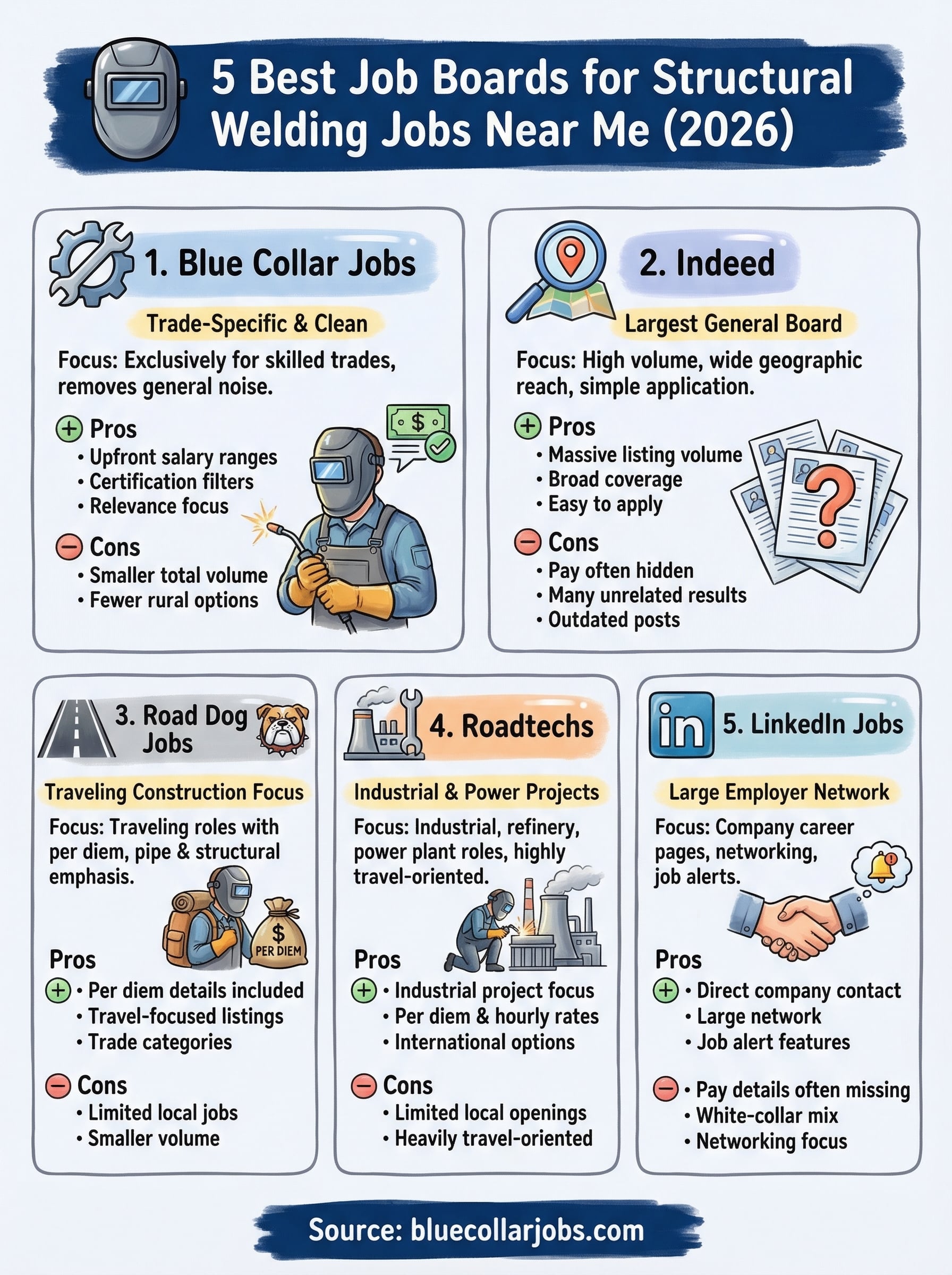
Apply, follow up, and win the weld test

Once you know how to find welding jobs that match your certifications, the way you apply separates you from the stack of resumes that get skipped. A targeted application takes ten minutes longer than a generic one and significantly improves your callback rate.

Write a targeted application for each role

Read the job posting carefully before you apply. Pull out the specific processes, certifications, and experience levels the employer listed, then match your resume language to those exact terms. If the posting says "structural welder with AWS D1.1 certification," your resume should reflect that specific credential and process in plain language, not buried in a general skills list.
Use this short checklist before you submit:

  • Resume includes the exact certifications the job posting requests
  • Work history shows relevant processes (MIG, TIG, Stick, FCAW)
  • Contact info is current and correct
  • Portfolio PDF is attached if the role is in fabrication or specialty work

Follow up within 48 hours

Most applicants never follow up, which means a single phone call or email puts you in a small group of candidates who showed actual interest. Call the shop directly, ask for the hiring manager or foreman, and confirm your application arrived. Keep the message short: your name, the role you applied for, and your top certification.

A brief follow-up call after submitting your application consistently moves qualified welders to the top of the callback list.

Pass the weld test by preparing like it’s a job

Many employers require a weld test before any formal offer. Treat it as seriously as the job itself. Ask in advance what process and position they’ll test, review the relevant AWS code, and run practice welds on similar base material at home or at a local fab shop. Showing up practiced and prepared tells the employer exactly what kind of worker they’re hiring.

how to find welding jobs infographic

You’re ready to get hired

You now have a complete system for how to find welding jobs that match your certifications, pay expectations, and career goals. The process works when you follow it in order: define your target first, build your hireable proof, search on trade-focused platforms, and apply with intention.

Most welders who struggle to get hired skip one of these steps. They either apply without direction, search on the wrong platforms, or show up to a weld test unprepared. Every step in this guide exists to close those gaps and put you in front of the right employers faster.

Your next move is straightforward. Start your search where skilled trade employers actually post open roles. Browse welding jobs on BlueCollarJobs to find positions sorted by trade, state, and experience level, so your next application goes directly to a job that fits your certifications and goals.

5 Best Job Boards for Structural Welding Jobs Near Me (2026)

5 Best Job Boards for Structural Welding Jobs Near Me (2026)

Structural welders hold buildings, bridges, and infrastructure together, literally. So it’s no surprise that demand for this trade stays strong year after year. But if you’ve searched for structural welding jobs near me recently, you’ve probably noticed how scattered the listings can be. General job boards bury trade positions under thousands of unrelated results, making it harder than it should be to find jobs that match your certifications and pay expectations.

That’s exactly the problem platforms like bluecollarjobs.com were built to solve, connecting skilled tradespeople with employers who need them, without the noise of white-collar listings getting in the way. Whether you’re a certified structural welder looking for local shop work or open to traveling roles with per diem, the right job board makes all the difference.

Below, we break down five job boards worth your time in 2026, including what each one does well, where they fall short, and which is the best fit depending on your situation.

1. Blue Collar Jobs

Blue Collar Jobs (bluecollarjobs.com) is a trade-specific job board built exclusively for skilled workers in welding, plumbing, HVAC, and electrical work. It removes the noise of general platforms and puts relevant listings front and center.

1. Blue Collar Jobs

What you can find there

When you search for structural welding jobs near me on Blue Collar Jobs, you get listings built specifically for the trades. The platform covers roles across the full experience range:

  • Apprentice and helper roles for those entering structural work
  • Journeyman positions for certified welders with field experience
  • Foreman and management roles for experienced lead welders

Best filters and search tips

Use the state-based location filter to narrow results to your area, then apply the trade specialization filter to isolate welding roles. Sorting by experience level cuts through listings that don’t match your current certifications.

You can also filter by employment type, which matters if you want permanent shop work versus a contract role with travel pay included.

Typical pay info you can see

Salary ranges appear directly in search results rather than buried inside individual listings. Most structural welding posts show specific hourly rates or annual figures, so you can judge a job before you even click.

Common pay details you’ll see include hourly rate ranges, annual salary figures for salaried roles, and per diem rates on traveling job posts.

Pros and cons for welders

Blue Collar Jobs keeps trade listings clean and focused. Here’s a quick breakdown:

  • Pros: Trade-specific listings, upfront salary ranges, certification filters, no white-collar noise
  • Cons: Smaller total listing volume than general boards; rural areas may have fewer openings

The trade-specific focus means every listing you see is actually relevant to your skills, which saves real time in your job search.

Employer pricing and posting options

Employers use structured pricing tiers to post on Blue Collar Jobs. Each post requires salary range, employment type, and certification details, so every listing gives you complete, useful information without vague descriptions.

This structure means listings come from companies with active, real hiring needs rather than outdated or speculative posts, which directly improves your experience as a job seeker.

2. Indeed

Indeed is one of the largest general job boards in the US, and it carries a significant volume of structural welding listings from construction firms, fabrication shops, and staffing agencies.

What you can find there

Indeed aggregates listings from company career pages and direct employer posts. You can find structural welding jobs near me ranging from entry-level helper roles to senior structural positions on large infrastructure projects.

Best filters and search tips

Use the job title field to search "structural welder" specifically, then apply the location radius filter to narrow results by distance. Adding a salary filter removes postings with no pay information listed.

Typical pay info you can see

Pay transparency varies widely on Indeed. Some listings show full hourly rates upfront, while others hide pay until you apply. Use the salary filter to surface only listings that include compensation details.

Filtering by salary range saves you time and helps you skip postings that won’t meet your pay expectations.

Pros and cons for welders

  • Pros: High listing volume, wide geographic coverage, straightforward application process
  • Cons: Many listings omit pay details, results include unrelated roles, outdated postings appear frequently

Employer pricing and posting options

Indeed uses a pay-per-click model for sponsored listings, with free basic postings also available. Sponsored posts gain more visibility, but pricing scales with the level of competition in your trade and location.

3. Road Dog Jobs

Road Dog Jobs focuses on traveling construction workers, making it a strong option if you’re open to relocating for higher pay. The platform specializes in pipe, structural, and ironwork roles that typically include travel pay and per diem packages.

3. Road Dog Jobs

What you can find there

Road Dog Jobs carries listings for traveling structural welders on industrial and infrastructure projects across the US. If you’ve searched for structural welding jobs near me and come up short locally, this board helps you expand your reach to higher-paying traveling roles quickly.

Best filters and search tips

Search by trade category to isolate structural welding from pipe or ironwork listings. You can also filter by state or region to target projects within a reasonable driving distance before committing to full travel.

Typical pay info you can see

Many listings include per diem rates alongside hourly pay, which gives you a clearer total compensation picture than most general boards show.

When per diem is factored in, traveling roles can significantly outpay local shop positions at the same experience level.

Pros and cons for welders

  • Pros: Travel-focused listings, per diem details included, trade-specific categories
  • Cons: Limited local job options, smaller overall listing volume

Employer pricing and posting options

Employers post directly using trade-specific listing categories. Pricing targets construction and industrial contractors who need traveling workers on short notice.

4. Roadtechs

Roadtechs serves industrial and power construction workers, including structural welders on refineries, power plants, and heavy infrastructure projects across the US and internationally.

What you can find there

Roadtechs focuses on industrial project-based roles rather than general fabrication or shop work. If local searches for structural welding jobs near me keep returning the same postings, this platform opens access to a different category of higher-paying industrial assignments.

Most listings target certified journeymen and experienced welders who can step onto active job sites quickly and handle the demands of industrial environments.

Best filters and search tips

Use the craft category filter to isolate structural welding from pipe or ironwork. You can narrow further by:

  • State or region to target projects within your travel range
  • Project type to separate refinery work from power construction

Typical pay info you can see

Many listings include hourly rates and per diem figures alongside project duration, so you get a complete compensation picture before applying.

Industrial project rates on Roadtechs often run above standard shop rates because of the remote locations and hazardous working conditions involved.

Pros and cons for welders

  • Pros: Industrial project focus, per diem details included, international listings available
  • Cons: Limited local openings, heavily travel-oriented

Employer pricing and posting options

Employers post through trade-specific listing categories built for industrial contractors and project owners who need certified welders on active sites with minimal lead time.

5. LinkedIn Jobs

LinkedIn Jobs brings a large employer network to your search, and construction companies, fabrication shops, and staffing agencies post structural welding listings there regularly through their company pages.

What you can find there

Searching structural welding jobs near me on LinkedIn surfaces roles from companies that recruit actively through the platform. Listings range from local fabrication shop positions to large infrastructure projects posted by regional and national contractors.

Best filters and search tips

Filter by job title and location first, then narrow by experience level to cut irrelevant results. Setting up a job alert pushes new matching posts directly to you without daily manual searching.

Typical pay info you can see

Pay transparency varies widely on LinkedIn. Some employers display salary ranges upfront, but a large share of listings leave compensation out entirely.

Apply the salary filter to surface only the listings that show pay before you click through.

Pros and cons for welders

  • Pros: Large employer network, direct company contact, job alert feature
  • Cons: Pay details often missing, white-collar listings mix in, interface favors networking over quick applying

Employer pricing and posting options

LinkedIn uses a pay-per-click model for sponsored posts. Free listings are available but receive significantly less visibility than paid placements, which means some active openings may not surface in your search results.

structural welding jobs near me infographic

What to do now

You now have five solid options for finding structural welding jobs near me in 2026, each serving a different type of search. If you want trade-specific listings with upfront pay details, start with Blue Collar Jobs. If local options run thin, Road Dog Jobs and Roadtechs open up traveling roles with per diem that can significantly increase your total compensation. Indeed and LinkedIn round out your search with broader coverage, but require more filtering to cut through irrelevant results.

Your best move is to run active searches on two or three of these boards at the same time rather than relying on just one. Set up job alerts wherever the platform allows so new listings reach you before positions fill. If you’re ready to start right now, search structural welding jobs on Blue Collar Jobs and use the trade and experience filters to find roles that actually match your certifications and pay requirements.

Paid Apprenticeship Programs Near Me: 5 Places To Apply Now

Paid Apprenticeship Programs Near Me: 5 Places To Apply Now

If you’ve been searching for paid apprenticeship programs near me, you’re already thinking smarter than most. Apprenticeships let you earn a paycheck from day one while learning a skilled trade, no student debt, no unpaid internships, no guessing whether the career will actually pan out.

The demand for electricians, plumbers, HVAC techs, and other trade workers keeps growing, and employers across the country are willing to pay you while you train. The challenge? Knowing exactly where to look and which programs are worth your time. A lot of the best opportunities get buried on generic job sites that lump trade roles in with everything else, making the search harder than it needs to be.

That’s where we come in. At bluecollarjobs, we focus exclusively on skilled trade careers, connecting workers with employers who need them. Below, we’ve put together five solid places where you can find and apply for paid apprenticeships right now, no matter where you’re located in the U.S.

1. Blue Collar Jobs

Blue Collar Jobs (bluecollarjobs.com) is built specifically for skilled trade professionals, which makes it one of the most direct starting points when you’re searching for paid apprenticeship programs near me. Unlike general job boards, every listing here is trade-specific, so you won’t waste time filtering out unrelated results.

1. Blue Collar Jobs

What you can find there

The platform lists entry-level and apprentice-level positions across trades including plumbing, HVAC, electrical, maintenance, and mechanics. Roles are clearly labeled by experience level, from Apprentice and Helper up through Journeyman, Master, and Foreman, so you can zero in on the right fit without guesswork.

Filtering by "Apprentice" or "Helper" instantly surfaces jobs where employers expect to train you from the ground up, which is exactly what you want when you’re starting out.

How to search and apply fast

Use the trade and state filters to narrow listings to your specific location and field. Each post shows the employer, location, experience level, and often the salary range upfront, so you can evaluate a role in seconds before clicking through to apply directly with the employer.

Eligibility and requirements to expect

Most apprentice-level postings require no prior certifications, just a willingness to work and learn on the job. Common requirements you’ll see across listings include:

  • Minimum age of 18
  • A valid driver’s license
  • Ability to pass a background check

Requirements vary by employer and trade, so read each listing carefully before you apply.

Cost and pay details

Searching and applying on bluecollarjobs.com is completely free for job seekers. Apprentice wages on the platform typically start between $15 and $22 per hour, depending on the trade and region. Many listings display the salary range directly in search results, so you know what the job pays before you ever reach out to an employer.

2. Apprenticeship.gov Apprenticeship Job Finder

Apprenticeship.gov is the federal government’s official apprenticeship platform, managed by the U.S. Department of Labor. It’s one of the most reliable starting points when you’re looking for paid apprenticeship programs near me, because every listing is a registered apprenticeship with federal oversight.

What you can find there

The site hosts thousands of registered apprenticeship openings across industries like construction, electrical, healthcare, and manufacturing. Programs listed here are DOL-approved, meaning the pay scales and training standards meet federal requirements.

Registered apprenticeships guarantee a structured wage progression, so your pay increases as your skills grow.

How to search and apply fast

Go to apprenticeship.gov and use the job finder tool to filter by occupation and zip code. Most listings link directly to the sponsor’s application page, so you can apply without jumping through extra steps.

Eligibility and requirements to expect

Requirements vary by program, but most registered apprenticeships require you to be at least 18 years old and hold a high school diploma or GED. Some trades may require a basic math or aptitude test before acceptance.

Cost and pay details

Applying through the platform is completely free. Apprentices in registered programs earn real wages from day one, with rates typically starting at 50% of the journeyman wage and rising incrementally throughout the program.

3. Your state apprenticeship agency

Every U.S. state has its own apprenticeship office or workforce development agency that registers and oversees programs locally. These offices list opportunities that rarely show up on national platforms, making them a strong resource when you’re searching for paid apprenticeship programs near me.

What you can find there

State agencies maintain databases of locally registered apprenticeships across construction, manufacturing, public utilities, and more. Because these programs are state-approved, they come with structured training plans and protected wage schedules tied to your progress.

How to search and apply fast

Search "[your state] apprenticeship office" or "[your state] workforce development apprenticeship" to find the right agency website. Most state offices list open programs by trade and county, and many let you submit an interest form or contact sponsors directly.

Your state agency can also connect you with local sponsors who aren’t advertising on larger job boards.

Eligibility and requirements to expect

Most state programs require a high school diploma or GED and a minimum age of 18. Some trades add a basic aptitude test or a physical fitness screening before enrollment.

Cost and pay details

State agency resources are completely free to access. Wages in state-registered programs follow a progressive scale, typically starting between 40% and 50% of the journeyman rate and rising as you advance.

4. Local unions and JATCs

Local trade unions and Joint Apprenticeship and Training Committees (JATCs) run some of the most structured paid apprenticeship programs available. If you’re searching for paid apprenticeship programs near me in the electrical, plumbing, or pipefitting trades, these organizations often hold the best-paying opportunities.

4. Local unions and JATCs

What you can find there

Unions like the IBEW (electricians) and UA (plumbers and pipefitters) sponsor multi-year programs that combine on-the-job training with classroom instruction. Each JATC is tied to a specific local, so the work, wages, and training all stay within your region.

How to search and apply fast

Visit the national union website for your trade and use their local finder tool to locate the nearest JATC. Application windows open on a set schedule, so check the local’s site regularly and submit your application as early as possible.

Missing an application window can set you back months, so track the schedule closely.

Eligibility and requirements to expect

Most JATC programs require you to be at least 18 years old, hold a high school diploma or GED, and pass a math aptitude test. Some locals also require a physical examination before enrollment.

Cost and pay details

Applying to a union apprenticeship is completely free. Wages typically start at 40% to 50% of the journeyman rate and increase every six months as you complete your training hours and coursework.

5. Community colleges and American Job Centers

Community colleges and American Job Centers (AJCs) are two underused resources when you’re searching for paid apprenticeship programs near me. Community colleges often partner with local employers to offer pre-apprenticeship training, while AJCs connect you with openings and career coaches at no cost.

What you can find there

Both resources focus on entry-level and pre-apprenticeship opportunities across trades like construction, HVAC, and electrical work. Community colleges also offer short-term certificates that strengthen your application before you enter a full registered program.

A pre-apprenticeship certificate gives you a measurable edge when competing for spots in union and employer-sponsored apprenticeships.

How to search and apply fast

Visit careeronestop.org to find the nearest American Job Center using your zip code. For community colleges, check the workforce development or continuing education department on your school’s website for active employer partnerships and upcoming enrollment dates.

Eligibility and requirements to expect

Most programs require a high school diploma or GED and a minimum age of 18. AJCs often offer priority placement services for veterans, displaced workers, and low-income applicants, so mention your situation when you first walk in or call.

Cost and pay details

American Job Center services are completely free to use. Community college pre-apprenticeship courses may carry small tuition fees, though financial aid and workforce development grants are commonly available to offset those costs.

paid apprenticeship programs near me infographic

Your next step

You now have five solid places to find paid apprenticeship programs near me, and each one gives you a real path into a skilled trade without taking on debt. The options range from trade-specific job boards to federal databases, state agencies, local unions, and community resources, so there’s no reason to keep waiting.

Start with the one that fits your situation best. If you want to move fast, browsing active apprentice and helper listings on a focused platform gets you in front of real employers quickly. If you want union-backed training with structured pay increases, go straight to your nearest JATC. The goal is to apply somewhere today, not to keep researching.

When you’re ready to see what’s open right now in your area, browse apprentice and trade jobs on Blue Collar Jobs and filter by your state and trade. Your next job is already listed.