

10 Highest Paying HVAC Jobs in 2026 (With Salaries)
HVAC technicians are earning more than ever, with experienced professionals in specialized roles pulling in six-figure salaries. If you’re already in the trade or considering a career change, knowing which paths lead to the highest paying HVAC jobs can shape your next move.
The demand for heating, ventilation, and air conditioning work isn’t slowing down. Commercial construction, industrial facilities, and the push for energy-efficient systems have created opportunities that pay well above the national average, especially for those willing to specialize or step into leadership roles.
At bluecollarjobs, we track thousands of HVAC positions across the country. We’ve pulled together real salary data and job trends to show you exactly which roles offer the best earning potential in 2026. Whether you’re an apprentice mapping out your career or a journeyman ready to level up, this list breaks down the positions worth targeting, along with what it takes to land each one.
1. Find high-paying HVAC roles on Blue Collar Jobs
Blue Collar Jobs cuts through the noise by focusing exclusively on skilled trades and manual labor positions. When you search for highest paying HVAC jobs, you’re not sifting through office roles or retail listings. Every posting on the platform connects directly to trades-focused employers who understand what certifications cost and what experienced technicians bring to the table.
Why a trade-specific job board helps you earn more
Generic job boards bury HVAC positions between corporate openings and gig work. Blue Collar Jobs surfaces salary ranges upfront and lists specific license requirements, so you know exactly what an employer values before you apply. Platforms built for all industries treat HVAC roles like afterthoughts, but a trade-specific board prioritizes the details that matter to you: shift differentials, per diem rates, and whether the role requires a Journeyman or Master license.
Employers posting here already expect to pay competitive wages because they’re targeting certified professionals, not general laborers. That baseline shifts your earning power from the start.
When you filter by trade and experience level, you skip the low-ball offers and go straight to positions that match your skills and pay expectations.
Filters to use to surface top-paying HVAC roles fast
Start by selecting HVAC as your primary trade category, then narrow by experience level. If you hold a Journeyman or Master license, choose those filters to exclude apprentice and helper roles that won’t match your salary floor. Add your state or region to focus on markets where HVAC work commands higher pay, like Texas, California, or Florida. Use the seniority filter to surface management, foreman, and lead technician positions, which typically carry $20,000 to $40,000 more annually than standard field tech roles.

What to look for in listings to spot real high pay
Look for postings that mention project-based bonuses, overtime guarantees, or performance incentives. Jobs advertising “prevailing wage” or “union scale” often deliver the strongest compensation packages. Check whether the listing includes benefits like tool allowances, paid training, or company vehicles, which add real value to your total compensation. Roles tied to commercial or industrial contracts usually pay more than residential service calls.
How to compare offers across cities and states
Cost of living drives salary differences, but so do licensing reciprocity and demand spikes. A $90,000 offer in Houston might stretch further than $110,000 in San Francisco, so use cost-of-living calculators to adjust for housing and taxes. States with high construction activity or extreme climates (like Arizona or Minnesota) often pay above the national average because demand stays consistent year-round. Compare job descriptions to see if similar roles in neighboring states offer relocation packages or better per diem rates, especially if you’re open to travel work.
2. HVAC design engineer
HVAC design engineers sit at the top of the pay scale because they combine technical expertise with engineering credentials. You design complete heating, cooling, and ventilation systems for buildings before a single duct gets installed. This role demands mechanical engineering knowledge, proficiency in design software, and the ability to translate architectural plans into functional HVAC systems that meet code requirements.
Typical pay in 2026 and what drives the range
HVAC design engineers earn between $85,000 and $135,000 annually, with senior-level positions pushing past $150,000 in major metros. Your salary climbs based on project complexity, whether you handle residential subdivisions or multi-story commercial towers. Engineers working on hospital systems, cleanrooms, or data centers command premium rates because these environments require precise environmental controls and specialized compliance knowledge. Professional Engineer (PE) licensure adds $15,000 to $25,000 to your base salary in most markets.
Design engineers who specialize in energy modeling or sustainable systems consistently land among the highest paying HVAC jobs available today.
What you do day to day
You calculate heating and cooling loads for buildings, select equipment that matches those requirements, and produce detailed construction drawings. Each project starts with reviewing architectural blueprints and conducting site assessments to understand space constraints and client needs. Your workday includes coordinating with architects and structural engineers, running energy simulations, and specifying ductwork layouts that balance airflow across every zone. You also prepare equipment schedules and write technical specifications that contractors follow during installation.
Skills, degrees, and software that raise pay
A bachelor’s degree in mechanical engineering serves as your baseline, but employers pay more for PE licensure and LEED certification. Mastery of Revit MEP, AutoCAD, and Carrier HAP software separates you from drafters who only trace plans. Knowledge of building energy codes like ASHRAE 90.1 and experience with computational fluid dynamics (CFD) tools pushes your value higher. Graduate degrees in HVAC or building systems open paths to research roles and consulting positions that break six figures early in your career.
Industries and locations that pay the most
Engineering firms serving healthcare, pharmaceuticals, and technology sectors offer the strongest compensation packages because their projects carry strict regulatory requirements and tight tolerances. Cities with heavy commercial construction like New York, San Francisco, Seattle, and Austin pay $10,000 to $30,000 above the national average. You’ll find top rates at large MEP consulting firms and at manufacturers that employ in-house design teams for proprietary systems.
3. HVAC project manager
HVAC project managers oversee installations from contract signing to final inspection. You coordinate crews, manage budgets, and keep projects on schedule while ensuring work meets engineering specifications and building codes. This role blends field experience with business acumen, making it one of the highest paying HVAC jobs for technicians ready to step out of the tools and into leadership.
Typical pay in 2026 and what drives the range
HVAC project managers earn between $90,000 and $145,000 annually, with bonuses pushing total compensation past $160,000 at large mechanical contractors. Your salary scales with project size and complexity, as managing a $10 million hospital retrofit pays more than overseeing residential tract builds. Markets with strong commercial construction activity pay premiums, and contractors handling multiple concurrent projects offer higher base salaries to keep experienced managers on staff year-round.
What you do day to day
You review blueprints and submittal packages each morning, then visit job sites to verify that crews follow installation sequences correctly. Meetings with general contractors, architects, and inspectors fill your afternoons as you resolve coordination conflicts and material delivery delays. You track labor hours against budget projections, approve change orders, and maintain schedules that keep subcontractors moving without costly downtime. Safety compliance and quality control checks fall under your watch, along with client communication when scope adjustments arise.
Experience and credentials that raise pay
Employers expect five to ten years of field experience before promoting technicians into project management roles. PMP certification adds credibility and typically lifts your salary by $8,000 to $12,000. Proficiency in Procore, Bluebeam, and Microsoft Project streamlines your workflow and makes you more valuable. Contractors prefer managers who hold Journeyman or Master licenses because you can interpret technical drawings and troubleshoot installation problems without escalating every issue.
Industries and locations that pay the most
Mechanical contractors serving healthcare, data centers, and institutional clients pay top rates because projects demand tight schedules and exact specifications. Cities like Boston, Denver, and Washington DC offer salaries $15,000 to $25,000 above the national average due to robust commercial pipelines. Design-build firms and national mechanical contractors provide the strongest compensation packages, often including company vehicles, performance bonuses, and profit-sharing plans.
4. Air quality engineer
Air quality engineers focus on indoor environmental quality within buildings, making them essential to modern HVAC systems. You design ventilation strategies that remove contaminants, control humidity, and maintain proper air exchange rates. This specialization sits among the highest paying HVAC jobs because you protect occupant health while meeting stringent regulations for hospitals, labs, and manufacturing facilities.
Typical pay in 2026 and what drives the range
Air quality engineers earn between $88,000 and $140,000 annually, with positions in regulated industries reaching $155,000. Your compensation rises when you handle complex environments like pharmaceutical cleanrooms, biosafety labs, or semiconductor fabrication plants. Projects requiring detailed contamination control protocols and continuous monitoring systems command premium rates because mistakes carry serious health and compliance consequences.
Engineers who hold certifications in industrial hygiene or environmental health consistently earn $12,000 to $20,000 above those without specialized credentials.
What you do day to day
You conduct air sampling and particulate counts to establish baseline conditions, then design filtration systems and ventilation patterns that meet ASHRAE standards and client specifications. Testing equipment performance and troubleshooting airflow imbalances fills much of your schedule. Documentation tasks include writing indoor air quality reports, creating maintenance protocols, and preparing compliance records for regulatory audits.
Skills and specialties that raise pay
Certifications like Certified Industrial Hygienist (CIH) or Indoor Environmental Quality Specialist add substantial value to your profile. Expertise in airborne infection control, mold remediation, and volatile organic compound mitigation opens doors to high-paying consulting roles. Proficiency with air sampling instruments and data analysis software distinguishes you from generalists.
Industries and locations that pay the most
Healthcare systems, pharmaceutical manufacturers, and semiconductor facilities offer the strongest compensation because they operate under strict air quality mandates. Metropolitan areas with dense hospital networks like Boston, San Diego, and Chicago pay $15,000 to $30,000 above national averages. Consulting firms specializing in environmental health provide top-tier salaries and project-based bonuses.
5. CFD engineer for HVAC and thermal systems
CFD engineers apply computational fluid dynamics to model airflow, heat transfer, and thermal behavior inside buildings before construction starts. You run simulations that predict how air moves through spaces, identify hot spots, and optimize system designs to eliminate comfort problems. This specialized role ranks among the highest paying HVAC jobs because your work prevents costly redesigns and ensures systems perform exactly as specified.

Typical pay in 2026 and what drives the range
CFD engineers earn between $95,000 and $150,000 annually, with senior consultants exceeding $165,000 in markets demanding advanced thermal modeling. Your compensation scales with project complexity and the sophistication of simulations you deliver. Engineers modeling data center cooling, cleanroom environments, or stadium ventilation systems command premium rates because these projects require detailed validation and carry high stakes if predictions miss the mark.
Engineers who publish research or hold advanced degrees in fluid mechanics consistently secure the top tier of CFD compensation packages.
What you do day to day
You build 3D models of building spaces, define boundary conditions, and run iterative simulations to test ventilation strategies. Mornings typically involve meshing geometries and setting up solver parameters, while afternoons focus on analyzing results and preparing visual reports for design teams. Troubleshooting convergence issues and validating simulation accuracy against measured data fills the gaps between client meetings where you present findings and recommend system modifications.
Technical stack that raises pay
Mastery of ANSYS Fluent, Star-CCM+, or OpenFOAM forms your foundation, but employers pay more for proficiency in Rhino with Grasshopper for parametric modeling. Python scripting to automate workflows and post-process results adds $10,000 to $15,000 to your value. Experience with Autodesk CFD or SimScale broadens your marketability across consulting and design firms.
Industries and locations that pay the most
Consulting firms serving technology companies, aerospace manufacturers, and pharmaceutical clients offer the strongest salaries because their projects demand precision and carry regulatory requirements. Silicon Valley, Boston, and Seattle pay $20,000 to $35,000 above national averages due to concentration of tech clients and research institutions. Large MEP firms with dedicated simulation departments provide stable employment and performance bonuses tied to project outcomes.
6. Building automation and controls engineer
Building automation and controls engineers program and maintain smart building systems that manage HVAC equipment alongside lighting, security, and energy monitoring. You bridge mechanical systems and digital technology, making this one of the highest paying HVAC jobs for technicians who master both hardware installation and software configuration. Your work determines whether a building operates efficiently or burns through energy while leaving occupants uncomfortable.
Typical pay in 2026 and what drives the range
Building automation engineers earn between $82,000 and $130,000 annually, with specialists in complex systems pushing past $145,000. Your compensation climbs when you handle enterprise-level platforms across multiple buildings or campuses. Engineers who troubleshoot proprietary protocols and integrate legacy systems with modern IoT devices command premium rates because these skills prevent expensive downtime and system failures.
Controls engineers who hold multiple platform certifications consistently outpace general HVAC technicians by $25,000 to $40,000 annually.
What you do day to day
You program building automation systems to control temperature setpoints, schedule equipment runtime, and generate energy usage reports. Site visits involve commissioning new installations, diagnosing communication failures between sensors and controllers, and adjusting control sequences based on tenant complaints or operational changes. Your afternoons often include remote access sessions where you modify code, update graphics, and train facility managers on system interfaces.
Certifications and systems that raise pay
Certifications from Schneider Electric, Johnson Controls, Siemens, or Honeywell add immediate value to your profile. Proficiency in BACnet, Modbus, and LonWorks protocols distinguishes you from installers who only configure basic thermostats. Experience with Tridium Niagara Framework opens doors to consulting roles that pay $15,000 to $20,000 above standard positions.
Industries and locations that pay the most
Corporate campuses, hospitals, and university systems offer the strongest compensation because they operate extensive building portfolios requiring centralized control. Cities like San Francisco, New York, and Washington DC pay $18,000 to $30,000 above national averages. National controls contractors and manufacturers employing field engineers provide top-tier salaries with company vehicles and performance bonuses.
7. Industrial refrigeration technician
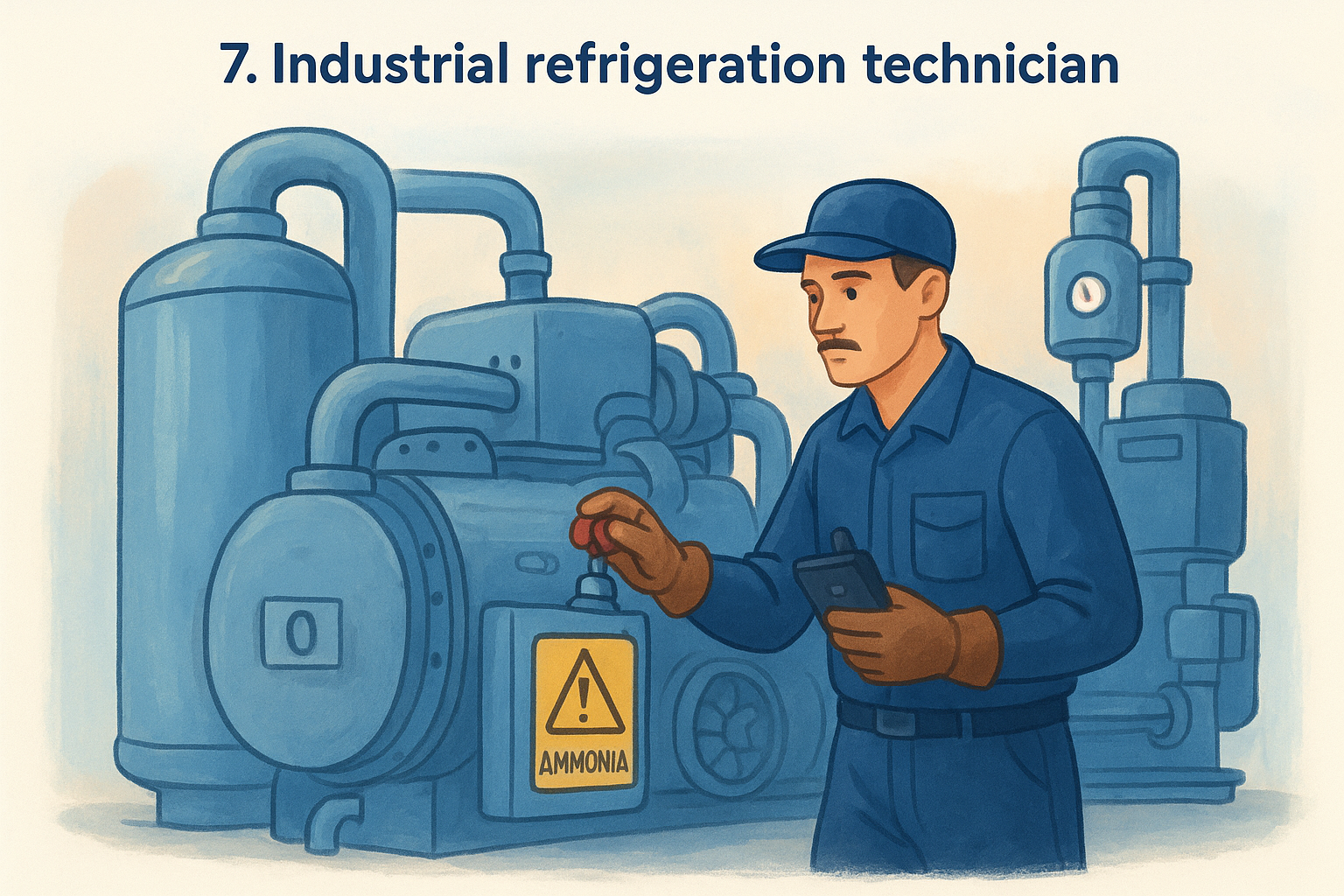
Industrial refrigeration technicians service large-scale cooling systems that keep warehouses, food processing plants, and cold storage facilities running. You work with ammonia-based refrigeration systems, screw compressors, and evaporative condensers that dwarf residential equipment. This specialty ranks among the highest paying HVAC jobs because the systems you maintain carry life-safety risks and directly impact millions of dollars in perishable inventory.
Typical pay in 2026 and what drives the range
Industrial refrigeration technicians earn between $75,000 and $125,000 annually, with lead technicians at major facilities exceeding $140,000. Your compensation jumps when you become ammonia-certified and prove you can troubleshoot complex rack systems without causing costly shutdowns. Technicians working in food manufacturing or pharmaceutical cold storage command premium rates because downtime in these environments creates product losses that measure in six figures per hour.
Ammonia-certified technicians with PSM (Process Safety Management) training consistently earn $18,000 to $30,000 above those working with synthetic refrigerants.
What you do day to day
You monitor system pressures and temperatures, adjust oil levels in compressors, and respond to emergency breakdowns that threaten product integrity. Routine maintenance includes inspecting valves, checking electrical connections, and testing safety cutouts that prevent dangerous pressure buildups. Much of your work happens in freezer environments or on rooftops where condensers and cooling towers operate around the clock.
Licenses and specialties that raise pay
EPA Section 608 certification serves as your baseline, but RETA (Refrigerating Engineers & Technicians Association) certification and IIAR (International Institute of Ammonia Refrigeration) training separate you from standard HVAC techs. States like California require additional ammonia handling permits. Specializing in automated controls for industrial systems or holding a stationary engineer license adds $12,000 to $20,000 to your earning power.
Industries and locations that pay the most
Food processing plants, cold storage warehouses, and pharmaceutical manufacturers offer the strongest compensation packages. Cities with major distribution hubs like Dallas, Atlanta, and Los Angeles pay $15,000 to $25,000 above national averages. Large grocery chains and logistics companies employing in-house technicians provide stable employment with overtime guarantees that push annual earnings past base salary figures.
8. HVAC project engineer
HVAC project engineers translate design concepts into installed systems that meet performance specifications. You bridge the gap between design engineers who draw plans and field technicians who install equipment. This role combines technical analysis with construction coordination, placing it among the highest paying HVAC jobs for professionals who understand both engineering principles and practical installation challenges.
Typical pay in 2026 and what drives the range
HVAC project engineers earn between $78,000 and $120,000 annually, with positions at major contractors pushing past $135,000. Your compensation climbs when you handle complex mechanical systems for hospitals, data centers, or industrial facilities where mistakes create expensive delays. Engineers who manage submittal reviews, equipment specifications, and value engineering proposals add more value than those who only coordinate installations. Projects requiring detailed load calculations and system modeling pay premiums because you prevent field conflicts before crews arrive on site.
What you do day to day
You review shop drawings and equipment submittals to verify compliance with construction documents, then coordinate with general contractors to resolve conflicts between mechanical systems and structural elements. Site visits involve checking installation progress, answering field questions, and documenting as-built conditions that differ from original plans. Afternoons include preparing RFIs (Requests for Information), updating project schedules, and conducting commissioning activities that verify systems operate correctly.
Project engineers who catch coordination errors during submittal review save contractors thousands in rework costs and schedule delays.
Skills and tools that raise pay
Proficiency in AutoCAD MEP, Revit, and Navisworks separates you from coordinators who only track schedules. Understanding psychrometric calculations and load estimating software like Trace 700 or Carrier HAP adds engineering depth to your profile. Employers value experience with construction administration and commissioning procedures because you can close out projects without engineering support.
Industries and locations that pay the most
Mechanical contractors serving healthcare systems, technology companies, and government facilities offer the strongest compensation. Cities with active commercial construction like Dallas, Phoenix, and Charlotte pay $12,000 to $22,000 above national averages. Large design-build firms and national mechanical contractors provide stable employment with performance bonuses tied to project completion.
9. Senior HVAC technician and lead tech
Senior HVAC technicians and lead techs supervise field crews while maintaining hands-on expertise with installations and repairs. You troubleshoot problems that stump junior technicians, train apprentices, and ensure quality control across multiple job sites. This path offers one of the highest paying HVAC jobs for technicians who build deep technical skills without stepping fully into office-based management roles.
Typical pay in 2026 and what drives the range
Senior HVAC technicians earn between $68,000 and $105,000 annually, with lead techs at commercial contractors pushing past $115,000. Your compensation rises when you hold Master licenses and demonstrate expertise across multiple systems like chillers, boilers, and building automation. Employers pay premiums for technicians who reduce callback rates and mentor crews effectively.
Overtime opportunities and emergency service calls add $12,000 to $25,000 to your base salary annually. Contractors running 24/7 service operations pay shift differentials that boost earnings substantially.
What you do day to day
You diagnose complex system failures that require detailed troubleshooting across mechanical, electrical, and control components. Mornings often involve reviewing work orders, assigning tasks to your crew, and visiting sites where junior techs need guidance. Quality checks on completed installations fill your afternoons, along with customer consultations about system upgrades or performance issues.
Lead techs also order parts, maintain truck inventory, and ensure crews follow safety protocols during every job.
Senior technicians who consistently solve problems on the first visit earn bonuses that rival project manager salaries.
Specialties that raise pay the fastest
Mastering chiller systems, boiler operations, and VRF installations pushes your earning potential above general service technicians by $15,000 to $25,000. Controls troubleshooting expertise adds significant value because few field techs understand both mechanical systems and digital interfaces. Emergency service specialization creates year-round income stability with premium pay rates.
Industries and locations that pay the most
Commercial contractors serving hospitals, hotels, and manufacturing facilities offer the strongest compensation packages. Cities with high construction costs like San Francisco, Boston, and New York pay $18,000 to $30,000 above national averages. Union contractors and large mechanical firms provide top-tier wages with pension contributions and comprehensive benefits.
10. HVAC estimator
HVAC estimators calculate project costs before contracts get signed, making them critical to contractor profitability. You analyze blueprints, quantify materials, and price labor hours to produce bids that win work while protecting margins. This role sits among the highest paying HVAC jobs for detail-oriented professionals who understand both field operations and business finances.
Typical pay in 2026 and what drives the range
HVAC estimators earn between $72,000 and $115,000 annually, with senior estimators at large mechanical contractors exceeding $130,000. Your compensation rises when you handle complex commercial projects worth multiple millions because accurate estimates on these jobs directly impact company profits. Estimators who consistently bid within 3% of actual costs command premium salaries because they minimize financial risk while keeping win rates competitive.
Estimators who understand installation challenges from field experience produce more accurate bids and earn $12,000 to $18,000 above those who only work from blueprints.
What you do day to day
You review construction documents and perform material takeoffs using digitizer tablets or on-screen measurement tools. Mornings involve quantifying ductwork, piping, and equipment from plans, then pricing items against supplier quotes and historical cost data. Afternoons include preparing bid documents, attending pre-bid meetings, and coordinating with project managers about installation sequencing that affects labor hours.
Skills and software that raise pay
Proficiency in Trimble AutoBid, QuoteSoft, or FastEST separates you from estimators using spreadsheets. Understanding labor productivity rates for union versus open-shop crews adds accuracy to your bids. Experience reading electrical and plumbing plans helps you identify coordination issues that competitors miss.
Industries and locations that pay the most
Mechanical contractors bidding healthcare systems, data centers, and industrial facilities offer the strongest salaries. Cities with robust commercial pipelines like Houston, Atlanta, and Denver pay $15,000 to $25,000 above national averages.

Next steps
Landing one of the highest paying HVAC jobs in 2026 requires targeted action and strategic positioning. You’ve seen which roles command top salaries, what credentials separate average earners from six-figure professionals, and which markets reward specialized skills most generously. Your next move determines whether you stay on your current trajectory or break into the upper tier of HVAC compensation.
Start by evaluating where your skills align with the roles listed here. Identify certifications, licenses, or software proficiencies that close the gap between your current position and higher-paying opportunities. Check job listings regularly to track which employers in your region actively hire for these specialized positions.
Ready to explore more strategies for advancing your HVAC career? Visit our blog for guides on certifications, salary negotiation tactics, and market insights that help you stay competitive in the trades.
Want blue collar jobs delivered to your inbox?
Want blue collar jobs delivered to your inbox?
