

ABC Apprenticeship Program: Trades, Pay, And How To Apply
Breaking into the skilled trades doesn’t require a four-year degree or crushing student debt. The ABC apprenticeship program, run by the Associated Builders and Contractors, offers a direct path into high-demand careers like electrical work, plumbing, HVAC, and construction management. With over 800 apprenticeship programs across the country, ABC has trained hundreds of thousands of craft professionals since its founding.
What makes this program stand out is the “earn while you learn” model, you get paid from day one while building real skills on actual job sites. At bluecollarjobs, we regularly see employers seeking ABC-trained apprentices and journeymen because they arrive job-ready with industry-recognized credentials.
This guide breaks down the specific trades available, what you can expect to earn during training, program requirements, and the step-by-step process to apply. If you’re serious about launching a career in the trades, here’s everything you need to know.
Why the ABC apprenticeship program matters
The construction and trades industry faces a massive labor shortage, with over half a million unfilled positions across the United States. Traditional college paths leave many graduates buried in debt with degrees that don’t translate to immediate employment. The ABC apprenticeship program solves both problems by placing you directly into paying jobs while you gain nationally recognized credentials in high-demand fields.
Real wages from day one
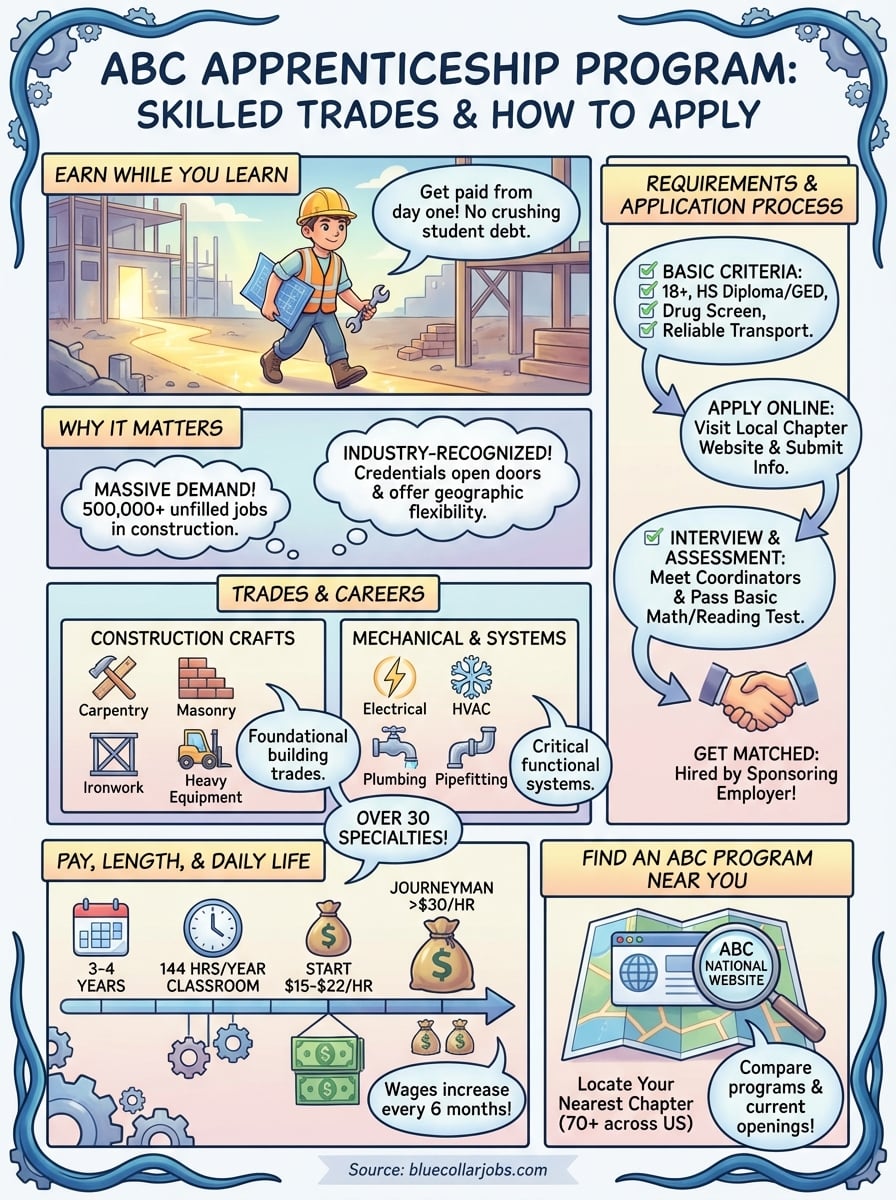
You start earning a competitive hourly wage the moment your apprenticeship begins, typically between $15 and $22 per hour depending on your trade and location. As you complete training milestones and gain experience, your pay increases systematically until you reach journeyman-level wages that often exceed $30 per hour. This means you’re building both a paycheck and a career simultaneously, with no tuition bills waiting for you after graduation.
ABC apprentices earn over $300,000 more during their careers compared to workers without formal training.
Industry recognition that opens doors
Employers across the construction sector actively seek out ABC-certified graduates because the program’s curriculum meets strict industry standards verified by the Department of Labor. Your credentials transfer across state lines, giving you geographic flexibility that many careers lack. Companies know ABC apprentices arrive with hands-on experience, safety certifications, and the technical knowledge to contribute immediately. When you search job boards like bluecollarjobs, you’ll regularly see postings that specifically request or prefer ABC training because hiring managers understand the quality and consistency the program delivers.
Trades and careers you can train for
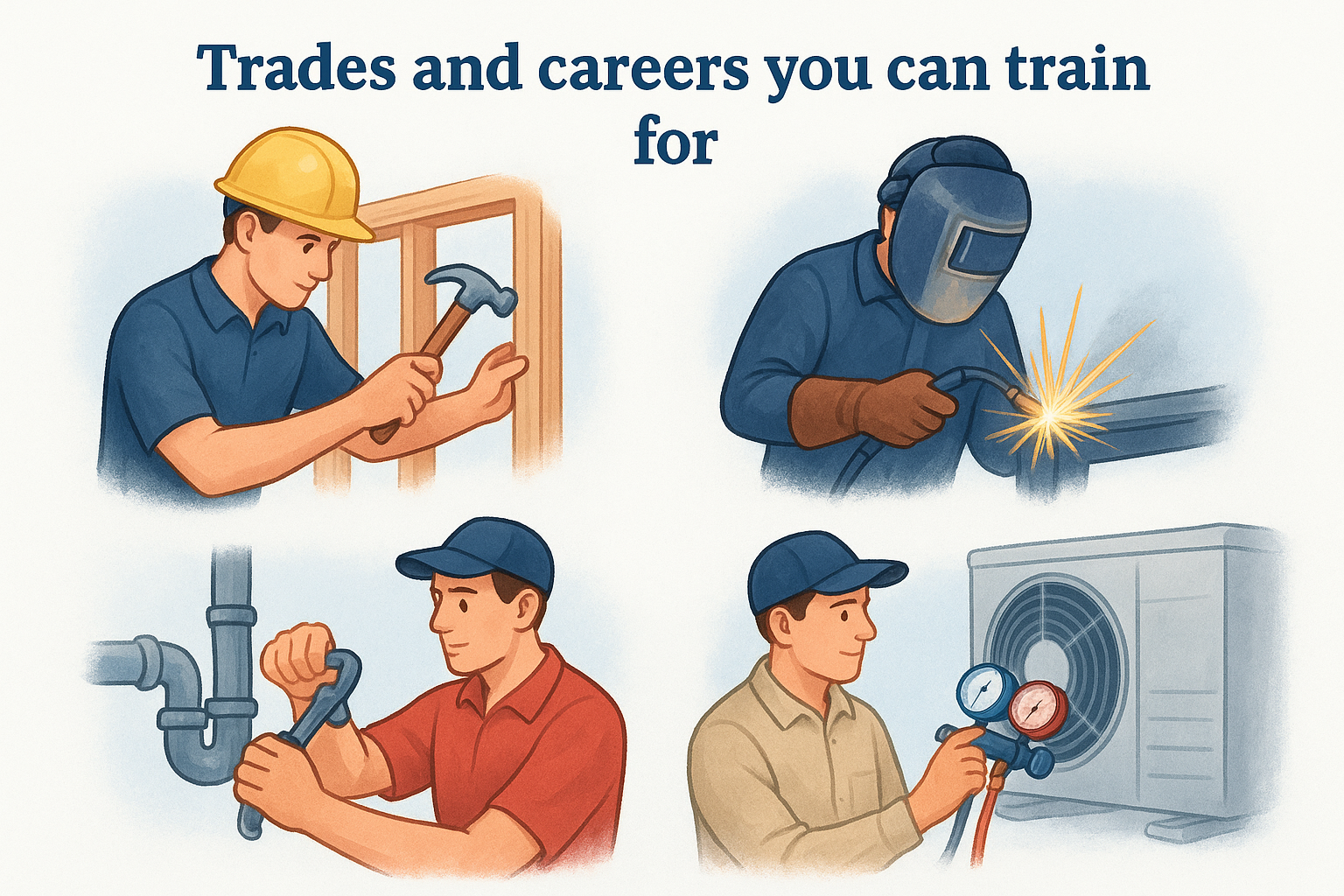
The ABC apprenticeship program covers over 30 different craft specialties across the construction and trades industry. You can choose from foundational building trades like carpentry and masonry, technical systems work like electrical and HVAC, or specialized fields like welding and crane operation. Each program provides the hands-on training and classroom instruction needed to earn your journeyman certification in your chosen trade.
Construction craft specialties
Structural trades form the backbone of any construction project. You can train as a carpenter, learning everything from framing and concrete formwork to finish carpentry and cabinet installation. Masonry programs teach bricklaying, block work, and stonework techniques used in both commercial and residential construction. Other options include ironworkers who build structural steel frameworks, sheet metal workers who fabricate and install ductwork, and heavy equipment operators who run the machinery that moves earth and materials across job sites.
ABC offers apprenticeships in over 30 recognized craft areas, each leading to nationally portable credentials.
Mechanical and systems trades
Technical trades focus on the critical systems that make buildings functional. Electrical apprenticeships cover everything from residential wiring to industrial power distribution and control systems. HVAC technicians learn to install, maintain, and repair heating, cooling, and ventilation equipment. Plumbing programs teach water supply systems, drainage, and gas line installation, while pipefitting apprenticeships focus on industrial process piping and mechanical systems in commercial facilities.
Pay, length, and what to expect day to day
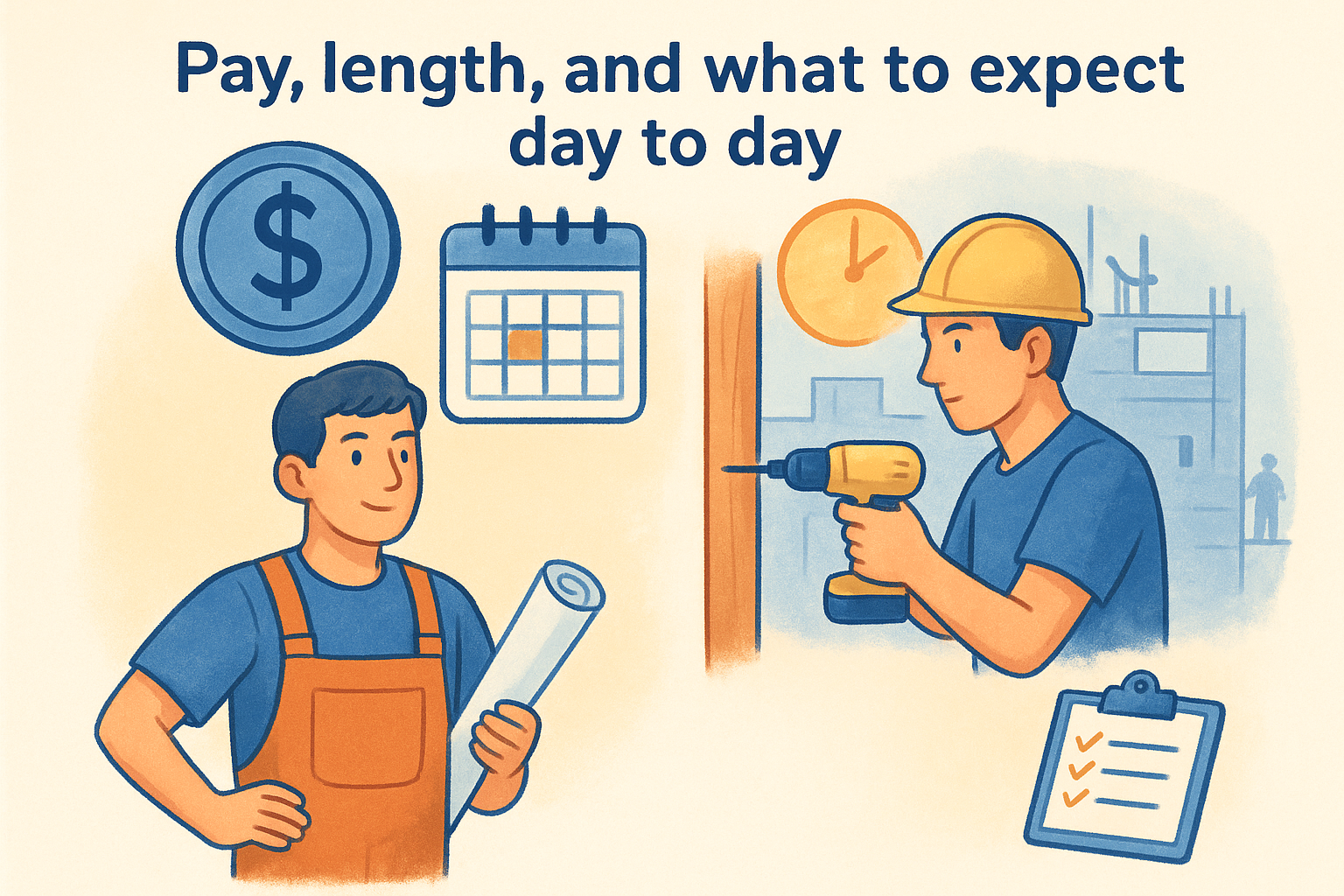
The ABC apprenticeship program typically runs three to four years, depending on your chosen trade. You’ll split your time between classroom instruction and hands-on work at actual job sites, usually spending 144 hours per year in technical training courses while working full-time for your sponsoring employer. This combination gives you the theoretical knowledge and practical skills employers demand.
Starting wages and progression
You start at 50 to 60 percent of a journeyman’s wage in your trade, which translates to roughly $15 to $22 per hour in most markets. As you complete each program year and demonstrate competency, your hourly rate increases in predetermined steps. By your third or fourth year, you’re earning 80 to 90 percent of journeyman wages before you even finish the program.
ABC apprentices see wage increases every six months as they progress through their training milestones.
Daily work expectations
Your typical day involves reporting to your job site by 7:00 or 8:00 AM for a full work shift alongside experienced tradespeople. You’ll perform actual construction tasks under supervision, not just observing from the sidelines. Evening or weekend classes happen one or two nights per week, covering blueprint reading, code requirements, safety protocols, and trade-specific technical skills.
Requirements and how to apply
Getting into the ABC apprenticeship program requires meeting a few straightforward criteria, and the application process takes less time than most people expect. You don’t need previous construction experience or specialized training to start, just a willingness to learn and meet basic eligibility standards that apply across most trades.
Basic eligibility criteria
You must be at least 18 years old with a high school diploma or GED to qualify for most ABC apprenticeship programs. Some trades require physical fitness standards because the work involves lifting, climbing, and standing for extended periods. You’ll need reliable transportation to reach job sites and classroom locations, plus the ability to pass a drug screening that most construction employers mandate for safety reasons.
The majority of ABC apprenticeship programs require only a high school diploma and no prior construction experience.
Application process steps
Visit your local ABC chapter’s website to browse available apprenticeship openings in your area. You submit an online application that includes basic personal information, education history, and your trade preferences. After your initial application gets reviewed, you’ll attend an in-person interview where program coordinators assess your interest and aptitude. Many chapters also administer a basic math and reading comprehension test. Once accepted, your chapter matches you with a sponsoring employer who hires you as an apprentice.
Finding an ABC program near you
The Associated Builders and Contractors operates over 70 local chapters across the United States, each running apprenticeship programs tailored to their region’s construction needs. Your local chapter handles everything from initial applications to job placement with member contractors, so finding the right one determines where your career begins.
Locating your nearest chapter
Start by visiting the ABC national website and using their chapter locator tool to find programs in your state. Most chapters serve multiple counties or an entire metropolitan area, so you might have several options within driving distance. Each chapter lists their contact information, active apprenticeship trades, and upcoming enrollment dates directly on their site. You can also call chapters directly to speak with apprenticeship coordinators who answer specific questions about their programs.
ABC chapters in major metro areas typically offer 15 to 25 different trade apprenticeships simultaneously.
Comparing program availability
Different chapters offer different trades based on local construction demand and employer participation. A chapter in Houston might have strong HVAC and electrical programs due to commercial growth, while a rural chapter focuses on carpentry and heavy equipment operation. Review each chapter’s current openings and start dates before applying, since some trades only accept new apprentices once or twice per year.
Key takeaways and next steps
The ABC apprenticeship program delivers paid training in over 30 skilled trades without requiring college debt or prior experience. You earn between $15 and $22 per hour from day one, with wages increasing systematically until you reach journeyman-level pay that often exceeds $30 per hour. Programs run three to four years and combine classroom instruction with hands-on work at real job sites, giving you both technical knowledge and practical skills employers value.
Your next step involves visiting your local ABC chapter’s website to review available trades and application deadlines in your area. Complete the online application, prepare for the interview and assessment test, and start connecting with member contractors who sponsor apprentices. If you’re already ABC-trained and looking for your next opportunity, explore blue collar job openings across all 50 states and multiple trade specialties.
Want blue collar jobs delivered to your inbox?
Want blue collar jobs delivered to your inbox?
