
Plumbing isn’t just a stable career, it’s one where high paying plumbing jobs regularly cross the six-figure mark without requiring a four-year degree. While the national average for plumbers sits around $60K–$65K, certain specializations and career paths push well beyond $100,000 annually, especially for those who pursue the right licenses and niche expertise.
The difference between a $50K salary and a $120K salary in plumbing often comes down to what you specialize in and where you work. Roles in industrial piping, medical gas installation, and underwater welding pay significantly more than residential service calls, and demand for these specialists is only growing as infrastructure projects ramp up across the country.
We built bluecollarjobs.com to help skilled trade professionals find exactly these kinds of opportunities, filtered by trade, experience level, and location, without wading through irrelevant white-collar listings. Below, we break down eight plumbing career paths that can realistically get you to $100K or more, including what each role pays, what qualifications you need, and where the jobs are right now.
1. Blue Collar Jobs Plumbing Listings
bluecollarjobs.com is a dedicated trade job board built to connect skilled professionals with plumbing-specific roles across every US state. Instead of wading through general job sites packed with unrelated listings, you get a filtered view of opportunities matched to your trade, experience level, and location from the moment you land on the site.
What it is
Blue Collar Jobs is a specialized recruitment platform built exclusively for skilled trades, including plumbing, HVAC, electrical, and mechanical work. Every listing targets manual and technical roles, which means plumbing jobs are never buried under office or retail postings. You can sort by state, seniority, and trade to narrow results down to exactly what fits your current career stage and license level.
Why it can reach $100K+
The platform actively features high paying plumbing jobs at the Master, Journeyman, and Foreman levels, where six-figure salaries are common. Employers post here specifically because they need licensed, certified professionals capable of handling commercial, industrial, or specialty work, not general labor with no trade credentials.
The roles that consistently reach $100K on the platform are tied to specific licenses and niche certifications, not just years of experience.
Typical pay range and pay structure
Pay on listed roles varies by seniority and region. Apprentice and Helper roles typically start between $18 and $28 per hour, while Journeyman and Master positions often show salary ranges from $65,000 up to $130,000 or more annually. Most listings display the pay range directly in search results, so you know what a role pays before you spend time reading the full description or writing a cover letter.
Requirements that employers ask for
Employers posting on the site regularly require a state-issued Journeyman or Master plumber license, proof of relevant certifications, and in many cases two or more years of documented field experience. Commercial and industrial listings frequently add requirements like backflow prevention certification, OSHA 10 or 30, or medical gas endorsements depending on the type of facility.
Where to find openings and how to apply
Visit bluecollarjobs.com and use the trade and state filters to pull current plumbing listings in your area. Each posting includes direct employer contact details and application instructions, so you apply without going through a third-party recruiter or paying any fees to access the listing.
2. Plumbing Engineer
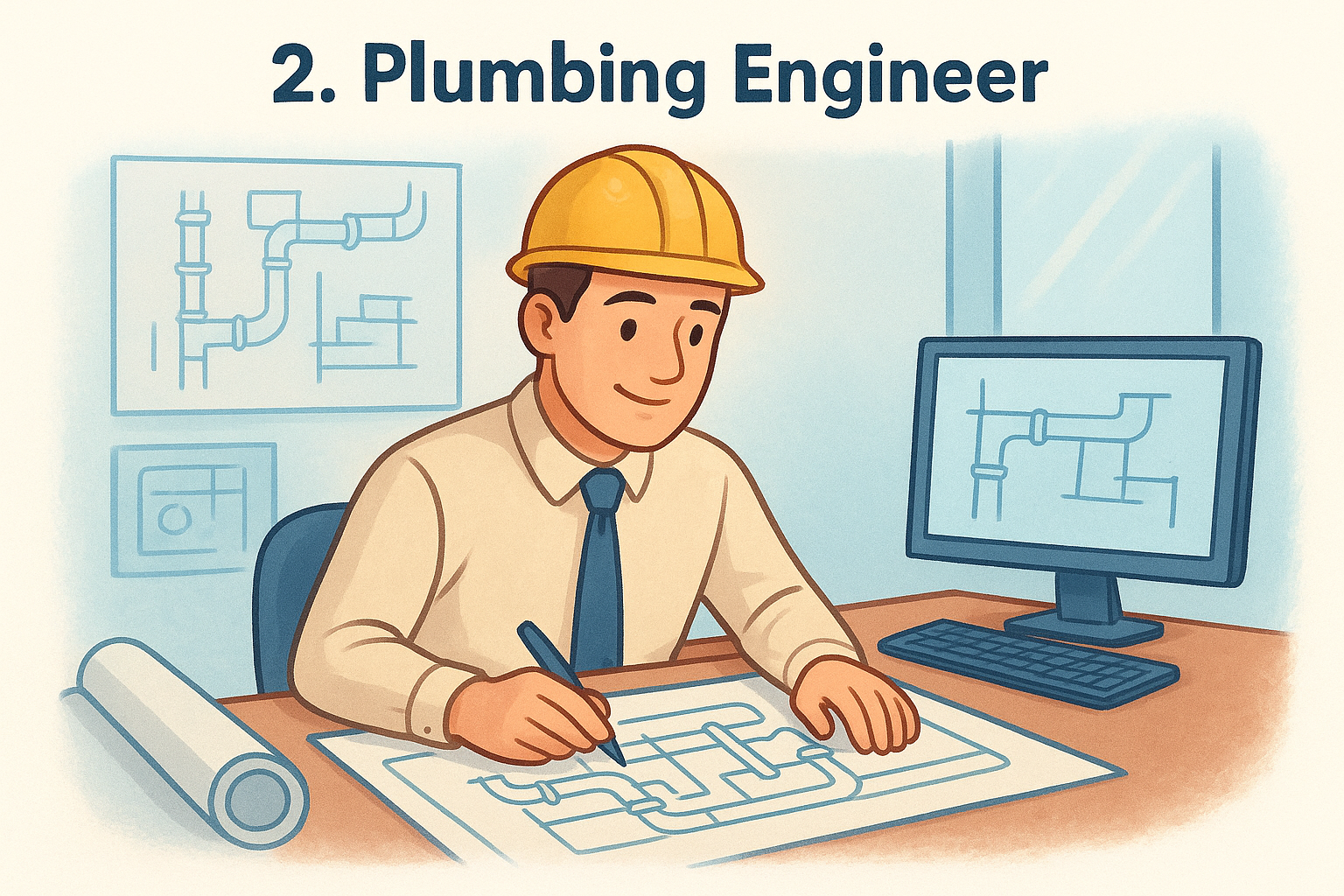
A plumbing engineer sits at the intersection of technical field knowledge and engineering design principles, making it one of the most demanding roles in the trade. Unlike a working plumber, a plumbing engineer focuses on designing and specifying piping systems for large-scale projects, from hospitals and skyscrapers to industrial facilities.
What it is
Plumbing engineers design complete water supply, drainage, and gas distribution systems for commercial and institutional buildings. They work alongside architects and structural engineers during the planning phase, producing technical drawings and specifications that field crews follow during installation.
Why it can reach $100K+
The role demands both an engineering background and deep plumbing knowledge, which narrows the talent pool significantly. Employers on large commercial or government contracts pay a premium for someone who can design systems that meet code, safety, and efficiency standards without costly revisions.
Plumbing engineers who specialize in healthcare or industrial facilities consistently command the highest salaries in this category.
Typical pay range and pay structure
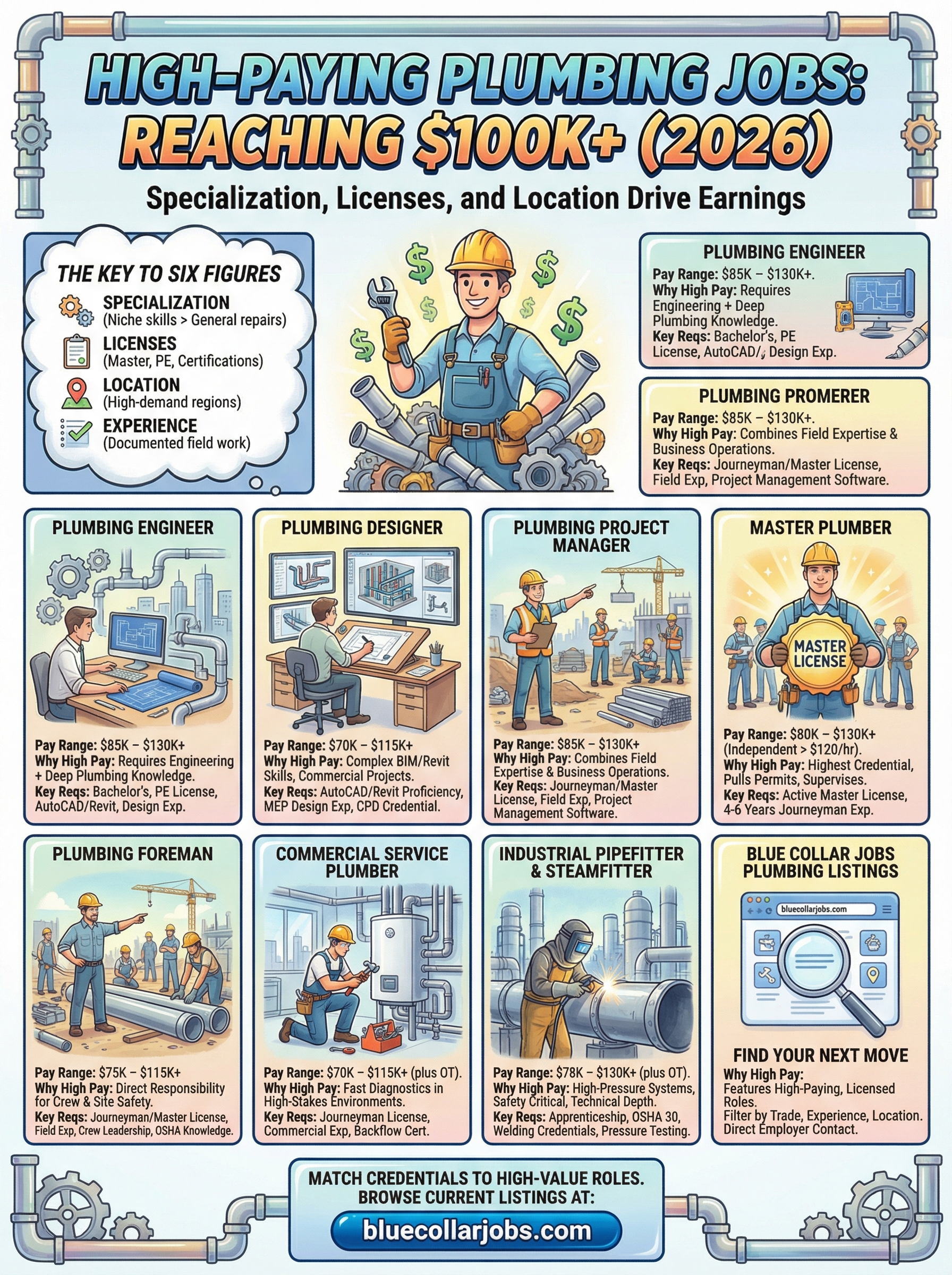
Most plumbing engineers earn between $85,000 and $130,000 annually, with senior engineers at large firms or those handling federal projects often exceeding that range. Compensation is typically salaried with full benefits, though some work as independent consultants on project-based contracts.
Requirements that employers ask for
Employers typically require a bachelor’s degree in mechanical or civil engineering, a Professional Engineer (PE) license, and several years of hands-on plumbing or MEP design experience. AutoCAD or Revit proficiency is standard, so make sure your portfolio clearly reflects those skills.
Where to find openings and how to apply
Search for these high paying plumbing jobs through engineering firms and MEP consultancies. Target companies working on commercial construction or government infrastructure projects, as those consistently offer the strongest compensation packages for your experience level.
3. Plumbing Designer
A plumbing designer works one step below a full plumbing engineer but handles many of the same technical drafting and specification tasks on commercial and multi-family residential projects. This role focuses on translating engineering concepts into detailed construction documents that installation crews follow on-site.
What it is
Plumbing designers produce CAD drawings, pipe routing plans, and fixture schedules for new construction and renovation projects. They collaborate with architects, general contractors, and plumbing engineers to ensure every system fits within the building’s physical constraints and meets local code requirements.
Why it can reach $100K+
Designers with strong BIM and Revit skills and experience on large commercial projects are in short supply, which drives salaries up. Firms working on multi-story commercial buildings or institutional campuses consistently pay a premium for designers who can handle complex systems without constant supervision.
Plumbing designers who specialize in healthcare facility standards tend to land at the top of the salary range in this role.
Typical pay range and pay structure
Most plumbing designers earn between $70,000 and $115,000 annually, depending on project complexity and region. High-cost markets like California, New York, and Texas push your compensation toward the higher end of that range if you bring proven MEP design experience.
Requirements that employers ask for
Employers typically look for the following qualifications:
- Proficiency in AutoCAD and Revit MEP
- An associate’s or bachelor’s degree in drafting or engineering technology
- Two to three years of MEP design experience
- A Certified in Plumbing Design (CPD) credential from the American Society of Plumbing Engineers, which strengthens your application considerably
Where to find openings and how to apply
Target MEP engineering consultancies and large general contractors that handle commercial or institutional construction. These firms post high paying plumbing jobs for designers regularly, and a portfolio of completed project drawings gives your application a clear, concrete edge.
4. Plumbing Project Manager
A plumbing project manager combines field expertise and business operations, overseeing everything from bid estimation to final inspection on commercial and industrial projects. This role sits above the tools but requires a deep understanding of how plumbing systems work at every phase.
What it is
Plumbing project managers coordinate crews, subcontractors, and material schedules across large-scale construction or retrofit jobs. They manage budgets, client communications, and contractor relationships to make sure each phase hits its deadline without costly overruns.
Why it can reach $100K+
Managing a large commercial plumbing contract requires both technical knowledge and business judgment, which very few people can deliver reliably. Contractors pay significantly above the field average to keep projects on schedule and protect profit margins on multi-million-dollar jobs.
A single cost overrun on a large commercial job can erase a contractor’s profit entirely, so companies invest heavily in project managers who prevent that.
Typical pay range and pay structure
Most plumbing project managers earn between $85,000 and $130,000 annually, with bonuses tied to project profitability in many firms. Larger companies handling multi-site or federal contracts often reach above that range depending on project volume.
Requirements that employers ask for
Employers consistently look for a Journeyman or Master plumber license, several years of field experience, and a track record of delivering projects on time and within budget. Proficiency in project management software like Procore or Buildertrend adds real weight to your application.
Where to find openings and how to apply
Target mechanical and plumbing contractors that handle commercial construction, property management, or institutional facilities. These employers post high paying plumbing jobs for project managers regularly, and a documented history of on-budget project delivery is your strongest selling point when you apply.
5. Master Plumber
The Master plumber license represents the highest credential in the trade, and employers treat it as proof that you can design, install, and supervise plumbing systems without oversight. This role is one of the clearest paths to high paying plumbing jobs at the six-figure level because the license itself filters out most of the competition.
What it is
A Master plumber holds the top-tier state-issued license in the plumbing trade and typically operates as the lead technician or business owner on a job. Masters can pull permits, design systems, and legally supervise Journeymen and Apprentices, which makes them the most versatile and high-value hire on any commercial or residential project.
Why it can reach $100K+
The Master license requires years of documented field experience and a demanding exam, so licensed Masters are genuinely scarce in most markets. Contractors who need someone to pull permits and run a crew cannot legally operate without one, which gives you significant negotiating leverage when setting your rate.
Master plumbers who work independently or run their own crews consistently earn more than those who take salaried positions with a single employer.
Typical pay range and pay structure
Most Master plumbers earn between $80,000 and $130,000 annually, with self-employed Masters often exceeding that through contract work and service call revenue. Hourly billing rates in high-demand metro areas frequently reach $90 to $120 per hour for independent operators.
Requirements that employers ask for
- Active state-issued Master plumber license
- A minimum of four to six years of Journeyman-level field experience
- Strong knowledge of local building codes and permit processes
Where to find openings and how to apply
Search trade-specific job boards and target mechanical contractors and property management companies that run active commercial service divisions. Your license is your application, so lead with it clearly in every submission.
6. Plumbing Foreman
A plumbing foreman leads a crew on active job sites while holding hands-on technical accountability for installation quality and schedule. This role is a direct step up for experienced Journeymen ready to take on crew leadership without leaving the field entirely.
What it is
Foremen manage day-to-day crew operations on commercial or industrial sites, handling labor scheduling, material coordination, and quality control. You communicate directly with the project manager above you while supervising Journeymen and apprentices throughout each phase of the job.
Why it can reach $100K+
Foremen carry direct responsibility for crew output and site safety, which puts real business risk on their shoulders. Contractors running large commercial projects pay above Journeyman rates to keep someone reliable on-site who can prevent schedule delays and labor budget overruns without needing constant direction.
Foremen with a consistent track record of on-schedule delivery become the highest-compensated field employees in most contracting operations.
Typical pay range and pay structure
Most plumbing foremen earn between $75,000 and $115,000 annually, with compensation tied to crew size, project scope, and region. High-demand markets like Texas and California consistently push your earnings toward the upper end of that range when you bring documented experience managing large crews.
Requirements that employers ask for
Employers require an active Journeyman or Master plumber license, several years of field experience, and a proven ability to direct a crew without constant oversight. Knowledge of OSHA safety standards and basic project scheduling tools makes your application noticeably stronger against other candidates.
Where to find openings and how to apply
Search for high paying plumbing jobs at the foreman level through trade-specific boards that filter listings by experience tier. Target commercial and industrial plumbing contractors, where crew leadership roles consistently carry the strongest pay packages and give you the most complex, resume-building project experience.
7. Commercial Service Plumber
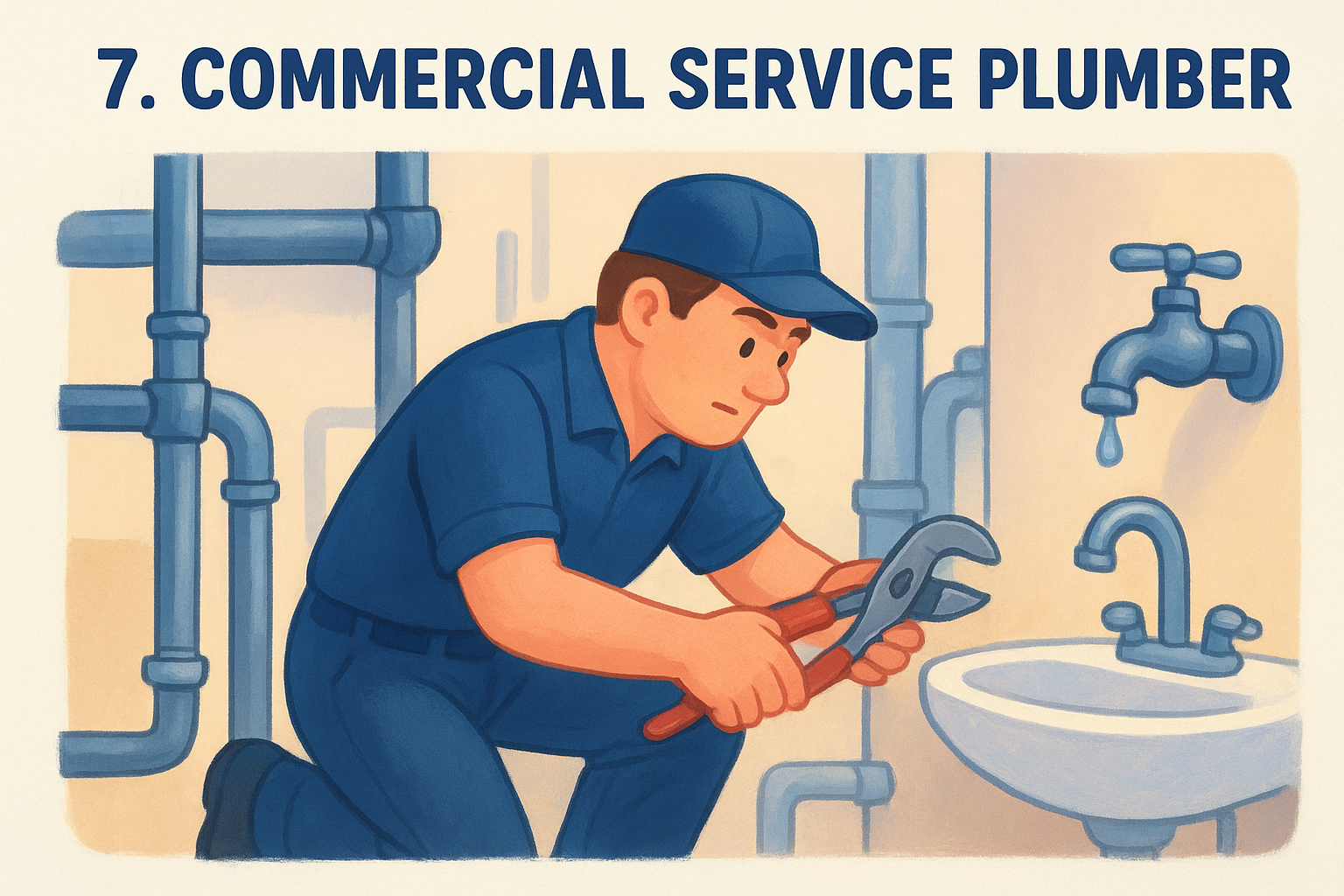
A commercial service plumber handles repair, maintenance, and emergency calls for businesses, property management companies, hospitals, schools, and large institutional facilities. Unlike residential work, commercial service calls involve complex building systems that require a broader technical range and faster diagnostic ability to keep operations running without costly downtime.
What it is
Commercial service plumbers troubleshoot and repair water supply, drain, gas, and fixture systems in active commercial environments. You respond to service calls, diagnose failures in aging infrastructure, and execute repairs under real time pressure while tenants or facility staff remain on-site.
Why it can reach $100K+
Commercial clients pay a significant premium for fast, reliable service because a broken system in a restaurant, hospital, or office building disrupts revenue directly. Plumbers who build a reputation for quick diagnostics and clean repairs in high-stakes commercial environments become indispensable to facility managers who keep calling the same person back.
Commercial service plumbers who carry backflow certification and gas line experience consistently land at the top of the pay range for this role.
Typical pay range and pay structure
Most commercial service plumbers earn between $70,000 and $115,000 annually, with overtime and emergency call premiums pushing top earners well above that figure. Many employers structure pay as a base salary plus service incentives tied to completed call volume and customer retention.
Requirements that employers ask for
Employers consistently require an active Journeyman plumber license, experience diagnosing commercial systems, and familiarity with local code requirements for commercial properties. Backflow prevention certification and OSHA 10 training are standard additions that strengthen your application.
Where to find openings and how to apply
Search trade-specific boards for high paying plumbing jobs at the commercial service level, filtering by your state and experience tier. Target plumbing contractors and facility management companies that service multi-tenant properties or institutional clients, where service volume and call complexity are both consistently high.
8. Industrial Pipefitter and Steamfitter
Industrial pipefitters and steamfitters install and maintain high-pressure piping systems in power plants, refineries, chemical processing facilities, and large manufacturing operations. This work demands a technical depth that goes well beyond standard residential or commercial plumbing, which is the core reason it pays so well.
What it is
Pipefitters and steamfitters fabricate, assemble, and install steam lines, hydraulic systems, and high-pressure gas and liquid piping that keep industrial plants running safely. You work directly from engineering blueprints and isometric drawings in environments where an installation error on a pressurized line carries real safety consequences for the entire facility.
Your scope also includes pressure testing, system startup support, and ongoing maintenance during scheduled plant shutdowns, which is where a large portion of overtime earnings accumulate.
Why it can reach $100K+
Industrial employers cannot afford production stoppages caused by faulty piping, so they pay a serious premium for certified pipefitters who deliver accurate work on high-stakes systems. The combination of technical depth, physical demands, and genuine safety responsibility narrows the qualified candidate pool significantly.
Pipefitters working in power generation and petroleum refining consistently reach the upper end of the pay scale in this specialization.
Typical pay range and pay structure
Most industrial pipefitters and steamfitters earn between $78,000 and $130,000 annually, with union members receiving strong benefits packages on top of base wages. Turnaround and shutdown cycles generate substantial overtime that regularly pushes total annual earnings above the base figure.
Requirements that employers ask for
Employers require completed apprenticeship training through a union or accredited trade program, OSHA 30 certification, and documented experience with the specific systems used at their facility. Pipe welding credentials and working knowledge of pressure testing procedures give your application a clear, concrete advantage over other candidates.
Where to find openings and how to apply
Search trade-specific boards for high paying plumbing jobs at the industrial level filtered by your state. Target energy companies, petrochemical plants, and large mechanical contractors that run active maintenance and capital construction programs throughout the year, as those operations hire pipefitters consistently rather than seasonally.
Your Next Move
Every role on this list proves that high paying plumbing jobs are not rare exceptions. They are the direct result of pursuing the right license, specialization, or career path within the trade. Whether you are working toward your Master license, building commercial service experience, or targeting industrial pipefitting work, the common thread is matching your credentials to the roles where employers pay a significant premium over the field average.
Your next step is straightforward: find openings that fit your current experience level and start applying. BlueCollarJobs.com filters listings by trade, state, and seniority level, so you skip irrelevant postings and get directly to plumbing roles that match where you stand right now. The pay ranges outlined above are real, and employers are actively filling these positions. Browse current plumbing job listings on BlueCollarJobs.com and apply to the positions that align with your license and career goals today.

https://shorturl.fm/8pvlw
https://shorturl.fm/ye5Vu
https://shorturl.fm/3wbrA
https://shorturl.fm/IIUgv
https://shorturl.fm/icCgF
https://shorturl.fm/W5avj
https://shorturl.fm/kL6fo
Phim Sex Mới, Phim Heo Hay, JAV HD Không Che, Đụ Nhau Cực Nứng
https://shorturl.fm/nIc1V
TerraTweakHub is a great place to learn about eco-friendly habits. The content is clear. I enjoy it.
TecnoTipsNest is a great source for tech tutorials and tips. I learned a lot about Windows optimization there. It’s very helpful for beginners.
Xem phim sex clip sex Việt Nam không che mới nhất được GaiDamVL tuyển chọn, cập nhật liên tục mỗi ngày.
TecnoTipsNest has great content for smartphone users. The tips are practical. I like it.
Phim Heo HD, Xem Phim Heo Gái Bướm Múp Không Che Hay Nhất
For the reason that the admin of this site is working, no uncertainty very quickly it will be renowned, due to its quality contents.
I’m often to blogging and i really appreciate your content. The article has actually peaks my interest. I’m going to bookmark your web site and maintain checking for brand spanking new information.
I do not even understand how I ended up here, but I assumed this publish used to be great
This was beautiful Admin. Thank you for your reflections.
https://shorturl.fm/jRnql
https://shorturl.fm/fkeKH
https://shorturl.fm/IwR7a
https://shorturl.fm/hH45A
https://shorturl.fm/25gVZ
https://shorturl.fm/zfZv3