

Plumbing Career Guide: How To Become A Plumber Step-by-Step
Plumbers earn a solid living, enjoy strong job security, and can work independently or build their own businesses. The trade isn’t going anywhere, people will always need running water and functioning drains. If you’re researching how to become a plumber, you’re likely weighing your options and want a clear picture of what the path actually looks like. Good news: you don’t need a four-year degree or massive student debt to get started.
This guide breaks down every step of the process, from high school preparation to earning your master plumber license. You’ll learn about the different training pathways available, whether that’s a formal apprenticeship, trade school, or a combination of both. We’ll cover state licensing requirements, typical timelines, earning potential at each career stage, and what to expect from the day-to-day work. No fluff, just the information you need to make an informed decision about your future.
At bluecollarjobs, we connect skilled trade professionals with employers across the country. We see firsthand how high the demand for qualified plumbers is, and how rewarding this career can be for those willing to put in the work. Whether you’re just starting to explore the trades or ready to find your first apprenticeship, this guide will give you a realistic roadmap from day one to a licensed professional career.
What plumbers do and what the career looks like
Plumbers install, repair, and maintain the systems that deliver clean water into buildings and remove wastewater. You’ll work with pipes, fixtures, water heaters, drainage systems, and everything in between. The job combines physical labor with technical problem-solving, and no two days look exactly the same. You might spend Monday installing a bathroom in new construction, Tuesday diagnosing a leak under a kitchen sink, and Wednesday replacing a commercial water heater. Understanding how to become a plumber starts with knowing what the work actually involves on the ground.
The daily work of a plumber
Your typical workday involves reading blueprints, measuring and cutting pipe, threading and fitting connections, and testing systems for leaks or proper function. You’ll use hand tools like pipe wrenches and hacksaws, power tools like reciprocating saws and drain augers, and diagnostic equipment to locate hidden leaks or blockages. Much of the work happens in tight spaces like crawl spaces, attics, and utility closets where you’ll need to maneuver tools and materials while maintaining precision.
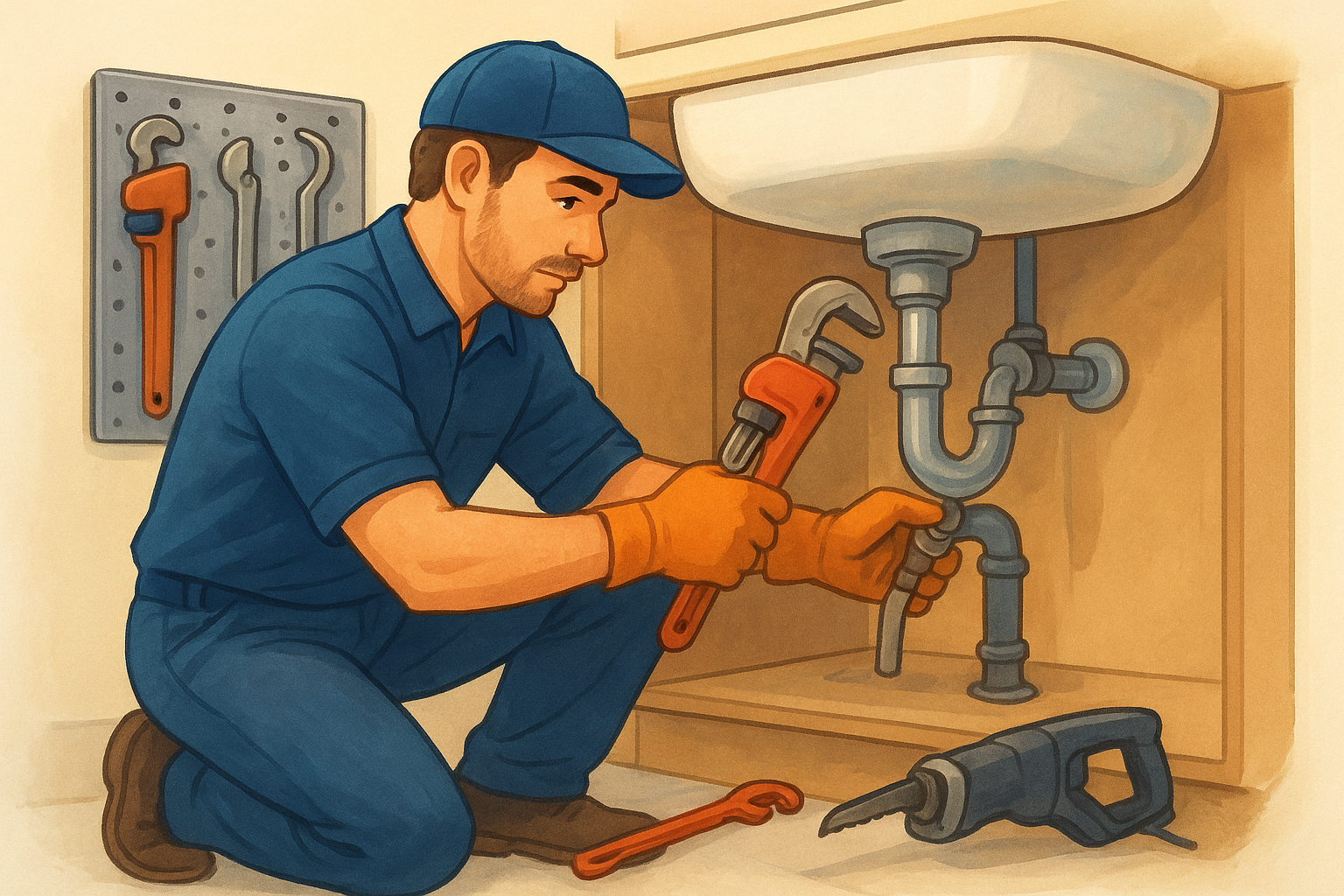
Residential plumbers handle everything from fixing dripping faucets to repiping entire homes. You’ll respond to emergency calls for burst pipes or backed-up sewers, often outside regular business hours. Commercial plumbers work on larger-scale systems in office buildings, hospitals, schools, and industrial facilities. These jobs require coordinating with other trades, following strict code requirements, and working around occupied buildings with minimal disruption. Service plumbers focus on repairs and maintenance, while construction plumbers work on new installations in buildings under development.
The variety keeps the work interesting, but you need to be comfortable with unpredictability and physical demands.
Where plumbers work and who they serve
You’ll split your time between multiple job sites each day as a service plumber, traveling in a work van stocked with tools and common parts. Construction plumbers typically spend weeks or months at a single large-scale project site, working alongside electricians, HVAC technicians, and other trades. Some plumbers work directly for plumbing contractors or construction companies, while others are self-employed and run their own businesses. Your customers range from homeowners dealing with emergency repairs to property managers maintaining apartment complexes to general contractors building new developments.
Employment settings vary widely in this trade. You might work for a small residential plumbing company with five employees, a large commercial contractor with dozens of plumbers, or a facilities maintenance department at a university or hospital. Union plumbers often work on major commercial and industrial projects with structured pay scales and benefits packages. Non-union plumbers have more flexibility in choosing employers and negotiating compensation directly.
Career progression and specialization options
Most plumbers start as apprentices, learning the trade under licensed journeymen while earning a paycheck. After completing your apprenticeship and passing the exam, you become a journeyman plumber who can work independently and supervise apprentices. This is where many plumbers spend the majority of their careers, earning solid wages without the added responsibility of running a business. Journeymen with several years of experience often earn $60,000 to $85,000 annually depending on location and specialization.
The next step up is master plumber, which requires additional experience, examination, and sometimes continuing education. Master plumbers can pull permits, design plumbing systems, and operate their own contracting businesses. They earn more and have full autonomy over their work. Some plumbers specialize in specific areas like medical gas systems for hospitals, industrial process piping, or green building and water conservation technologies. These specializations typically command higher hourly rates and provide steady work in niche markets.
You can also move into related roles without leaving the industry entirely. Experienced plumbers become estimators who bid on projects, project managers who oversee multiple job sites, or code inspectors who ensure work meets regulations. Others transition into teaching positions at trade schools or union training programs, passing their knowledge to the next generation of plumbers.
Before you start: requirements and realities
Before you commit to learning how to become a plumber, you need an honest assessment of what the job demands physically, mentally, and financially. This isn’t a career where you can ease into the work or test it out part-time. You’ll be working with real systems in real buildings from day one of your apprenticeship, often under pressure to diagnose problems quickly or complete installations on tight deadlines. Understanding these realities upfront helps you prepare properly and avoid surprises six months into your training.
Physical demands you need to handle
You’ll spend most of your day on your feet, crouching, kneeling, crawling, or working in awkward positions. Plumbing work happens in basements, crawl spaces, attics, and behind walls where you need to fit your body into tight spots while maneuvering tools and materials. You’ll lift and carry pipe sections, water heaters, and toolboxes that weigh 50 to 100 pounds regularly. The work involves climbing ladders, working on roofs, and sometimes digging trenches for underground pipes in all weather conditions.
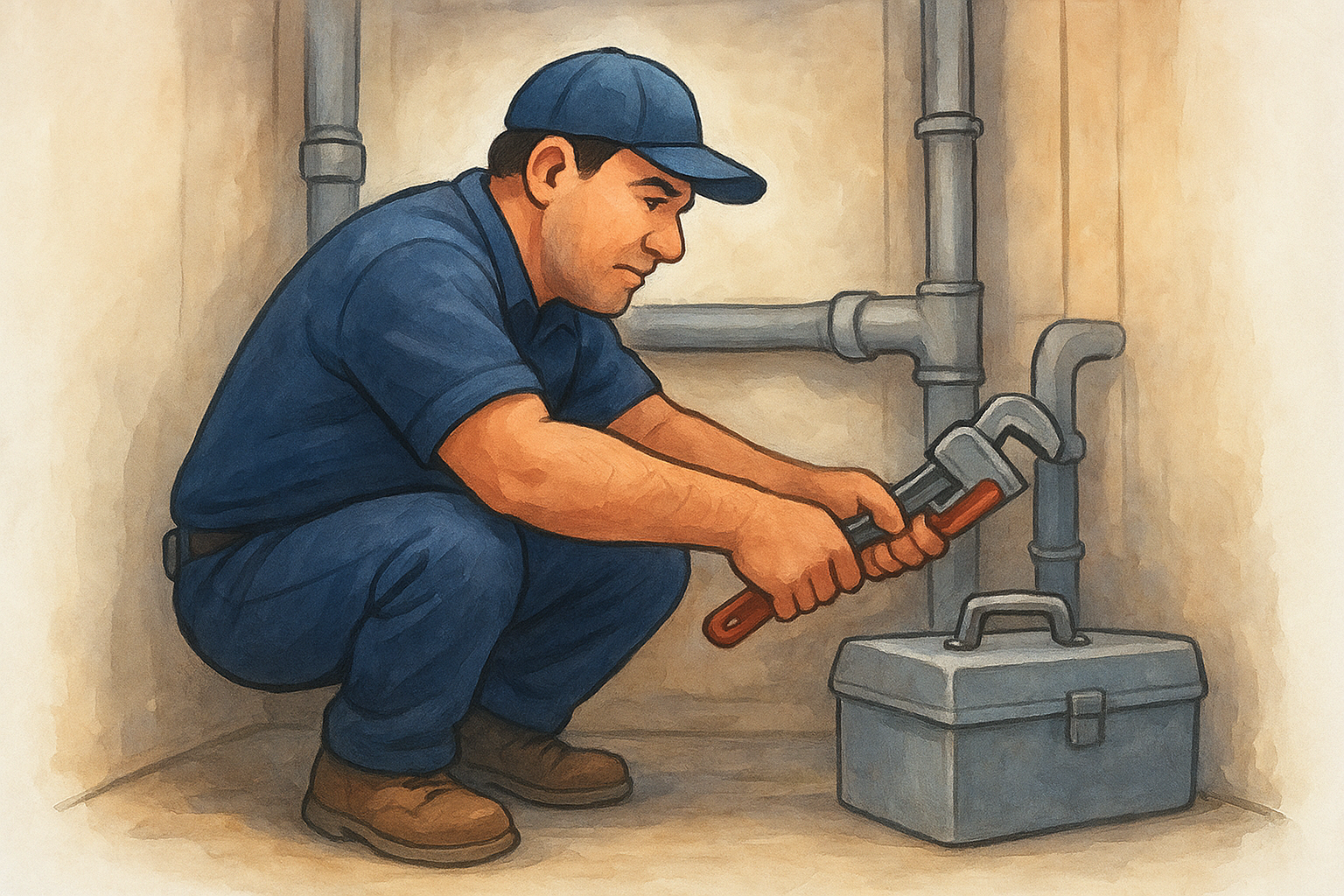
Your hands take constant abuse in this trade. You’ll grip wrenches for hours, work in wet conditions, and expose your skin to chemicals, solvents, and extreme temperatures. Back problems are common among plumbers who don’t use proper lifting techniques or take breaks to stretch. If you have serious mobility limitations, chronic back issues, or can’t handle repetitive physical strain, plumbing might not be the right fit. The good news is that most people adapt to the demands within a few months of starting their apprenticeship.
Physical fitness isn’t about being an athlete, it’s about handling the daily grind without breaking down.
Essential skills beyond the technical
You need strong math skills for calculating pipe angles, water pressure, drainage slopes, and material quantities. Geometry and basic algebra come up constantly when planning installations or troubleshooting system problems. You don’t need calculus, but you must be comfortable with fractions, decimals, and measurements in both imperial and metric systems. Trade school and apprenticeship programs include math instruction, but arriving with a solid foundation makes everything easier.
Problem-solving ability matters as much as physical capability in this field. Every job site presents unique challenges like existing structures that don’t match blueprints, unexpected obstacles behind walls, or systems that fail in ways you haven’t seen before. You need to think critically, adapt quickly, and come up with solutions on the spot. Customer service skills also play a bigger role than most people expect, especially if you work residential service calls where you’re explaining problems and solutions to homeowners who don’t understand plumbing systems.
Most states require a high school diploma or GED to enter an apprenticeship program, though some accept applicants without one if they can pass equivalency tests. You’ll need a valid driver’s license since the job involves traveling between job sites. Some employers require a clean driving record and the ability to pass a background check and drug screening.
Step 1. Confirm your state and local licensing path
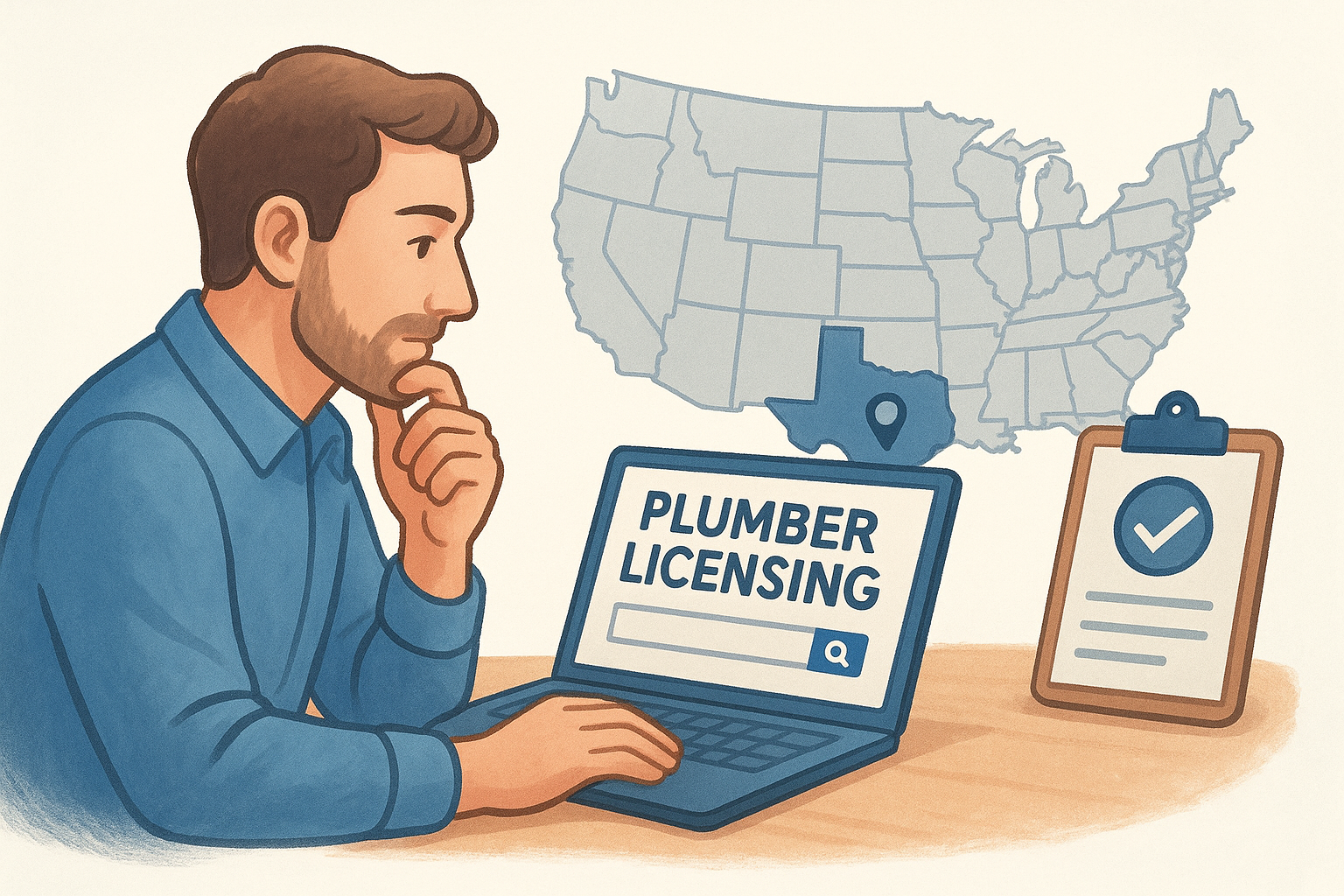
Your first move in learning how to become a plumber is researching your state’s specific licensing requirements, not enrolling in the first training program you find. Plumbing licenses are regulated at the state and sometimes local level, which means the path to becoming a licensed plumber in Texas looks completely different from the requirements in California or New York. Some states require formal apprenticeships through registered programs, while others allow on-the-job training under a licensed plumber to count toward your hours. You need to know exactly what your state demands before you spend time or money on training that might not meet their standards.
Why licensing requirements vary by state
Each state sets its own rules for plumber licensing through their Department of Labor, state board of contractors, or similar regulatory body. These agencies determine how many training hours you need, what type of experience counts, whether you must complete formal classroom instruction, and what exams you must pass. Some states like Massachusetts require 8,000 to 10,000 hours of apprenticeship, while others accept 4,000 hours. Certain states separate residential and commercial licensing, letting you specialize early in your career.
Local jurisdictions add another layer of complexity in many areas. Cities and counties often require their own permits, inspections, or additional certifications beyond state licensing. You might hold a valid state journeyman license but still need city registration to pull permits in the municipality where you work. Understanding both state and local requirements from the start prevents costly surprises later.
Research your specific location’s requirements before committing to any training program or apprenticeship.
How to research your specific requirements
Start by visiting your state’s contractor licensing board or Department of Labor website. Search for terms like “plumber licensing requirements [your state]” or “journeyman plumber license [your state].” These official sources list the exact hour requirements, exam prerequisites, and approved training pathways for your location. Look for the apprenticeship registration process and whether your state requires you to register before starting your training hours.
Contact your state licensing board directly by phone if the website information seems unclear or outdated. Ask specific questions about approved apprenticeship programs, whether trade school credits count toward your hours, and what documentation you need to maintain during training. Many states publish detailed application packets that outline every step of the licensing process from apprentice to journeyman to master plumber.
Key information to collect and document
You need to gather specific details about your state’s requirements and keep them organized as you move forward. Create a checklist that includes the total apprenticeship hours required, the ratio of classroom to hands-on training, any age or education prerequisites, and the exam format and passing score. Document whether your state requires sponsorship by a licensed plumber to start your apprenticeship or if you can register independently.
Write down the names and contact information for approved apprenticeship programs in your area, including union training centers, community colleges, and independent contractor programs. Note their application deadlines, entrance requirements, and whether they help place apprentices with employers. Some programs have waiting lists that stretch six months or longer, so you need this information early to plan your timeline accordingly.
Step 2. Build foundational skills and choose training
You have two main pathways for gaining the knowledge and hands-on experience you need to work as a plumber: formal trade school programs or direct entry into an apprenticeship with on-the-job training. Both routes can lead to a successful career, but they differ in cost, time commitment, and how quickly you start earning money. Many plumbers combine both approaches, completing a certificate program at a technical college before entering an apprenticeship to strengthen their applications and accelerate their learning curve. Your choice depends on your financial situation, learning style, and how quickly you need to start generating income.
Trade school programs and their advantages
Trade schools and community colleges offer plumbing certificate or diploma programs that typically run nine months to two years. These programs cover blueprint reading, local building codes, mathematics for the trades, safety protocols, and hands-on practice with pipe fitting, soldering, and fixture installation. You’ll work in shop environments that simulate real job sites, learning proper techniques before you step onto an actual construction site or service call. The structured curriculum gives you a solid theoretical foundation that can make your apprenticeship go more smoothly.
The main drawback is cost and opportunity cost combined. Programs range from $3,000 to $15,000 depending on the institution, and you’re not earning plumber wages while you attend. However, many programs have financial aid available, and some community colleges offer affordable options with evening or weekend classes that let you work part-time. Graduates often find it easier to land apprenticeships because employers value the foundational knowledge they bring on day one.
Trade school makes sense if you can afford the upfront investment and want structured learning before diving into full-time work.
Direct apprenticeship entry without formal schooling
You can skip trade school entirely and enter an apprenticeship program directly if you meet the basic requirements like high school completion and pass any entrance exams the program requires. This approach to how to become a plumber gets you earning money immediately, since apprentices receive wages from their first day on the job. Union apprenticeship programs typically include classroom instruction as part of their training, giving you the technical education alongside practical experience without separate tuition costs.
The challenge with direct entry is competition for limited apprenticeship slots. Programs receive many more applications than they have openings, and candidates with trade school backgrounds or relevant experience often get priority. You’ll also face a steeper learning curve in your first year without formal preparation, which can feel overwhelming when you’re trying to absorb information quickly on active job sites.
How to evaluate your training options
Compare programs based on their accreditation status, job placement rates, and relationships with local plumbing contractors. Contact recent graduates directly and ask about their experience, whether the training prepared them for real work, and if the school helped them secure apprenticeships. Visit campuses to see the shop facilities and equipment students use for hands-on training.
Look at the specific curriculum to ensure it covers both residential and commercial plumbing, not just one specialty. Programs should teach you multiple pipe materials including copper, PVC, PEX, and cast iron. Check whether the training hours count toward your state’s apprenticeship requirements, since some states accept trade school credits while others don’t.
Step 3. Get into an apprenticeship and log hours
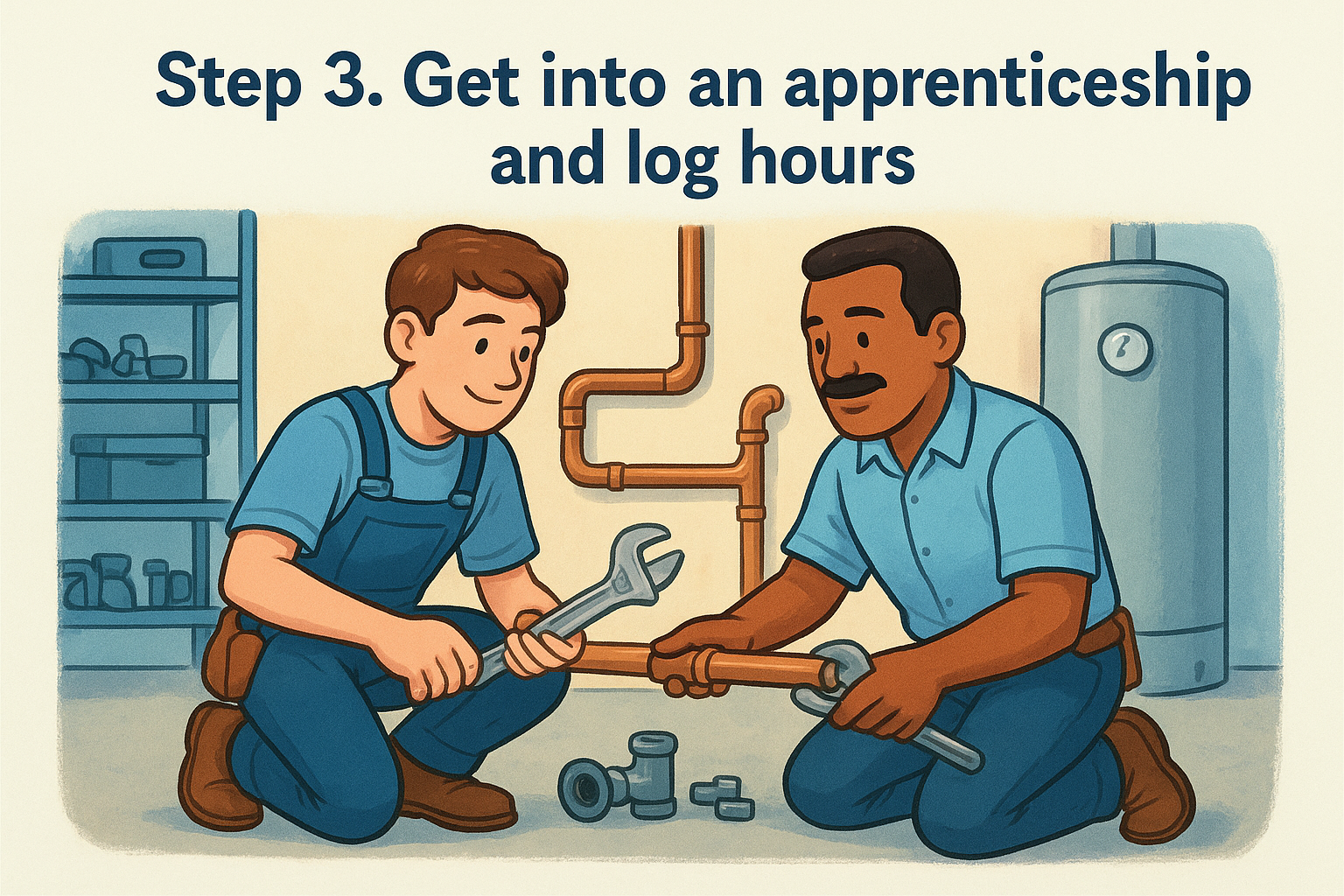
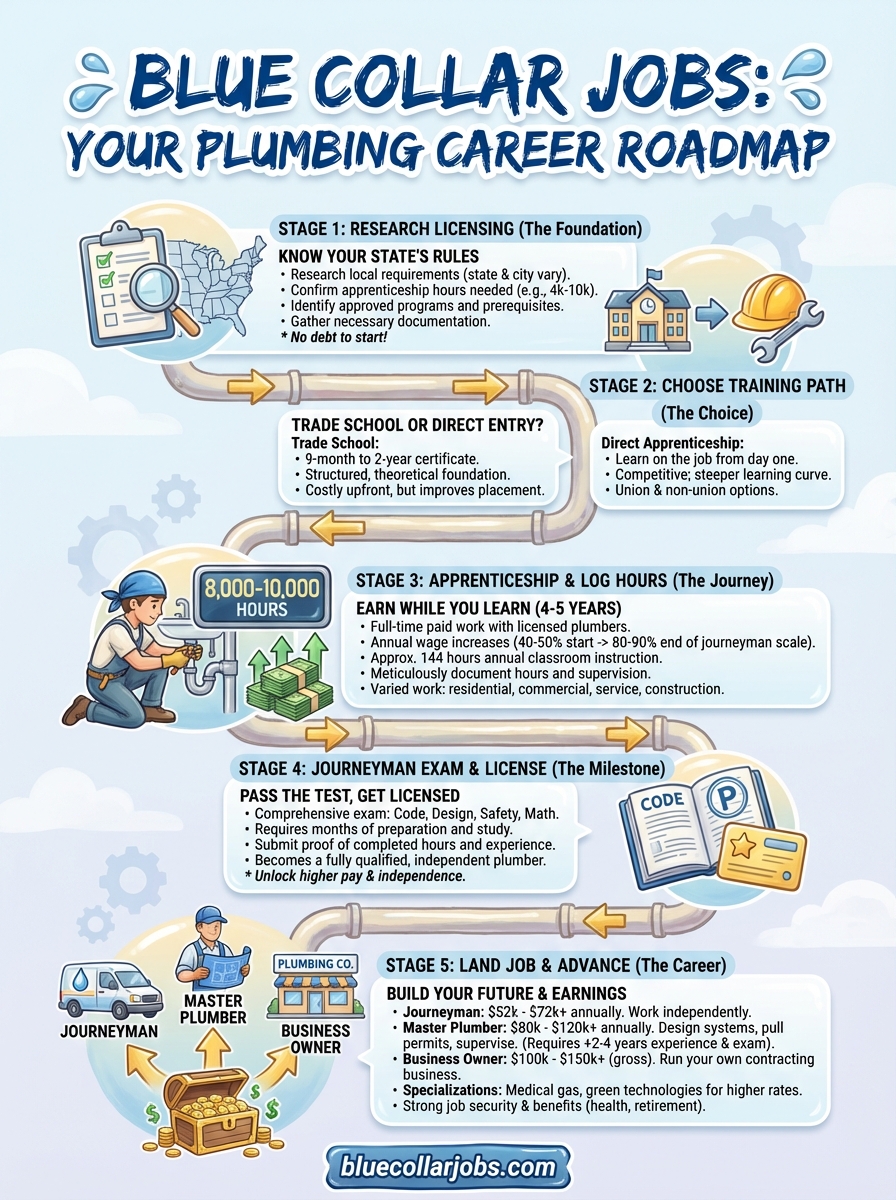
The apprenticeship phase is where you transform from someone curious about how to become a plumber into a skilled tradesperson earning progressively higher wages. You’ll spend four to five years working full-time under licensed plumbers while completing classroom instruction, logging thousands of hours of hands-on experience across residential and commercial projects. This isn’t an internship where you watch from the sidelines. You’re a paid employee from day one, handling real tools, installing actual systems, and gradually taking on more complex tasks as your skills develop.
Finding and applying to apprenticeship programs
Start your search with union apprenticeship programs through the United Association (UA) of Plumbers and Pipefitters, which operates training centers across the country. These programs offer structured curricula, guaranteed wages that increase annually, and strong job placement after completion. You’ll find applications on their local union websites, typically accepting new candidates once or twice per year. Non-union options include apprenticeships through plumbing contractors, home builders associations, and independent contractor networks that register their programs with state labor departments.
Your application packet typically includes your high school transcript or GED, valid driver’s license, completed application form, and sometimes letters of recommendation. Many programs require you to pass an aptitude test covering basic math, reading comprehension, and mechanical reasoning. Union programs often conduct panel interviews where you explain your interest in the trade and demonstrate your commitment to completing the full apprenticeship. Competition can be intense, so apply to multiple programs simultaneously to increase your chances of acceptance.
What to expect during the apprenticeship years
You’ll work 40 hours per week on job sites alongside journeyman plumbers who assign tasks, demonstrate techniques, and evaluate your progress. Your first year involves basic work like digging trenches, hauling materials, cleaning job sites, and assisting with simple installations. As you prove your capability, you move into pipe cutting, fitting connections, installing fixtures, and troubleshooting minor problems. Most programs require 144 hours of annual classroom instruction covering code updates, system design, business practices, and advanced technical skills.
Your wages increase automatically each year, typically starting at 40-50% of journeyman scale and reaching 80-90% by your final year.
Expect varied assignments across residential service calls, new construction projects, commercial tenant improvements, and maintenance work. This exposure gives you well-rounded experience across different project types and helps you identify which specialization interests you most.
Documenting your hours properly
Your state licensing board requires detailed records of your apprenticeship hours broken down by work type and supervision level. Keep a log book or digital spreadsheet where you record daily hours, the specific tasks you performed, and which licensed plumber supervised your work. Many states provide official hour tracking forms or online portals where you submit monthly reports verified by your supervising plumber’s signature and license number.
Maintain copies of everything in multiple locations. Save pay stubs showing your employment dates, apprenticeship agreements signed by your employer, and completion certificates from classroom instruction. You’ll need these documents when you apply for your journeyman exam and license, and replacing lost records can delay your application by months.
Step 4. Prepare for the journeyman exam and license
Your apprenticeship completion brings you to the critical milestone in understanding how to become a plumber: passing the journeyman licensing exam. This comprehensive test evaluates your knowledge of plumbing codes, system design, safety regulations, and practical problem-solving across residential and commercial applications. Most states require you to pass both a written exam and sometimes a practical skills assessment before they issue your journeyman license. The exam typically costs $150 to $400, and you’ll want to pass on your first attempt to avoid retake fees and delays in your career advancement.
Understanding what the exam covers
The journeyman exam focuses heavily on your state’s adopted plumbing code, usually the International Plumbing Code (IPC) or Uniform Plumbing Code (UPC). You’ll answer questions about pipe sizing calculations, fixture unit loads, venting requirements, water heater installations, and drainage system design. Expect questions on backflow prevention devices, cross-connection control, gas piping systems, and accessibility requirements under ADA standards. The test includes mathematical problems where you calculate pipe slopes, water pressure losses, and material quantities for given scenarios.
Most exams include 75 to 150 multiple-choice questions that you must complete within three to four hours. Your state licensing board publishes the specific code edition they test on, and you need to study that exact version since code requirements change every three years. Some jurisdictions allow you to bring your code book into the exam marked with tabs but no written notes, while others provide a clean copy you can reference during testing.
Study the specific code edition your state tests on, not just any plumbing code book you find.
Study materials and preparation strategies
Purchase or borrow the official code book your state uses and read through it systematically, focusing on chapters covering drainage systems, water supply, venting, and fixtures. Many plumbers use exam preparation books specifically written for journeyman testing that include practice questions, code references, and explanations of commonly tested concepts. Companies like Plumber’s Handbook and Craftsman Book Company publish state-specific study guides that mirror actual exam formats.
Your apprenticeship program likely offers exam prep classes in the final months before graduation. Attend every session and complete all practice tests they provide. Form study groups with fellow apprentices to quiz each other on code requirements, pipe sizing tables, and calculation methods. Focus on areas where you lack hands-on experience, since the exam covers both residential and commercial applications regardless of where you spent most of your apprenticeship.
The application and exam process
Submit your journeyman license application to your state board at least 60 days before your desired exam date. Your packet includes documented proof of completed apprenticeship hours, supervisor verification forms, classroom completion certificates, and the application fee. The board reviews your submission and approves you to schedule your exam through their testing vendor, typically Pearson VUE or PSI Services.
Schedule your exam date as soon as you receive approval, since testing centers book up weeks in advance in many areas. Arrive early on exam day with your government-issued photo ID, approved calculator, and any permitted reference materials. You’ll receive your pass/fail result immediately after completing computer-based exams, though your official license may take several weeks to process and arrive by mail.
Step 5. Land your first plumber job and succeed
Your fresh journeyman license opens doors to higher-paying positions and independent work that weren’t available during your apprenticeship. You’re now qualified to work without direct supervision, take on your own service calls, and command a professional wage. The job market for licensed plumbers remains strong across most of the country, with demand consistently outpacing supply in many regions. Your success in landing the right position depends on how effectively you present your skills, where you look for opportunities, and how you negotiate your compensation package.
Building a resume that highlights your skills
Your plumbing resume needs to emphasize your hands-on experience, licensing credentials, and specialized skills rather than following a traditional white-collar format. Start with your journeyman license number and state at the top, followed by any specialized certifications like backflow prevention or medical gas systems. List your apprenticeship employer with specific achievements such as “completed over 500 residential service calls” or “installed plumbing systems in 12 commercial buildings.”
Include a skills section that details the pipe materials you work with, fixture types you install, and systems you can troubleshoot. Mention software or technology you use like pipe design programs or digital inspection cameras. Keep your resume to one page and focus on quantifiable accomplishments that demonstrate your capability to handle real work independently.
Finding quality job opportunities
Check specialized trade job boards like bluecollarjobs.com where employers specifically seek licensed plumbers rather than sorting through general employment sites. Union halls maintain job referral lists for members, often matching skilled journeymen with contractors who need immediate help. Local plumbing supply houses keep bulletin boards with job postings and can connect you with contractors who shop there regularly.
Network with plumbers you met during apprenticeship rotations, as many shops hire through referrals before posting publicly.
Contact commercial and residential contractors directly even if they haven’t advertised openings. Many companies will create positions for qualified journeymen who demonstrate strong skills and professionalism during cold outreach.
Succeeding in your first journeyman role
Your first 90 days determine your long-term success with any employer. Arrive early, maintain a fully stocked work van, and communicate clearly with customers and coworkers. Take initiative on diagnosing problems rather than waiting for senior plumbers to tell you what’s wrong. Document your work thoroughly with photos and detailed service tickets that protect both you and your employer.
Mistakes will happen as you transition from supervised apprentice to independent journeyman. When you encounter unfamiliar situations, ask questions before proceeding rather than guessing. Your willingness to learn continuously and admit knowledge gaps builds trust faster than pretending you know everything. Focus on developing your customer service skills alongside technical ability, since satisfied clients drive repeat business and referrals that make you valuable to your employer.
Step 6. Advance to master plumber or contractor
Reaching journeyman status isn’t the end of your career progression in learning how to become a plumber. After several years of working independently, you can pursue master plumber licensing or start your own contracting business. Master plumbers hold the highest technical credential in the trade, with authority to design plumbing systems, pull permits for major projects, and supervise other licensed plumbers. This advancement typically requires two to four additional years of journeyman experience, passing a more rigorous exam, and sometimes completing continuing education courses. Your earning potential increases significantly at this level, with master plumbers often commanding $80,000 to $120,000 annually depending on their location and business model.
Master plumber licensing requirements and process
Your state requires you to document a specific number of journeyman-level work hours before qualifying for the master exam, typically ranging from 4,000 to 12,000 hours depending on jurisdiction. Submit your application with detailed records of complex projects you completed, including commercial installations, system designs, and supervisory experience managing other plumbers. The exam covers advanced topics like hydraulic calculations, complex venting configurations, medical gas systems, and commercial code applications that go beyond journeyman-level knowledge.
Most states require master plumbers to maintain continuing education credits annually, staying current with code updates, new technologies, and green building practices. You’ll renew your license every two to three years and may need to carry additional insurance coverage when working on larger commercial projects.
Master licensing opens doors to government contracts, institutional work, and projects that specifically require master-level oversight.
Starting your own plumbing business
Operating as an independent contractor requires your master plumber license in most states, along with business liability insurance, workers compensation coverage, and a contractor’s license through your state board. Register your business entity as an LLC or corporation to protect your personal assets from business liabilities. Set up accounts with plumbing supply houses for contractor pricing, purchase or lease work vehicles, and invest in tools and equipment for your crews.
Your startup costs typically range from $25,000 to $75,000 covering insurance, licensing fees, vehicle down payments, initial inventory, and marketing expenses. Many plumbers start by taking side jobs evenings and weekends while still employed, building a customer base before transitioning to full-time business ownership.
Additional certifications that increase your value
Pursue specialized certifications beyond your master license to differentiate yourself in competitive markets. The backflow prevention certification qualifies you to test and maintain cross-connection control devices, creating recurring service contracts with commercial clients. Medical gas installer certification through ASSE International opens opportunities in healthcare facility construction and maintenance, where projects command premium rates.
Green plumber certification demonstrates expertise in water conservation technologies, solar water heating, and sustainable building practices that appeal to environmentally conscious clients. These credentials typically require 16 to 40 hours of training plus examination, with renewal every three to five years through continuing education.
Pay, benefits, and how long it takes
Understanding the financial reality and time commitment helps you plan your path as you figure out how to become a plumber. The complete journey from starting your apprenticeship to earning your journeyman license takes four to five years on average, though some states require longer training periods. Your earning potential grows steadily throughout this timeline, and most plumbers recoup any training investment within their first two years of work. Unlike degree programs that leave you with debt and no work experience, the apprenticeship model pays you to learn while building your skills.
Timeline from start to journeyman
Your apprenticeship typically requires 8,000 to 10,000 hours of on-the-job training combined with classroom instruction, which translates to four to five years working full-time. States like Texas require 8,000 hours while Massachusetts mandates 10,000 hours before you qualify to take the journeyman exam. Add another two to three months for exam preparation, testing, and license processing once you complete your hours.
| Career Stage | Time Required | Total Years From Start |
|---|---|---|
| Apprentice Year 1 | 2,000 hours | 1 |
| Apprentice Year 2 | 2,000 hours | 2 |
| Apprentice Year 3 | 2,000 hours | 3 |
| Apprentice Year 4 | 2,000 hours | 4 |
| Journeyman Exam | 2-3 months | 4-5 |
| Master License | 2-4 years journeyman experience | 7-9 |
What you’ll earn at each stage
First-year apprentices typically earn $15 to $20 per hour depending on their location and whether they work union or non-union. Your wages increase annually, reaching $22 to $30 per hour by your fourth year as you take on more complex tasks independently. Union apprenticeships usually pay higher starting wages with guaranteed annual increases tied to your training progression.
Newly licensed journeymen earn $25 to $35 per hour in most markets, translating to $52,000 to $72,800 annually at full-time hours. Experienced journeymen with specialized skills or who work in high-cost areas command $35 to $50 per hour. Master plumbers operating their own businesses often gross $100,000 to $150,000 annually after business expenses, though your take-home depends on overhead costs and how many jobs you complete.
Your earning potential as a licensed plumber typically exceeds what many four-year degree holders make, without the student loan burden.
Benefits beyond the paycheck
Most plumbing employers offer health insurance, retirement contributions, and paid time off as part of their compensation packages. Union positions typically include comprehensive benefits from day one of your apprenticeship, covering medical, dental, and vision care for your entire family. Some contractors provide company vehicles, tool allowances, and continuing education reimbursement that reduce your out-of-pocket expenses significantly.
Job security remains exceptionally strong in this trade since buildings always need functioning water and drainage systems. You gain skills that transfer anywhere in the country, giving you geographic flexibility that many careers lack. Physical work keeps you active rather than chained to a desk, and you finish each day seeing tangible results from your efforts.
Your next move
You now have a complete roadmap for how to become a plumber, from researching your state’s requirements through earning your master license. The path requires physical work and dedication, but it delivers steady income without student debt and strong job security in a trade that’s always in demand. Your first action should be contacting your state licensing board to confirm the specific apprenticeship hours and exam requirements where you plan to work.
Start applying to apprenticeship programs immediately if you meet the basic qualifications. Programs fill quickly, and waiting lists can delay your start by months. Building your career in the skilled trades takes commitment, but the financial rewards and job satisfaction make it worthwhile for thousands of plumbers working today. Whether you’re just exploring the trades or ready to submit your first application, you have everything you need to move forward confidently.
For more insights on blue collar careers and trade opportunities, visit our blog for practical career advice that helps you succeed in the skilled trades.
Want blue collar jobs delivered to your inbox?
Want blue collar jobs delivered to your inbox?
