

What Does an HVAC Technician Do? Duties, Pay & Career Path
Every building you walk into, homes, offices, hospitals, schools, relies on climate control systems to keep people comfortable and safe. The professionals who install, maintain, and repair these systems are HVAC technicians. If you’re asking what does an HVAC technician do, you’re likely considering a career that offers strong job security, hands-on work, and earning potential that grows with experience.
HVAC stands for heating, ventilation, and air conditioning. Technicians in this field troubleshoot equipment failures, perform routine maintenance, and install new systems. The work varies daily, combining problem-solving with physical labor across residential and commercial settings. With climate control demand increasing year-round, qualified technicians remain in high demand across every U.S. state.
This guide breaks down the core duties of an HVAC technician, typical salary ranges, required certifications, and how to advance from apprentice to master-level roles. At bluecollarjobs, we connect skilled trade professionals with employers actively hiring, so once you understand the path ahead, you’ll know exactly where to find your next opportunity.
Why HVAC technicians matter
You depend on heating and cooling systems more than you might realize. When temperatures drop below freezing or climb above 100 degrees, functional HVAC equipment becomes a necessity rather than a convenience. Beyond comfort, these systems directly affect air quality, humidity control, and energy efficiency in homes, hospitals, schools, and commercial buildings. Without trained technicians maintaining this infrastructure, modern life as we know it would grind to a halt. The work these professionals perform keeps critical facilities operational, protects vulnerable populations from extreme weather, and prevents costly equipment failures that can shut down entire operations.
Essential services that require constant climate control
Hospitals, data centers, pharmaceutical labs, and food storage facilities all require precise temperature and humidity regulation to function safely. A single system failure in these environments can spoil medication worth thousands of dollars, crash servers handling critical data, or compromise sterile operating rooms. HVAC technicians respond to emergency service calls at all hours, often arriving within minutes to restore climate control before damage occurs. You’ll find these professionals crawling through ceiling spaces at 2 a.m. or diagnosing refrigeration issues in walk-in freezers while grocery stores remain open. The stakes remain high because downtime translates directly to lost revenue and, in some cases, threats to public health.
Manufacturing plants that produce electronics, automotive parts, or chemicals rely on controlled environments to maintain product quality. When you ask what does an HVAC technician do in these settings, the answer extends beyond basic repair work. These specialists monitor complex systems that integrate with building automation networks, track performance metrics, and perform preventive maintenance that keeps production lines running without interruption.
Skilled HVAC technicians prevent problems before they start, saving businesses thousands in emergency repair costs and lost productivity.
Protection against extreme weather events
Climate patterns across the United States have become less predictable and more severe in recent years. Heat waves in the Southwest now regularly exceed 115 degrees, while winter storms in Texas and the Midwest strain heating systems beyond their designed capacity. Technicians who understand load calculations, system sizing, and emergency protocols become lifelines during these events. Elderly residents, young children, and people with chronic health conditions face serious risks when HVAC systems fail during temperature extremes. You can’t simply wait three days for a repair appointment when indoor temperatures reach dangerous levels.
Emergency response capabilities separate competent technicians from exceptional ones. Those who carry diagnostic tools, replacement parts, and refrigerant supplies in their service vehicles can often restore service during a single visit. Building managers and homeowners remember which companies showed up during the last crisis, creating long-term client relationships built on reliability rather than just competitive pricing.
What HVAC technicians do day to day
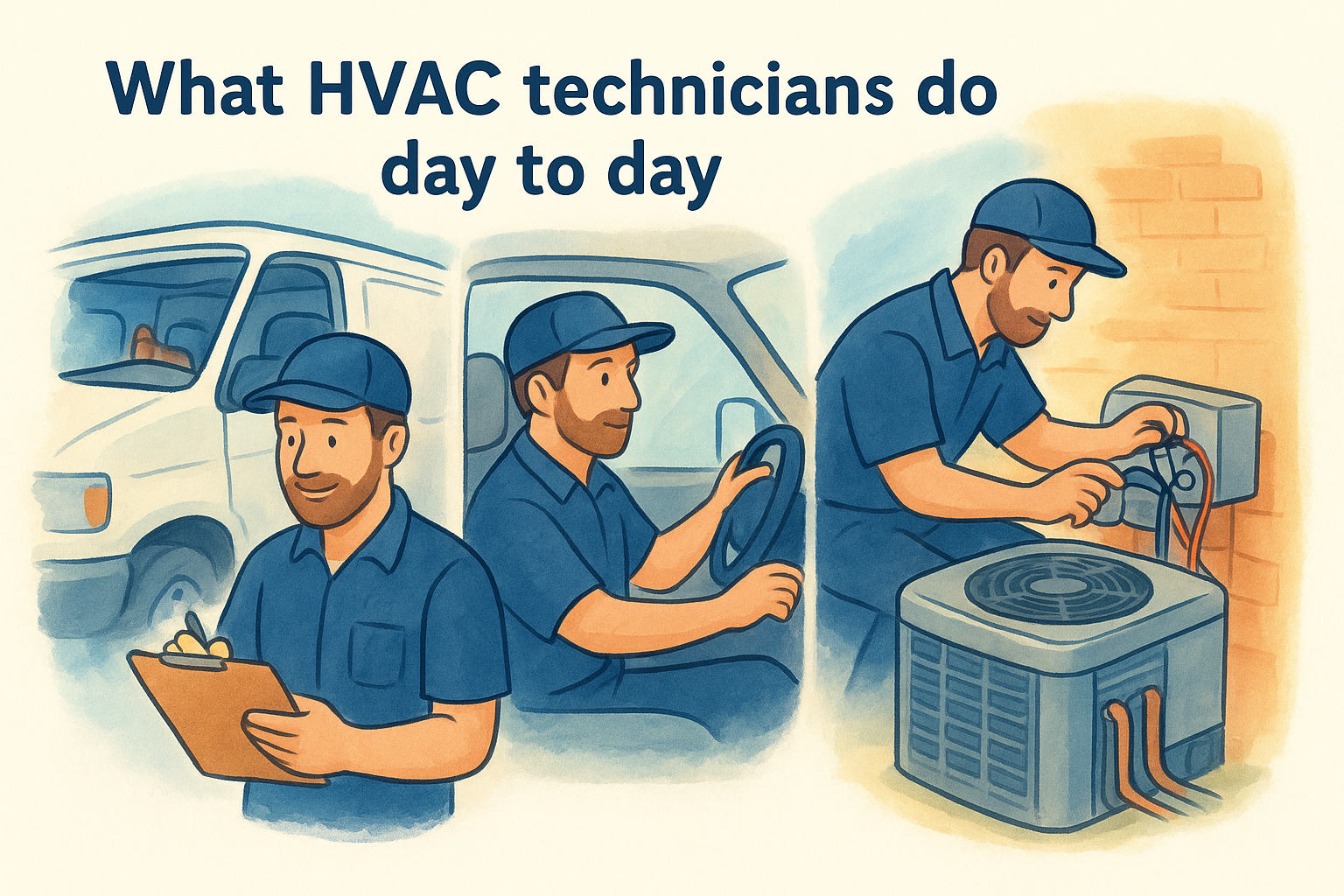
Your typical workday as an HVAC technician starts with checking your service schedule and loading tools into your truck. Dispatchers assign you to job sites based on your location, specialty, and the urgency of each call. You might handle three to six appointments daily, ranging from quick filter replacements to complex system diagnostics that require hours of troubleshooting. The variety keeps the work interesting because you rarely face the same problem twice in consecutive visits.
Morning dispatch and service calls
Most technicians begin their day between 7 and 8 a.m., reviewing work orders that detail customer complaints and system information. You’ll drive to residential homes or commercial buildings where occupants report issues like weak airflow, strange noises, or complete system failures. When you ask what does an HVAC technician do during a service call, the answer involves systematic diagnostics using multimeters, pressure gauges, and temperature sensors to identify the root cause. You test capacitors, check refrigerant levels, inspect electrical connections, and examine ductwork for leaks. After pinpointing the problem, you explain repair options to the customer, complete the fix, and verify the system operates correctly before leaving.
A skilled technician diagnoses accurately on the first visit, saving customers time and reducing return trips that cost your employer money.
Installation and replacement work
New construction projects and full system replacements require different skills than repair work. You coordinate with contractors to position equipment, run refrigerant lines through walls, install ductwork, and connect electrical components according to local building codes. These jobs often span multiple days and demand precision in measuring, cutting, and fitting components. Your work directly affects system efficiency and longevity, so cutting corners during installation creates problems that follow you for years.
Preventive maintenance and inspections
Commercial clients schedule routine maintenance contracts that keep you returning quarterly or seasonally. During these visits, you clean coils, lubricate motors, replace filters, calibrate thermostats, and test safety controls. You document your findings and alert building managers to developing issues before they cause breakdowns. This proactive approach builds trust with clients who value avoiding emergency repairs during business hours.
Where HVAC technicians work and what affects the job
Your work environment changes based on the clients you serve and your employer’s focus. Residential technicians spend their days in single-family homes, apartments, and condominiums addressing comfort complaints and performing system upgrades. Commercial specialists handle larger equipment in office buildings, retail stores, warehouses, and industrial facilities where downtime costs thousands per hour. Some technicians specialize in institutional work at hospitals, schools, or government buildings that require specific clearances and strict service protocols. The setting directly shapes what does an HVAC technician do on any given day, from the complexity of systems you encounter to the relationships you build with customers.
Residential versus commercial environments
Residential work puts you in direct contact with homeowners who often watch you troubleshoot their systems and ask questions about energy bills. You typically work alone or with one partner, carrying tools through living spaces while protecting floors and furniture from damage. These jobs usually wrap up within two to four hours, and you move to the next appointment across town. Commercial assignments involve coordinating with facility managers and building engineers who understand technical terminology and expect detailed reports. You might spend an entire week at one location replacing rooftop units or overhauling a chiller system that serves multiple floors. The equipment runs larger, the stakes climb higher, and your decisions affect dozens or hundreds of occupants simultaneously.
Commercial HVAC work typically pays more per hour but demands additional certifications and tolerance for challenging installation conditions.
Weather, geography, and seasonal factors
Climate patterns in your region determine peak demand periods when service calls spike. Technicians in Arizona and Nevada stay busiest during summer months when air conditioning failures create genuine emergencies. Those working in northern states like Minnesota or Michigan see heating system calls surge from November through March. Coastal areas with moderate temperatures year-round provide steadier work without extreme seasonal swings. You’ll climb onto roofs in 110-degree heat or crawl into attics where temperatures exceed 130 degrees during summer service calls. Winter repairs force you to work outdoors in freezing conditions, often on ice-covered rooftops where safety equipment becomes mandatory rather than optional.
Skills, tools, and certifications HVAC techs need
You can’t succeed in this field by relying on technical knowledge alone. The job demands a combination of physical abilities, problem-solving skills, diagnostic expertise, and formal credentials that vary by state and employer. When people ask what does an hvac technician do to prepare for the trade, the answer includes mastering hands-on skills while earning industry-recognized certifications that prove your competence with refrigerants and electrical systems. Your toolkit expands as you progress from apprentice to journeyman, with specialized equipment costing thousands of dollars once you establish yourself as an independent contractor or senior technician.
Technical skills and problem-solving abilities
You need solid understanding of electrical circuits, refrigeration cycles, airflow dynamics, and combustion processes that power furnaces and boilers. Diagnostic work requires methodical thinking because symptoms rarely point directly to a single cause. Your ability to interpret pressure readings, voltage measurements, and temperature differentials determines how quickly you solve problems without replacing parts unnecessarily. Communication skills matter equally because you explain complex issues to customers who lack technical backgrounds, helping them make informed decisions about repairs versus replacements.
Essential tools and equipment
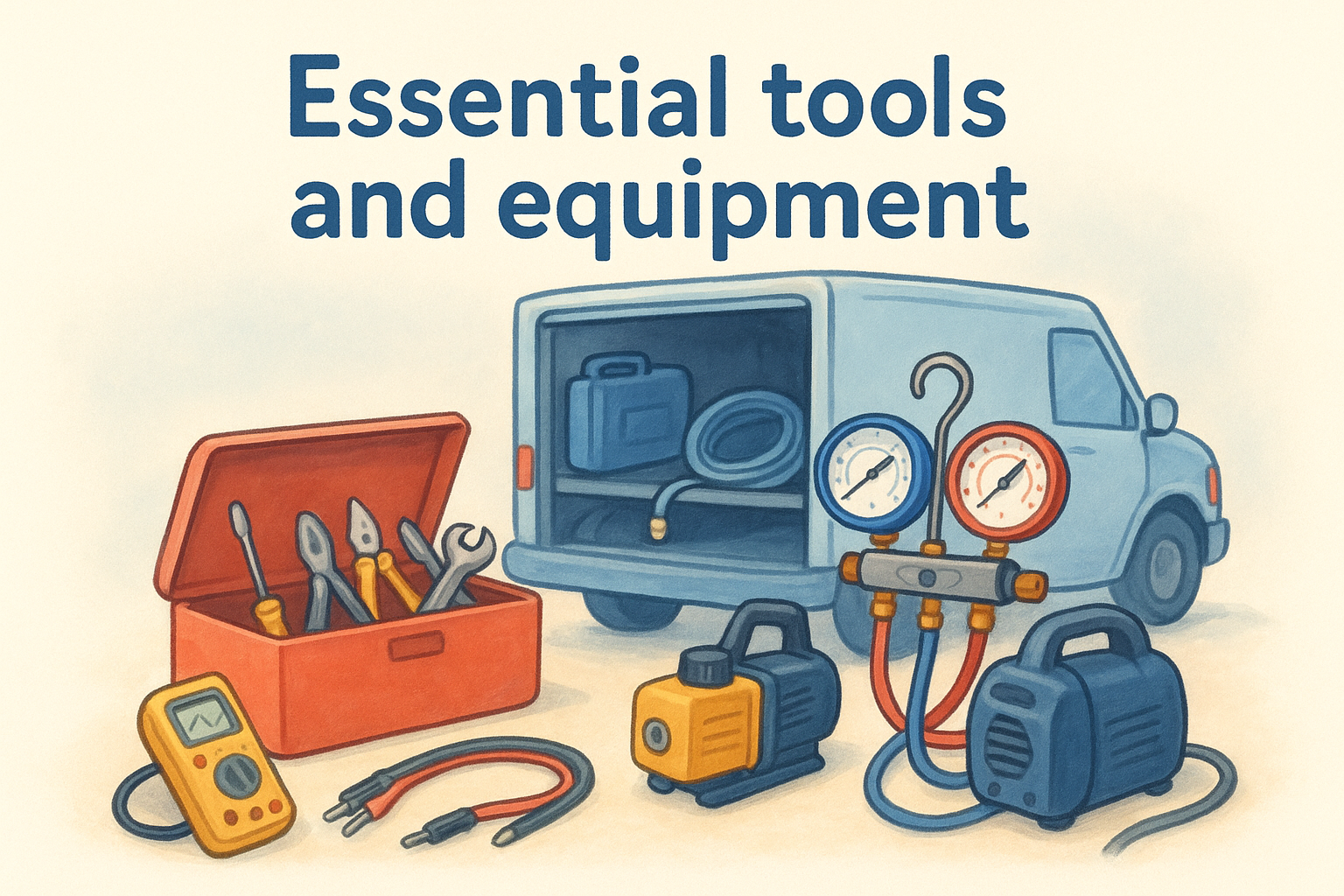
Your service truck carries multimeters, manifold gauge sets, refrigerant recovery machines, vacuum pumps, leak detectors, and hand tools for cutting, bending, and fastening components. You invest in quality instruments that withstand daily abuse and provide accurate readings under extreme conditions. Specialized tools like combustion analyzers, infrared thermometers, and duct pressure meters separate professionals from amateurs who guess at problems instead of measuring actual performance.
Experienced technicians maintain their tools meticulously because equipment failures during service calls cost time, money, and professional reputation.
Required certifications and licensing
The Environmental Protection Agency mandates EPA Section 608 certification for anyone handling refrigerants, with separate classifications for small appliances, high-pressure systems, and low-pressure equipment. Most states require contractor or journeyman licenses that involve passing exams covering codes, safety protocols, and system design. Employers value additional credentials like NATE (North American Technician Excellence) certification that demonstrates expertise in specific equipment types. You complete ongoing education to maintain licenses and stay current with new refrigerants, efficiency standards, and installation techniques that evolve constantly.
Pay, hours, and job outlook in the US
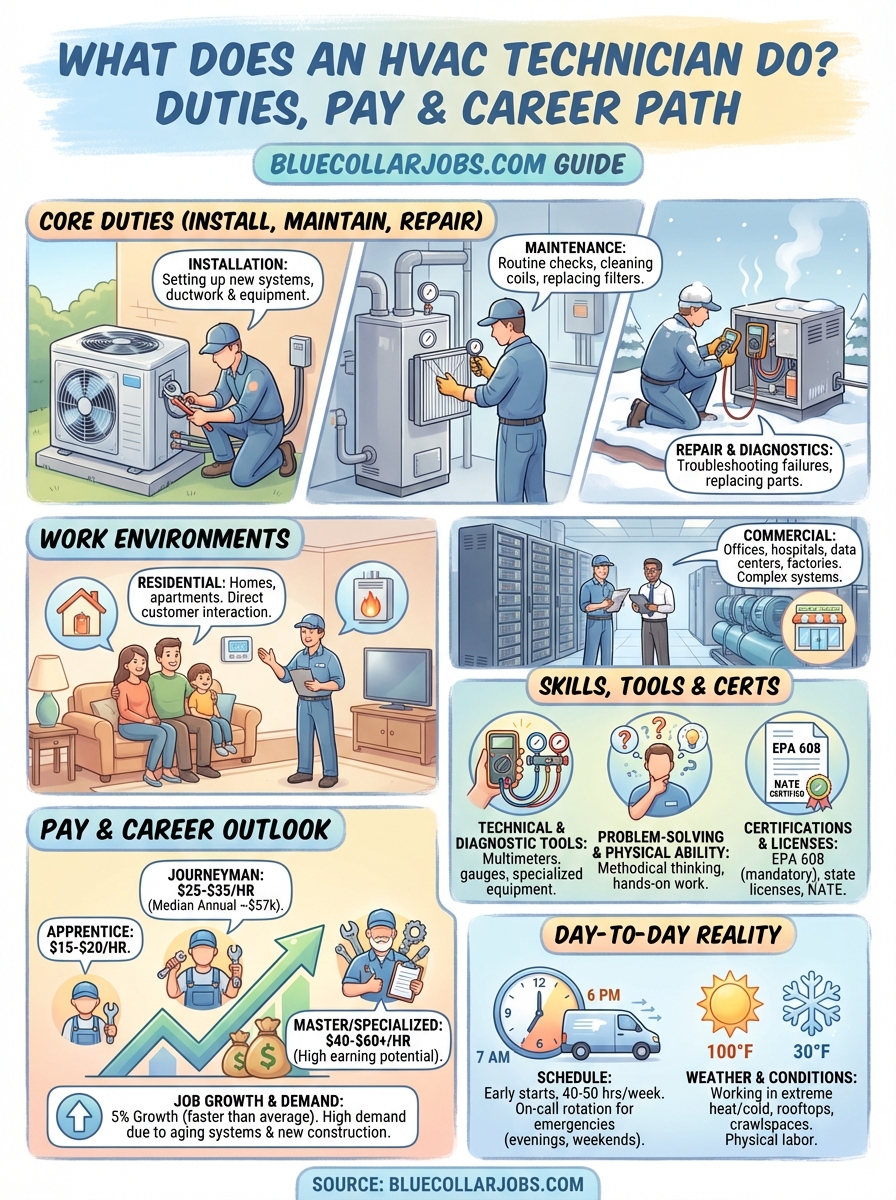
Your earning potential as an HVAC technician depends on experience level, geographic location, and specialization. Entry-level apprentices typically start between $15 and $20 per hour, while licensed journeymen earn $25 to $35 per hour in most markets. Master technicians and those with specialized commercial certifications command $40 to $60 per hour, particularly in high-cost metropolitan areas. When you ask what does an hvac technician do to maximize income, the answer involves pursuing advanced certifications, building a strong client base, and accepting emergency service calls that pay premium rates. Your compensation package often includes benefits like health insurance, retirement contributions, and company vehicles that reduce your personal vehicle expenses.
Average salaries and regional variations
Median annual income for HVAC technicians reaches approximately $57,000 nationwide, with significant variation based on where you work. States with extreme climates and high cost of living, including California, Alaska, Massachusetts, and Washington, pay $70,000 to $85,000 annually for experienced technicians. Southern and Midwestern states typically offer $45,000 to $60,000 for similar experience levels. Union membership can boost your earnings by 15 to 25 percent compared to non-union positions, along with providing stronger benefits packages and pension plans that secure your retirement.
Technicians who invest in commercial refrigeration or industrial controls certifications often earn 30 to 40 percent more than residential-only specialists.
Work schedules and overtime expectations
Your typical work week spans 40 to 50 hours, with mandatory overtime during peak heating and cooling seasons. Emergency service rotations require you to remain on-call during evenings, weekends, and holidays, responding to system failures that can’t wait until regular business hours. These emergency calls pay time-and-a-half or double-time rates, significantly boosting your annual income. Residential technicians usually work Monday through Saturday with occasional Sunday emergencies, while commercial specialists maintain steadier daytime schedules at facilities with dedicated maintenance departments.
Job growth and future demand
The Bureau of Labor Statistics projects 5 percent employment growth for HVAC technicians through 2032, faster than average across all occupations. Aging equipment replacement, new construction projects, and stricter energy efficiency regulations drive consistent demand for qualified professionals. Your job security remains strong because automation cannot replace the diagnostic judgment and physical installation work this trade requires.
Key takeaways and next steps
Understanding what does an hvac technician do gives you a realistic picture of a career that combines problem-solving, physical work, and steady income potential. You’ve learned that technicians install, maintain, and repair climate control systems across residential and commercial settings while earning between $45,000 and $85,000 annually depending on location and experience. The work demands EPA certifications, technical skills, and physical stamina, but job security remains strong as aging infrastructure and new construction create consistent demand for qualified professionals.
Your path forward starts with researching apprenticeship programs or trade schools in your area that provide hands-on training alongside classroom instruction. Contact local HVAC contractors to inquire about helper positions that let you earn while you learn. Once you understand the requirements and commit to the training, you’ll need employment opportunities that match your skill level. Browse our HVAC job listings across all 50 states to see what employers currently seek and where demand runs highest in your region.
Want blue collar jobs delivered to your inbox?
Want blue collar jobs delivered to your inbox?
