
An hvac helper job description outlines the entry-level responsibilities, skills, and qualifications needed to support licensed HVAC technicians on the job. Whether you’re an employer drafting a posting or a job seeker figuring out what this role actually involves, getting the details right matters, it sets expectations for both sides of the hiring table.
HVAC helpers are the backbone of installation and service crews. They carry materials, prep work sites, hand off tools, and learn the trade hands-on under experienced technicians. It’s physically demanding work, but it’s also one of the most accessible entry points into a skilled trade that pays well and has strong long-term demand. For employers, a clear and accurate job description helps attract candidates who know what they’re signing up for, and reduces turnover before it starts.
At bluecollarjobs, we connect trade professionals with employers across the country, and HVAC helper roles are among the most frequently posted positions on our platform. Below, we break down everything that belongs in a solid HVAC helper job description, from daily duties and required skills to certifications, salary expectations, and how the role fits into a broader HVAC career path.
Why the HVAC helper role matters
The HVAC industry is large and growing steadily. The U.S. Bureau of Labor Statistics projects that employment for heating, air conditioning, and refrigeration mechanics and installers will grow faster than average over the next decade, driven by new construction, aging equipment, and tightening energy efficiency requirements across residential and commercial buildings. That growth creates real demand at every level of the trade, and the helper position is where most careers in HVAC begin. Without a steady pipeline of helpers moving into the field, service companies struggle to keep pace with the volume of work that licensed technicians carry.
Employers who invest in well-screened helpers today are building the workforce they’ll rely on for the next decade.
The workforce gap driving demand
The HVAC industry faces a well-documented skilled labor shortage, and the effects are most visible at the entry level. Many experienced technicians are approaching retirement age, and there aren’t enough trained workers moving through the pipeline behind them. When employers post an hvac helper job description, they’re not just filling a short-term opening; they’re investing in candidates who will become their next journeymen, lead technicians, and eventually foremen. Getting that job description right from the start helps attract people who are serious about the trade and have realistic expectations of what the first year of work actually looks like.
For job seekers, this labor gap works in your favor. Entry-level HVAC positions are more available and better compensated than they were ten years ago. Employers are actively willing to train motivated helpers because leaving a position unfilled costs far more in delayed jobs and overworked crews than onboarding someone who still needs to learn the technical side of the work. If you’re physically capable, reliable, and willing to learn, you’re already ahead of many applicants.
Where helpers fit within a crew
On any given job, an HVAC crew runs most efficiently when everyone works at their appropriate skill and license level. A licensed journeyman or master technician shouldn’t spend time hauling equipment from a truck, cutting and fitting ductwork sections, or preparing a work site when a helper can handle those tasks. Helpers free up high-skill workers to focus on diagnostics, refrigerant work, and electrical connections, which keeps jobs on schedule and keeps labor costs reasonable for the employer. That division of labor matters significantly on commercial projects where multiple trades are working simultaneously and time on site is tightly managed.
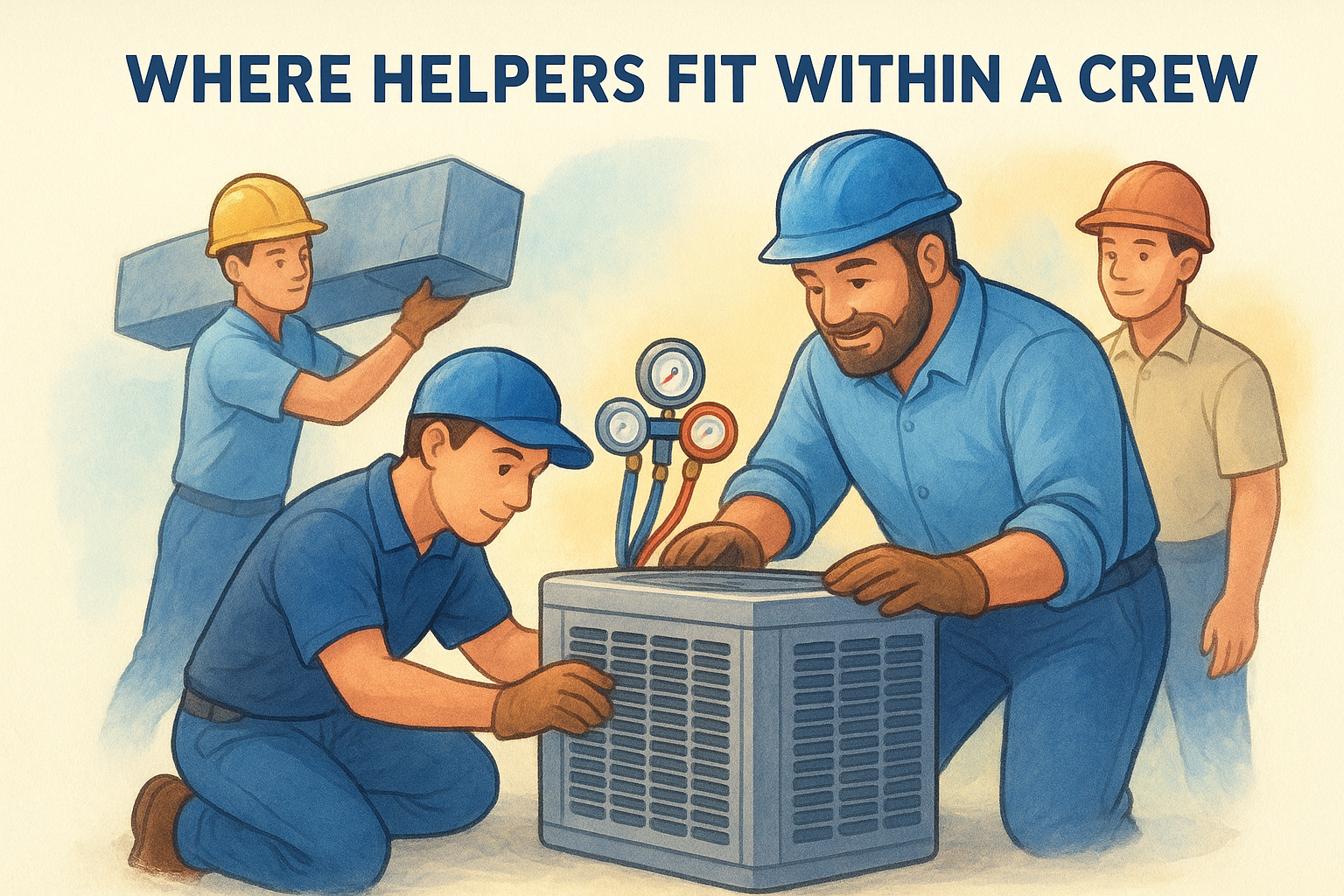
For you as a helper, this crew structure means you’re learning continuously while you work. Every job site puts you in direct contact with real systems, real problems, and real solutions being applied by people who have done this work for years. You see how technicians diagnose equipment faults, how they handle client communication on a service call, and how a full installation comes together from rough-in through startup and commissioning. Most helpers who stay committed to the trade and log their required field hours find that hands-on experience builds competency faster than classroom instruction alone ever could.
The role carries genuine responsibility from the first day on the job. You work near electrical panels, handle refrigerant lines, and operate in confined mechanical spaces or on rooftops in variable weather conditions. Physical stamina and consistent safety discipline are not optional; they are baseline expectations that employers watch for during every shift. If you’re evaluating whether this career path fits you, weigh those physical and safety demands just as seriously as you would any technical or certification requirement.
HVAC helper duties and day-to-day tasks
Every hvac helper job description should list the actual tasks you’ll perform day to day, not vague summaries. Helpers do real, essential work from the moment they arrive on a job site, and knowing the full scope of the role helps both employers write honest postings and candidates prepare for what they’re walking into.
Physical and site preparation tasks
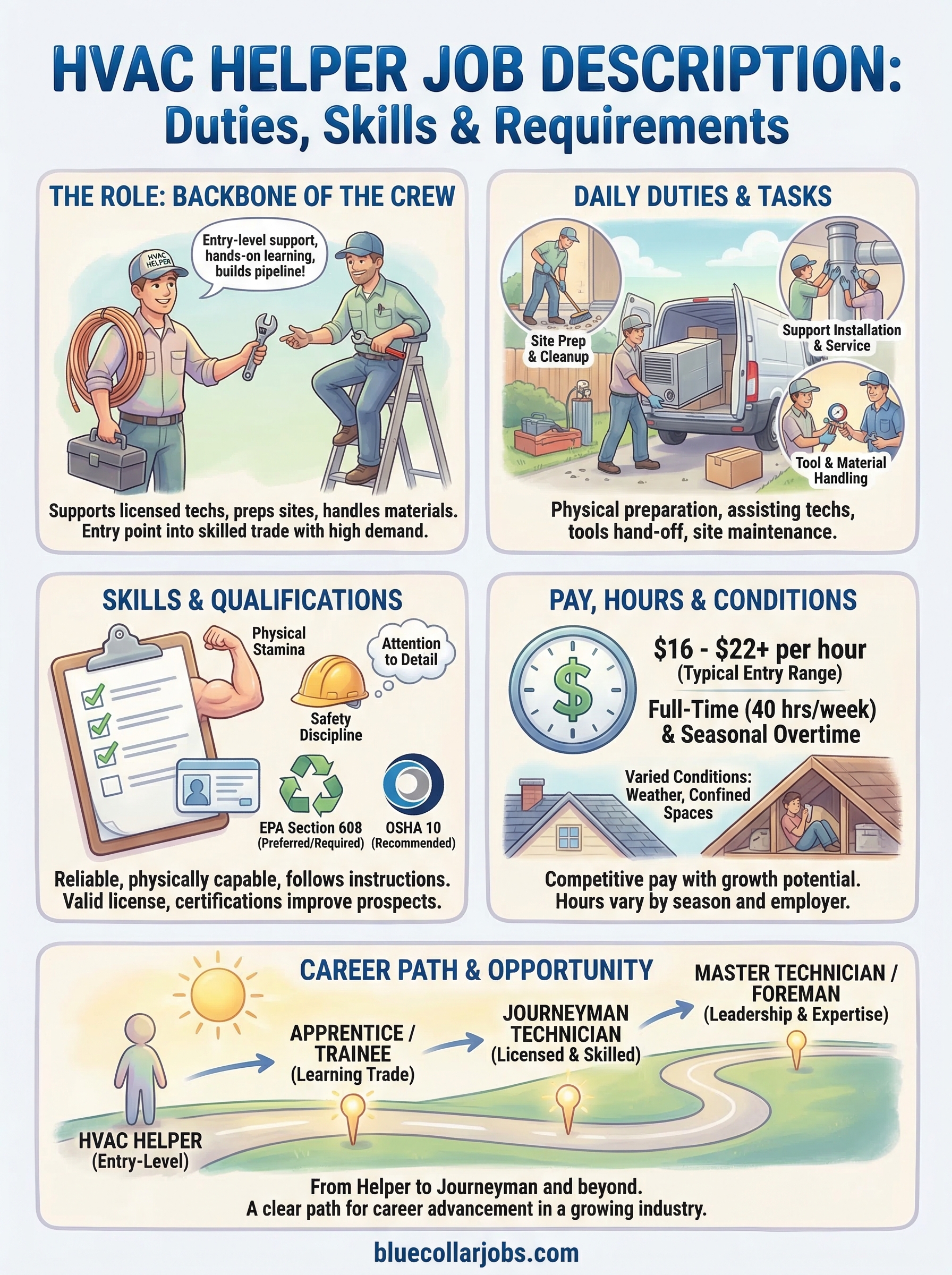
Before any installation or service work begins, you set up the environment that makes everything else possible. You unload and transport equipment from the vehicle to the work area, which often means moving heavy air handlers, coil units, or sections of ductwork through tight residential hallways or up commercial stairwells. You also clear debris from work areas, lay down protective coverings on floors and surfaces, and make sure tools and materials are staged and ready before the lead technician starts technical work. That prep work directly affects how efficiently the crew moves through the job.
A helper who shows up prepared and keeps the site organized lets technicians focus entirely on skilled work, which keeps the job on schedule.
Supporting technicians during installation and service
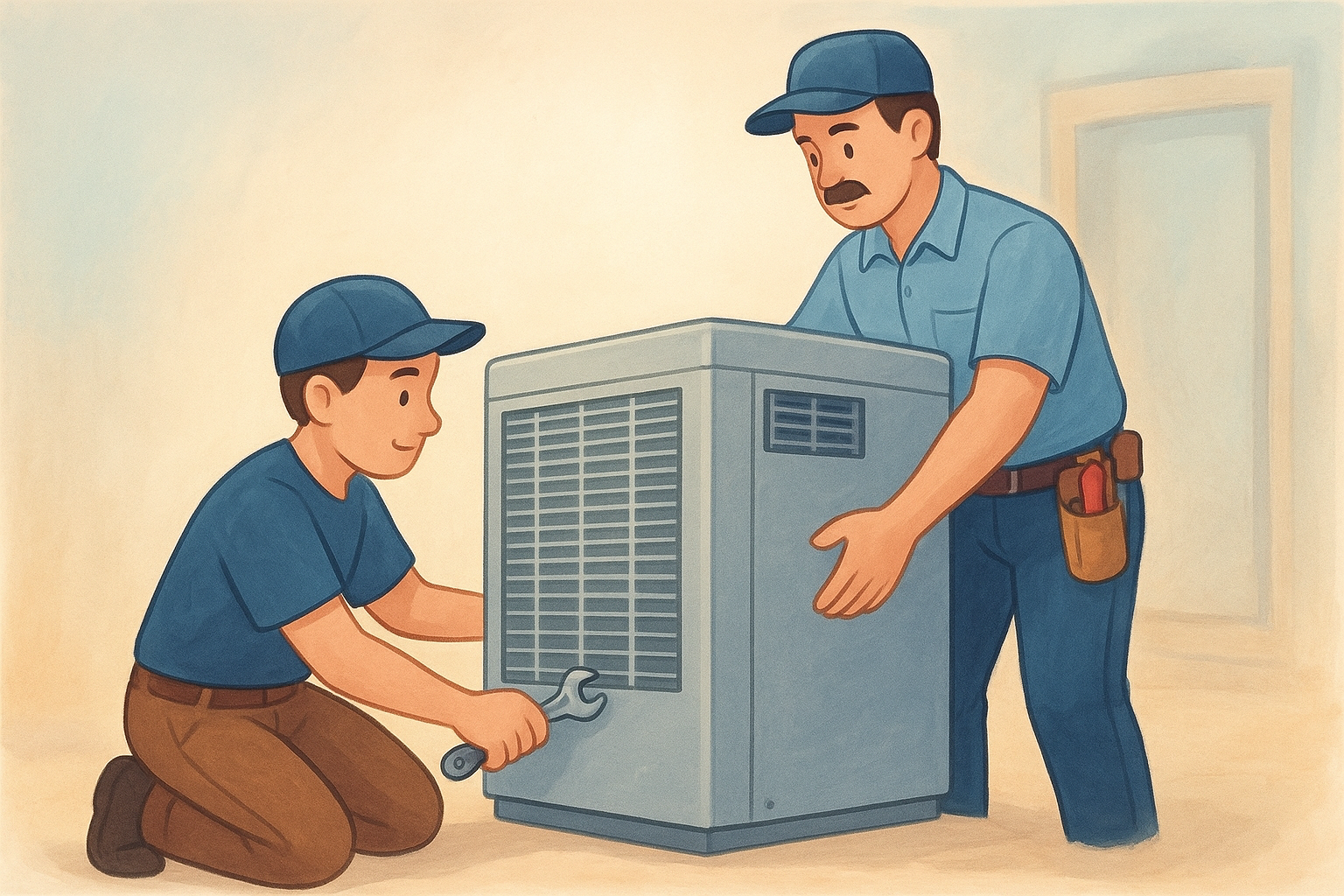
Once work is underway, your job shifts to active assistance. You hand off tools and materials on demand, hold components in position while technicians fasten or connect them, and assist with cutting, measuring, and fitting ductwork sections according to the specs the technician is working from. On service calls, you help pull access panels, retrieve replacement parts from the truck, and assist with the physical aspects of equipment removal and reinstallation.
Cleanup and closeout tasks also fall to you at the end of each job. You remove protective coverings, collect and return tools, dispose of packaging and old equipment properly, and help load everything back onto the vehicle. Residential customers notice the condition of their home after a crew leaves, and commercial clients track how well contractors maintain their facilities. Leaving a clean site reflects on the whole crew and directly impacts whether an employer wins repeat business from that customer.
HVAC helper skills and qualifications
Every hvac helper job description should clearly separate the skills you need on day one from the certifications and qualifications that either come with the job or must be in place before you start. Employers use this section of a job posting to filter applicants, and job seekers use it to gauge where they currently stand and what gaps they need to close before applying.
Physical and foundational requirements
The work is hands-on and physically demanding from the start. You need reliable physical stamina to lift and carry heavy equipment, work on your feet for full shifts, and operate in confined spaces or awkward positions throughout the day. Beyond raw physical capability, you also need a strong attention to detail when following instructions from a lead technician, because mistakes on a mechanical system can create safety hazards or expensive rework. Communication matters too; you’re part of a crew, and being able to ask clear questions and follow verbal directions quickly keeps jobs running on schedule.
Employers consistently rank reliability and the ability to follow instructions above prior technical knowledge for entry-level helper candidates.
The following are baseline qualifications most employers list as requirements:
- Valid driver’s license and ability to operate a company vehicle
- Ability to lift 50 or more pounds repeatedly throughout a shift
- Comfort working at heights, in attics, and in crawl spaces
- Basic math skills for measuring and reading job specs
- High school diploma or equivalent (preferred by most employers)
Certifications and licenses
You do not need a journeyman or master license to work as a helper, but some certifications improve your hiring prospects significantly. An EPA Section 608 certification allows you to handle refrigerants legally, which removes a legal restriction from your role and makes you more immediately useful on service calls. Many employers either require or strongly prefer Section 608 certification at hire, particularly for commercial work where refrigerant handling comes up regularly.
OSHA 10-hour construction training is another credential worth completing before you apply. It signals to employers that you take on-site safety standards seriously and understand basic hazard recognition, which matters when you’re working near electrical systems and pressurized lines. Some employers cover the cost of these certifications once you’re hired, but arriving with them already in hand puts you ahead of other applicants.
How to write an HVAC helper job description
A well-written hvac helper job description does two things at once: it filters out applicants who aren’t a good fit and gives serious candidates a clear reason to apply. Most poorly performing job postings fail because they’re either too vague to set expectations or so loaded with generic language that the actual requirements get buried. Keep your posting direct, specific, and honest about what the work physically involves day to day.
Start with a clear job overview
Your opening paragraph should tell candidates exactly who you are as an employer, what type of work your company handles (residential, commercial, or both), and where the helper will be working. Mention the crew structure upfront. Candidates want to know whether they’ll be working alongside one lead technician on service calls or rotating across a larger crew on installation projects. That context shapes how candidates evaluate the role and whether it fits their current experience level and career goals. A posting that opens with that kind of specificity immediately signals that you’re an employer who has thought through what the position actually requires.
One or two sentences describing your company’s work volume and service area will attract more qualified applicants than a generic company description ever will.
Write requirements in plain, specific terms
Avoid listing every possible soft skill and instead focus on what the job actually demands on a daily basis. If the role requires lifting over 50 pounds repeatedly throughout a shift, state that directly. If you require EPA Section 608 certification before the start date, make that a hard requirement rather than burying it under "preferred qualifications." Clarity here saves you time screening unqualified candidates and saves applicants from wasting an application on a role they’re not eligible for.
Use a short bulleted list for physical requirements, certifications, and licensing details so candidates can quickly scan for hard requirements. Put your non-negotiables in the bullets and keep anything flexible in the body copy. A job posting that honestly reflects the physical demands and daily schedule attracts candidates who stay past the first month, which is where most turnover in entry-level trade positions actually happens.
HVAC helper pay, hours, and work conditions
Understanding the compensation and working conditions that come with an hvac helper job description helps both employers set competitive pay and job seekers evaluate whether the role fits their financial needs. Pay, scheduling, and physical environment all vary depending on your employer type, geographic region, and the season, so knowing the typical ranges before you apply or post a position saves everyone time.
Pay and compensation
The U.S. Bureau of Labor Statistics reports median hourly wages for heating and cooling equipment mechanics and installers, and helpers typically earn in the lower range of that spectrum since the role sits at the entry level. Most HVAC helpers in the United States earn between $16 and $22 per hour, depending on the state, the type of work (residential versus commercial), and whether the employer provides benefits. Employers in states with high costs of living, such as California, New York, and Washington, tend to pay more. Some employers also offer overtime pay, tool allowances, and performance bonuses that can push total annual compensation significantly above the base hourly rate.
Adding EPA Section 608 certification before you apply often results in a higher starting wage because it removes a legal restriction from your role on the job.
Hours and scheduling
HVAC helpers typically work full-time schedules of 40 hours per week, though hours vary heavily with the season. Summer and winter peak seasons drive high demand for service calls and installations, which means overtime is common during those months and can add meaningful income for helpers willing to work extended hours. Some employers run on-call or weekend rotations, particularly companies that offer emergency service. If you’re evaluating a position, ask directly about overtime expectations and weekend availability requirements before accepting an offer.
Physical work conditions
The work environment is physically demanding and changes from job to job. On any given week, you might work in a cramped attic crawling around ductwork, on a commercial rooftop in direct sun, or in a basement mechanical room running new refrigerant lines. Weather exposure is real, and heat-related fatigue during summer peak season is a genuine occupational hazard that experienced crews manage through hydration protocols and scheduled breaks. Employers should address these conditions honestly in any job posting, and job seekers should factor them into their decision.
Next steps
A complete hvac helper job description gives everyone clarity from the start. Employers who write honest, specific postings attract candidates who show up ready to work and stay through their first year. Job seekers who understand the daily demands, pay range, and certification requirements can walk into an interview confident and prepared to make a real case for themselves.
Whether you’re hiring your next helper or looking for your first trade position, the right platform makes a significant difference in how quickly you connect with the right match. BlueCollarJobs specializes exclusively in skilled trade roles, which means your posting reaches candidates who are actively looking for HVAC work, not sifting through thousands of unrelated listings. You won’t find your next apprentice buried under white-collar job postings here.
Take the next step and post your HVAC helper job today to reach qualified candidates faster.

6 thoughts on “HVAC Helper Job Description: Duties, Skills & Requirements”