

How To Become A Welder: Training, Certs, And Career Path
Welding is one of those careers where demand never really drops off. Infrastructure needs repair, manufacturers need metal joined, and construction projects keep breaking ground. If you’re researching how to become a welder, you’re looking at a trade with solid earning potential and clear entry points, no four-year degree required.
This guide breaks down everything you need to know: the training options, certifications that actually matter, and what your career path looks like from day one. Whether you’re fresh out of high school or making a mid-career switch, the steps are straightforward once you understand them.
At bluecollarjobs, we connect skilled tradespeople with employers across the country. We see welding positions posted daily, from entry-level helpers to certified specialists, and we know what employers are looking for when they hire. Let’s walk through exactly what it takes to get your welding career started.
What welders do and what you need to start
Welders join metal parts together using heat and specialized equipment. You’ll work with different materials like steel, aluminum, and stainless steel, cutting and fusing them into finished products or structures. The work happens in manufacturing plants, construction sites, shipyards, and fabrication shops, depending on your specialty and employer.
Daily responsibilities and work environments
Your day-to-day tasks include reading blueprints, setting up equipment, and executing welds to exact specifications. You’ll inspect your work for defects, grind down rough spots, and ensure every joint meets safety and quality standards. Some positions involve repetitive production work, while others require problem-solving on custom projects or repairs in the field.
Physical demands are real. You’ll stand for long periods, work in tight spaces, and lift materials regularly. Heat, sparks, and fumes are part of the environment, which is why proper gear matters. Outdoor work means dealing with weather, while indoor shops can be loud and require constant focus on safety protocols.
Welding combines technical skill with physical work, and you need both stamina and precision to do it well.
Basic requirements to get started
You don’t need a college degree, but you do need a high school diploma or GED for most training programs and employers. Strong math skills help when reading measurements and calculating angles. Manual dexterity and good hand-eye coordination separate competent welders from those who struggle with precision work.
Before you start serious training on how to become a welder, you’ll need reliable transportation to job sites and the ability to pass a basic drug screening. Many employers also run background checks. Good vision (correctable with glasses) and steady hands are non-negotiable, since you’re working with molten metal and tight tolerances. Physical fitness matters too, especially for positions that involve climbing, crawling, or working overhead for extended periods.
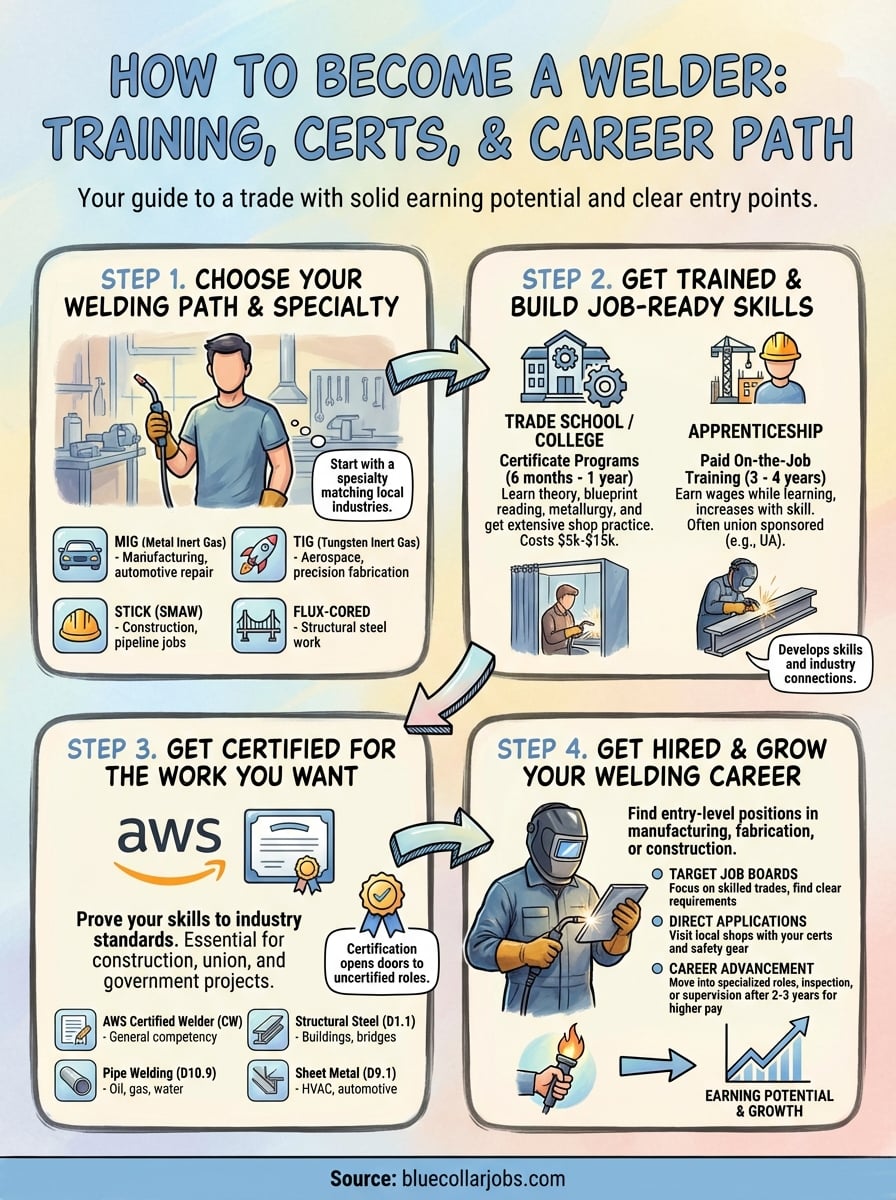
Step 1. Choose your welding path and specialty
Your first move in how to become a welder is deciding which type of welding you want to learn. Each specialty uses different equipment, materials, and techniques, and employers hire based on specific skills. You don’t need to master everything at once, but you should pick a starting point that aligns with the work you want to do.
Common welding specialties
Four main processes dominate the industry. MIG welding (Metal Inert Gas) is the most common for beginners and production work, used heavily in manufacturing and automotive repair. TIG welding (Tungsten Inert Gas) requires more precision and works well with thin materials like aluminum and stainless steel, often in aerospace or custom fabrication. Stick welding (SMAW) handles thicker materials and works outdoors in construction and pipeline jobs where wind and weather matter. Flux-cored welding combines elements of MIG and stick, making it popular for structural steel work on bridges and buildings.
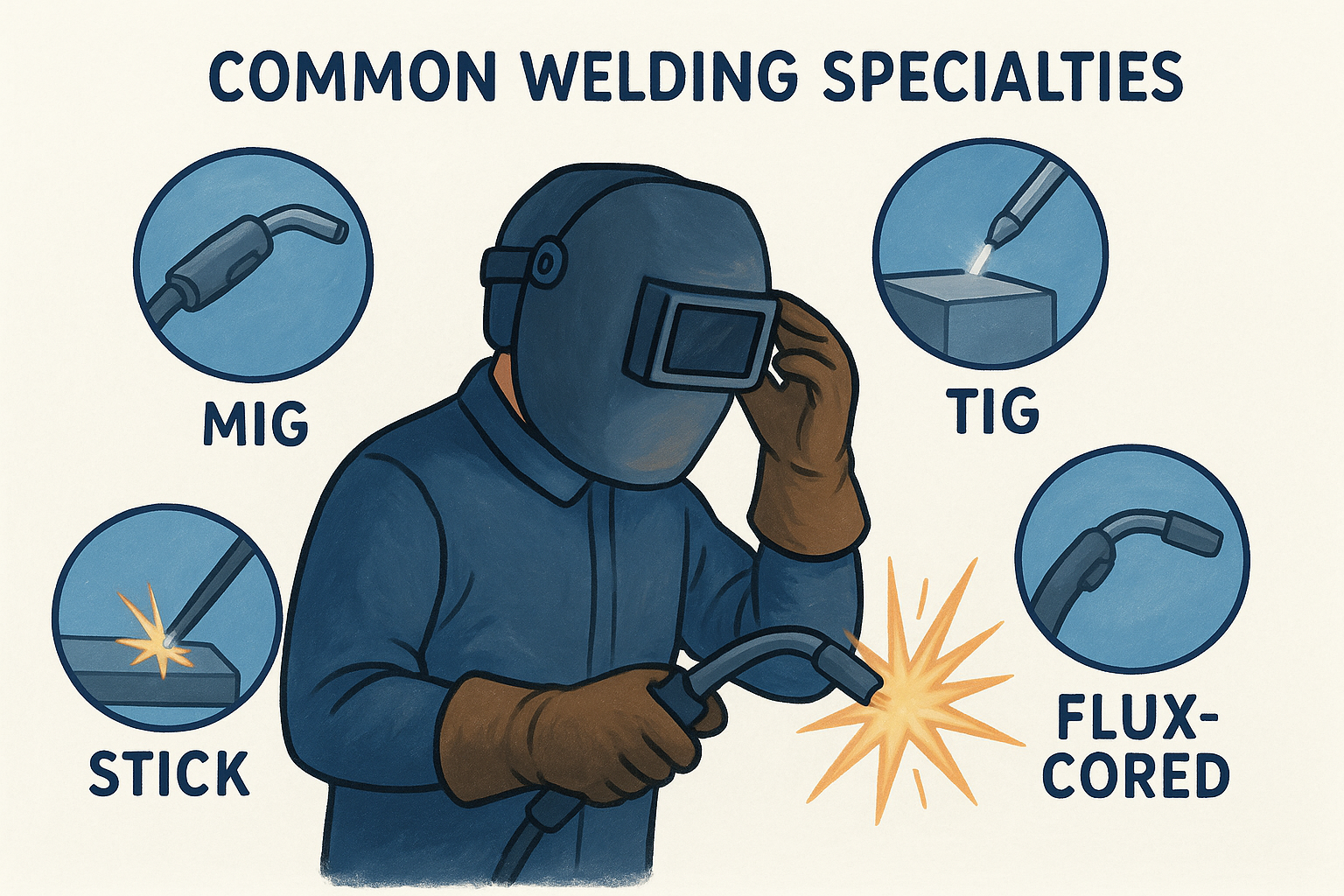
Start with the specialty that matches the industries hiring most actively in your area, then branch out once you have steady work.
Which path fits your goals
Research job postings in your region to see which welding types appear most often. Manufacturing plants typically need MIG welders for assembly lines, while construction companies seek stick welders for fieldwork. Look at salary ranges too, since TIG welders in specialized shops often earn more than production welders, but those positions require advanced skill and patience.
Consider your work preferences. If you want stable indoor hours, target MIG positions in factories. If you prefer varied work environments and don’t mind travel, pipeline and structural welding offer higher pay but more physical demands.
Step 2. Get trained and build job-ready skills
Training programs for how to become a welder range from a few months to two years, depending on the depth you need. You’ll learn proper equipment setup, safety protocols, metal preparation, and the actual welding techniques for your chosen specialty. Most employers expect you to handle basic tasks independently on day one, so your training needs to cover both classroom theory and extensive shop time.
Trade school and community college programs
Vocational schools and community colleges offer welding certificate programs that typically run six months to one year. These programs teach multiple welding processes, blueprint reading, and metallurgy basics in a structured environment. You’ll spend roughly half your time in lecture halls learning theory and the other half in welding booths practicing under supervision.
Costs range from $5,000 to $15,000 depending on location and program length. Financial aid, Pell Grants, and workforce development funding can reduce your out-of-pocket expenses significantly. Look for programs accredited by the American Welding Society (AWS), since employers recognize this credential and some programs include certification prep in the tuition.
Apprenticeship programs
Union and non-union apprenticeships combine paid on-the-job training with classroom instruction over three to four years. You’ll earn wages while learning, starting around 50% of journeyman pay and increasing as your skills improve. Companies sponsor apprenticeships through organizations like the United Association (UA) or local trade unions, and they often prefer candidates who’ve completed basic welding courses first.
Apprenticeships take longer but you’re building skills, earning income, and making industry connections from day one.
Step 3. Get certified for the work you want
Certification proves you can perform specific welding tasks to industry standards. While not every employer requires it upfront, most construction projects, government contracts, and union positions mandate certified welders. Getting your papers in order early opens doors that stay closed to uncertified welders, even if they have solid skills.
AWS certification options
The American Welding Society (AWS) offers the most recognized certifications in the industry. The Certified Welder (CW) program tests your ability to execute specific weld types in various positions using designated processes. You’ll perform actual welds on test plates, and a certified inspector evaluates them based on strength, penetration, and appearance.
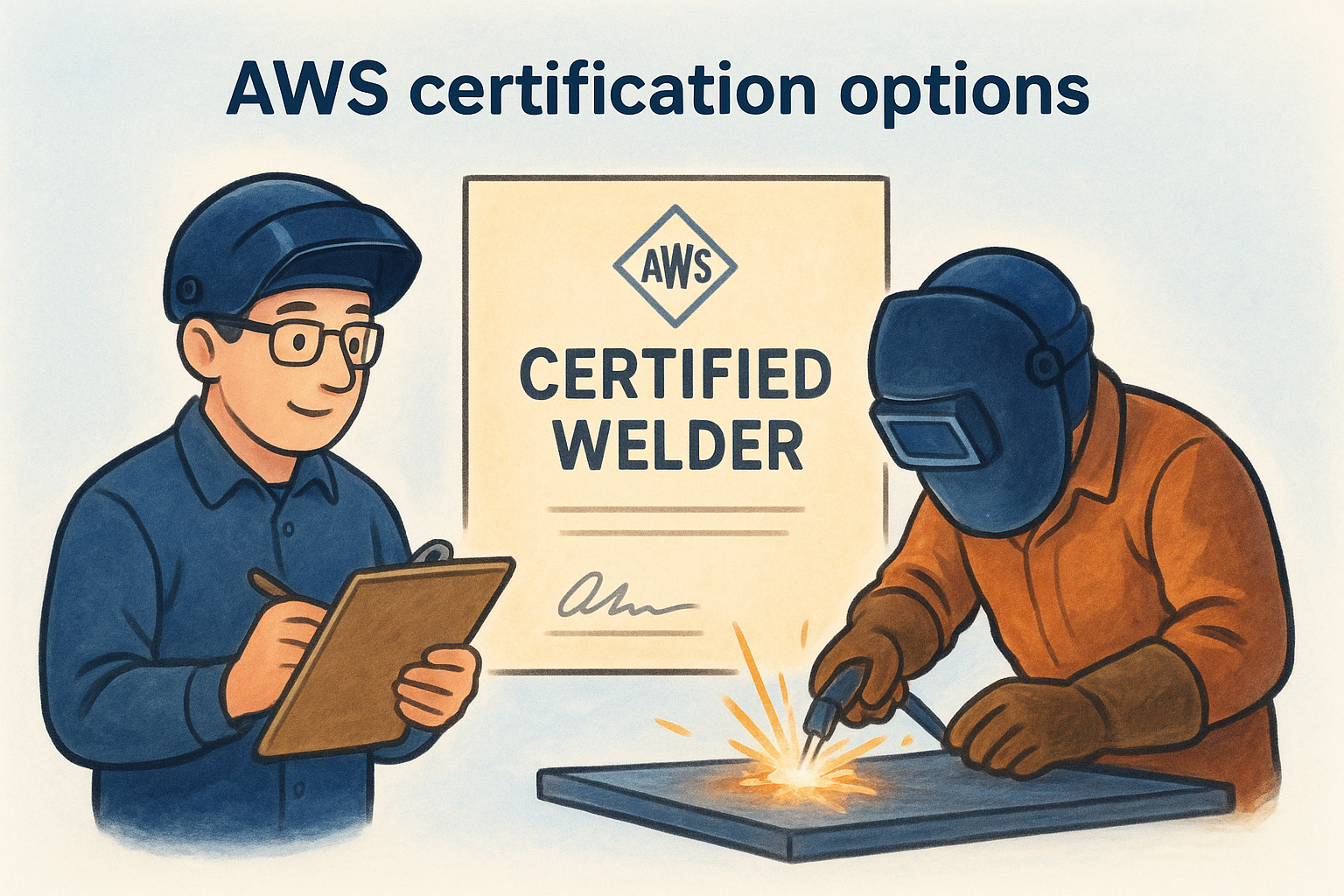
Common certifications include:
- Structural Steel (D1.1): Required for building and bridge construction
- Pipe Welding (D10.9): Necessary for oil, gas, and water pipeline work
- Sheet Metal (D9.1): Used in HVAC and automotive fabrication
- Stainless Steel: Needed for food processing and pharmaceutical equipment
Tests cost between $300 and $1,000 depending on the process and complexity. Certifications typically expire after six months to three years unless you maintain continuous employment in that specific welding type.
When certification matters most
You need certification before starting work on projects with structural integrity requirements or federal funding. Commercial construction companies won’t hire you without proper credentials, and union apprenticeships often require certification at specific training milestones.
Skip certification only if you’re targeting small fabrication shops or non-critical manufacturing roles where employers test your skills in-house.
Step 4. Get hired and grow your welding career
The final step in how to become a welder is getting hired and advancing your career. Entry-level positions exist across manufacturing plants, fabrication shops, and construction companies that need welders who can follow safety protocols and produce quality work. Your career progression depends on the skills you build, the connections you make, and how quickly you prove your value on the job.
Finding your first welding job
Start your job search by targeting companies that hire entry-level welders or apprentices in your specialty. Check job boards like bluecollarjobs that focus specifically on skilled trades, where employers post positions with clear requirements and salary ranges. Prepare a simple resume highlighting your training program, certifications, and any practice projects that demonstrate your capabilities.
Many welders find their first position through direct applications at local shops or through instructors who maintain industry contacts. Show up with your certification cards, safety gear, and willingness to start in helper or junior roles. Employers value reliability and teachability over perfection when hiring beginners.
Career advancement paths
Your earning potential grows significantly as you gain experience and expand your skill set. After two to three years, you can move into specialized welding roles like pipe welding or TIG work that pay premium rates. Some welders transition into inspection, supervision, or welding instruction positions that offer better hours and less physical strain.
Building expertise in multiple welding processes and pursuing advanced certifications creates the fastest path to higher-paying positions and job security.
Next steps
You now understand how to become a welder from start to finish. The path requires focused training, proper certification, and a willingness to start at entry-level positions while building your skills. Most welders find steady work within months of completing their training, especially if they’ve targeted high-demand specialties and obtained relevant certifications.
Start by researching training programs in your area and comparing costs, schedules, and job placement rates. Apply for programs that fit your timeline and budget, then commit to mastering the fundamentals before worrying about advanced techniques. Once you’ve completed training, update your certifications and begin applying to local shops and contractors.
Browse our blog for more blue collar career guides to explore other skilled trade opportunities and get practical career advice that helps you make informed decisions about your future in the trades.
Want blue collar jobs delivered to your inbox?
Want blue collar jobs delivered to your inbox?
