

Industrial electricians keep factories, plants, and large-scale facilities running. Without them, production lines stop, equipment fails, and operations grind to a halt. If you’re hiring for this role or considering it as a career path, understanding industrial electrician job responsibilities gives you a clear picture of what the position actually demands, from hands-on electrical work to reading complex schematics and maintaining compliance with safety codes.
This isn’t a job where two electricians do the same thing every day. Responsibilities shift based on the facility, the equipment, and the level of experience required. A journeyman wiring motor controls at a manufacturing plant faces different challenges than a master electrician overseeing power distribution at a water treatment facility. The specifics matter, especially when you’re writing a job description or deciding whether your skills and certifications line up with employer expectations.
Below, we break down the core duties, required skills, and daily tasks that define the industrial electrician role. Whether you’re an employer building a job listing on bluecollarjobs or a tradesperson mapping out your next career move, this guide covers what you need to know, no filler, just the details that count.
What industrial electricians do day to day
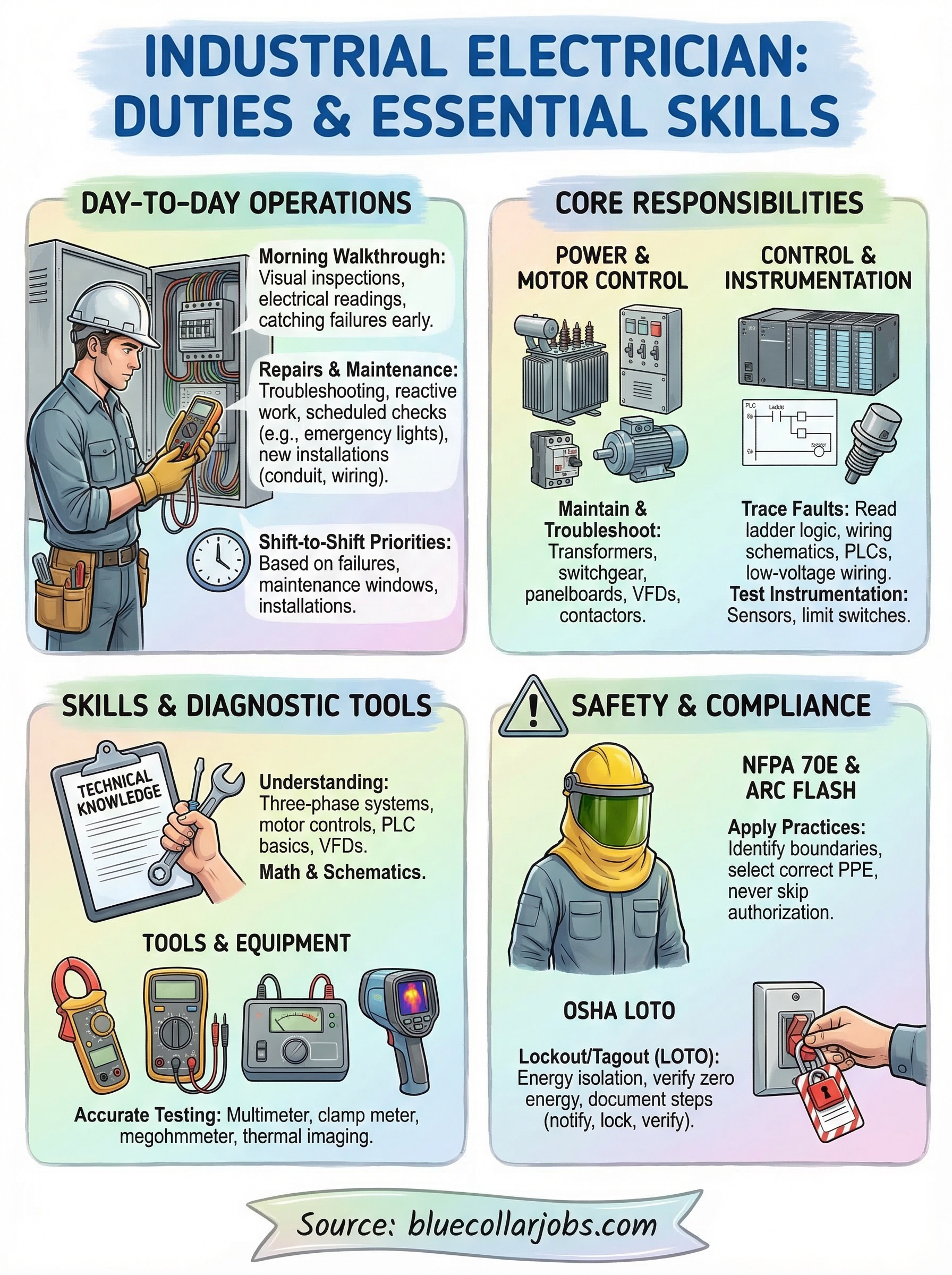
The daily routine of an industrial electrician rarely follows a fixed script. Shift-to-shift priorities change based on equipment failures, scheduled maintenance windows, and new installations. Most days combine reactive work (fixing what breaks) with planned tasks like preventive maintenance checks, panel inspections, or running new conduit for an equipment upgrade.
Morning walkthrough and equipment checks
Most shifts start with a walkthrough of critical systems: motors, control panels, switchgear, and any equipment flagged from the previous shift. You’re looking for warning signs before they become downtime. Visual inspections and electrical readings taken early catch problems before production starts, which matters when a single line stoppage costs thousands per hour.
Starting your shift with a structured inspection routine is one of the most effective ways to catch failures before they cost the facility real money.
These checks often involve using a multimeter or clamp meter to verify voltage levels, check for ground faults, or confirm that motor starter contacts are seating correctly. You document findings in a maintenance log, flag anything that needs follow-up, and coordinate with your supervisor if something needs immediate attention.
Repairs, installations, and scheduled maintenance
Once the shift gets moving, troubleshooting and repair work take up a significant portion of your time. You might pull a motor, test a variable frequency drive, or track down an intermittent fault in a control circuit. Scheduled maintenance tasks, like testing emergency lighting systems or inspecting contactors, run alongside that reactive work.
Industrial electrician job responsibilities also include supporting new equipment installations. You read electrical schematics and wiring diagrams, run conduit, pull wire, terminate connections, and test each system before it goes live. Precision matters here because mistakes in an industrial environment carry serious safety consequences.
Core responsibilities by system and task
Industrial electrician job responsibilities break down clearly when you organize them by system type. Thinking in categories makes it easier to match candidates to specific roles or identify which skill areas you still need to develop.
Power distribution and motor control
Power distribution is the backbone of any industrial facility. You’re responsible for maintaining and troubleshooting transformers, switchgear, panelboards, and bus ducts that feed power across the plant. Motor control work includes wiring and testing motor starters, contactors, and variable frequency drives that run conveyor systems, pumps, and HVAC equipment.
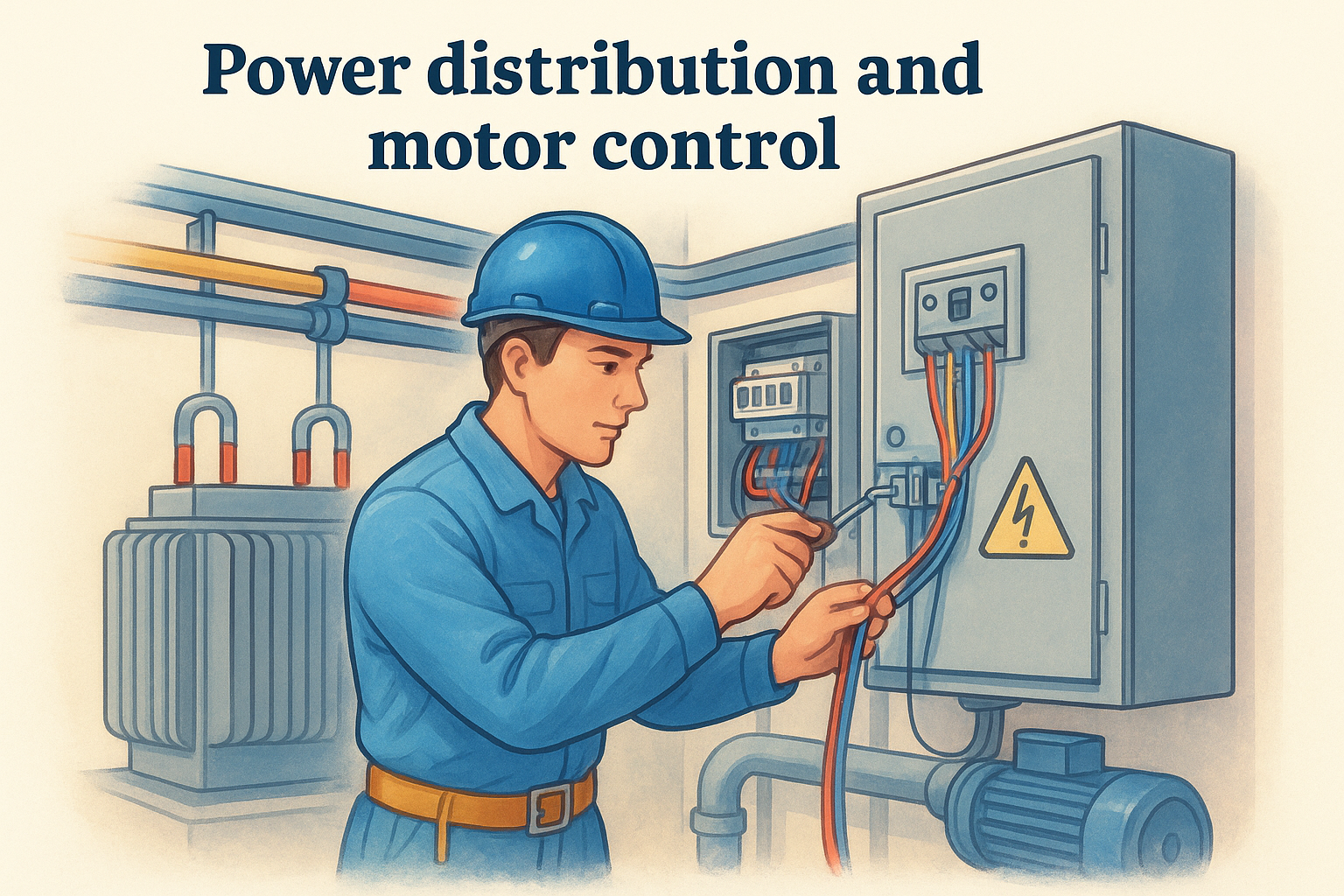
Faulty motor control circuits account for a large share of unplanned downtime in manufacturing facilities, so mastery here directly impacts production output.
You also verify correct phasing on three-phase systems and test overload protection devices to confirm motors won’t burn out under load.
Control circuits and instrumentation
Control circuits connect sensors, switches, and actuators to the equipment they manage. You read and modify ladder logic diagrams and wiring schematics to trace faults. Work in this area often involves PLCs, relay panels, and low-voltage control wiring that coordinates automated processes across production lines.
You’re expected to test instrumentation like pressure sensors and limit switches and confirm they communicate correctly with the control system before signing off on any repair.
Skills, tools, and technology you need
Industrial electrician job responsibilities demand a specific combination of technical knowledge and hands-on capability. You need to understand electrical theory at a level that lets you diagnose problems quickly, not just follow a checklist. Strong math skills and the ability to read schematics accurately are non-negotiable from day one.
Technical skills and knowledge
Your core technical foundation covers three-phase power systems, motor controls, and low-voltage control wiring. You should understand PLC basics well enough to navigate ladder logic and identify faults in automated systems. Employers increasingly expect familiarity with variable frequency drives and basic instrumentation, especially in manufacturing and processing facilities.
The more system types you can troubleshoot independently, the more value you bring to any industrial facility.
Tools and diagnostic equipment
You rely on a standard set of instruments to do the job accurately. A clamp meter and digital multimeter cover most electrical testing needs, while a megohmmeter helps you test insulation resistance on motors and cables. Thermal imaging cameras are becoming more common on industrial sites for spotting overloaded connections before they fail, so getting comfortable with that technology puts you ahead of candidates who only know the basics.
Safety, codes, and compliance expectations
Safety sits at the center of industrial electrician job responsibilities, not on the margins. Industrial facilities operate high-voltage systems where a single misstep can cause serious injury or a fatality. You’re expected to know the relevant codes, apply them on every task, and hold the workers around you to the same standard.
NFPA 70E and arc flash protocols
NFPA 70E defines electrical safety practices in the workplace, and industrial employers expect you to apply it from day one. You identify arc flash boundaries before starting any energized work, select the correct personal protective equipment (PPE) for each task category, and never skip authorization steps regardless of time pressure.
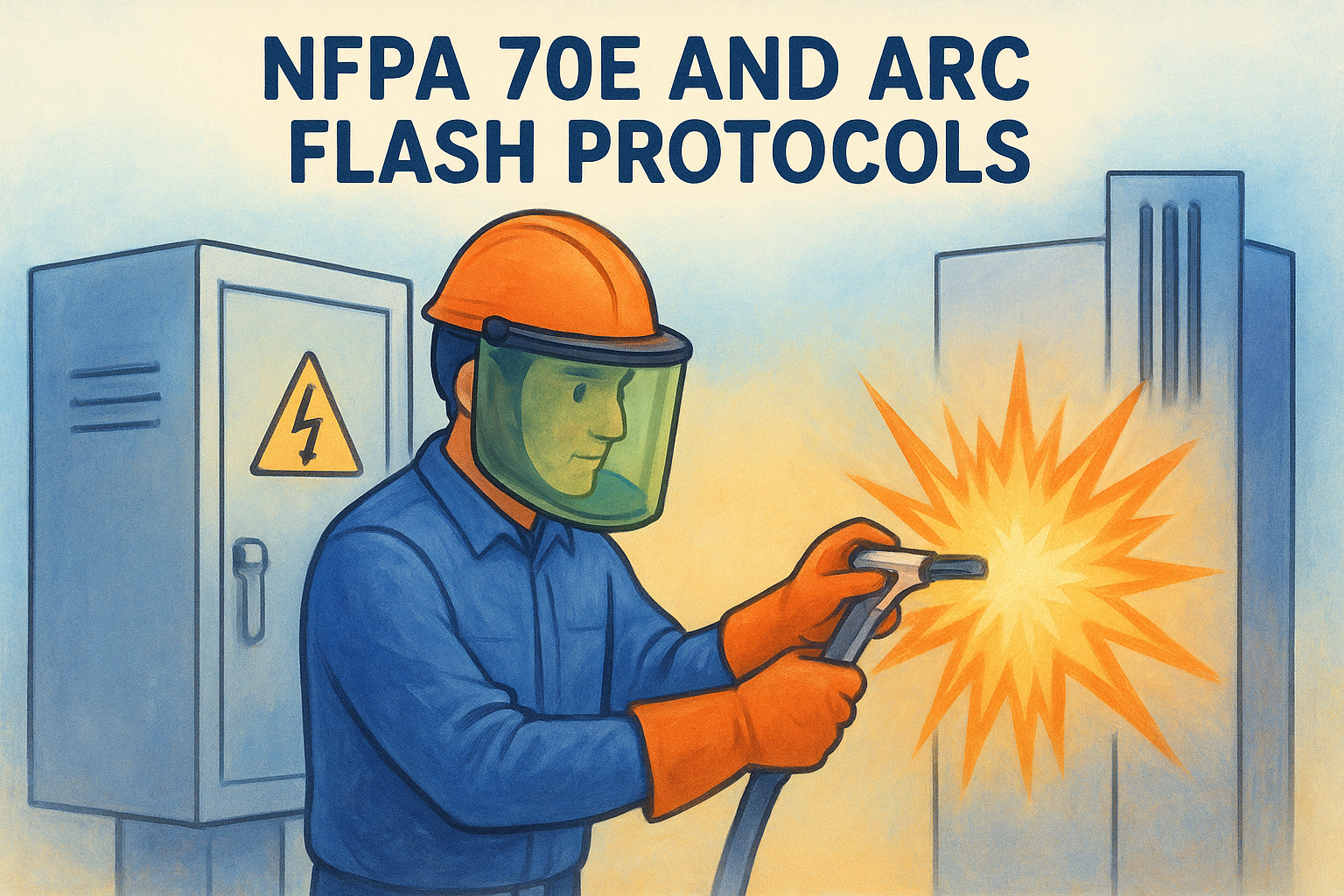
Skipping PPE requirements on energized work is one of the leading causes of electrical fatalities in industrial settings.
OSHA requirements and lockout/tagout
OSHA 29 CFR 1910.147 covers lockout/tagout procedures, and knowing it protects you and everyone working nearby. You apply energy isolation steps before any maintenance begins, verify that equipment is fully de-energized, and document each step clearly. Safety auditors and facility inspectors review those records regularly, so accuracy matters beyond the physical procedure itself.
Key lockout/tagout steps you document on every job:
- Notify affected workers before isolation begins
- Apply lockout devices to each energy source
- Verify zero energy state before touching equipment
How to write a strong job description
A well-written job description saves you time and attracts the right candidates. Vague listings pull in applicants who don’t match, while specific, detailed postings filter for the people you actually need. When you list industrial electrician job responsibilities clearly, qualified candidates self-select and unqualified ones move on.
Be specific about systems and certifications
Generic descriptions like "electrical experience required" don’t tell candidates what you actually need. Name the specific systems your facility runs, such as three-phase motor controls, PLCs, or variable frequency drives. List any required certifications, like a Journeyman or Master license, directly in the posting so candidates know before applying.
Listings that specify system types and license requirements consistently attract more qualified applicants than those that rely on broad language.
Set clear expectations on experience level
Experience level and daily task breakdown are the two details candidates prioritize most when reading a job post. Describe what a typical shift looks like: percentage of time on reactive repairs versus scheduled maintenance, whether the role involves installation work, and who the position reports to. That level of detail builds candidate confidence and reduces screening time on your end.
Next steps
Industrial electrician job responsibilities span a wide range of systems, from high-voltage power distribution to PLC-based control circuits, and every employer expects candidates to bring both technical depth and safety discipline to the role. Whether you’re a tradesperson figuring out where your skills fit or an employer trying to attract the right applicants, clarity on the specific duties and requirements makes a real difference.
For job seekers, use this breakdown to sharpen your resume and target roles that match your current certifications and experience level. Highlighting specific systems you’ve worked on, like variable frequency drives or three-phase motor controls, tells employers more than a generic "electrical experience" line ever will.
For employers, a detailed, specific listing brings in candidates who actually meet your requirements. Save time on screening and reach qualified industrial electricians faster by posting your job on BlueCollarJobs where trade-focused candidates are actively looking.

Do you want to go to Montenegro? Montenegro currency an Adriatic holiday with pristine beaches and beautiful cities. Resorts, excursions, and active recreation. An ideal destination for travel and seaside relaxation.
The site play-mods.com.az contains information about downloading PlayMods, downloading PlayMods APK files, compatibility with iOS, Android, and PC, as well as basic information about GTA San Andreas and other modified games.
фишки казино r7 казино
Онлайн женский журнал https://zhenskiy.kyiv.ua статьи о красоте, здоровье, моде и любви. Советы, тренды и полезный контент для женщин любого возраста.
Te joci pe PlayStation? Cele mai bune jocuri PlayStation din 2026 Cele mai a?teptate ?i deja populare jocuri cu un gameplay excelent, grafica puternica ?i mecanica unica. Afla ce proiecte merita aten?ia ta chiar acum.
портал новин inews.in.ua висвітлює події в Україні та світі, а також теми технологій. Тут можна знайти новини про гаджети, техніку, ІТ та актуальні тренди.
Full turnkey accounting support https://financeprofessional.ee filing declarations, calculating salaries, and reporting to the tax office. The guys work with e-Residency, everything is done online, without visiting the office. The prices are reasonable, and the reports are always on time.