

A welder helper is often the first step into a welding career, but the role carries real responsibility from day one. Whether you’re hiring for this position or preparing to apply, understanding welder helper job duties gives you a clear picture of what the job actually demands. These aren’t just "fetch and carry" roles. Helpers handle material prep, equipment setup, and jobsite safety tasks that keep welding operations running on schedule.
The problem is that most job descriptions either oversimplify the role or lump it in with general labor. That leaves employers with unqualified applicants and job seekers unsure of what they’re walking into. Getting the details right matters, for both sides of the hiring equation.
This guide breaks down the daily tasks, required skills, typical pay ranges, and working hours for welder helpers across the U.S. It’s built from real postings and trade knowledge, the same kind of practical, trade-specific information we focus on here at bluecollarjobs. If you’re posting a welder helper position or building your resume to land one, this is your starting point.
Why welder helpers matter on a crew
A welding crew runs on precision and timing. The welder at the torch needs to focus entirely on the arc, the joint, and the material in front of them. That focus is only possible when someone else manages setup tasks, material handling, and equipment readiness. Without a competent helper on the crew, experienced welders spend part of every shift doing work that pulls them away from the tasks they’re licensed and paid to perform.
The support structure behind every weld
On most job sites, a single journeyman or certified welder works with one or two helpers. Helpers are responsible for positioning base material, grinding surfaces before welding, and clearing completed work so the next joint can be set up. This isn’t background work. If a helper misaligns a piece or delivers the wrong filler rod, the welder stops, corrects the error, and potentially redoes sections of the weld. That lost time adds up fast across a full shift.
A well-prepared helper can save a journeyman welder 30 or more minutes per shift simply by managing material prep and tool retrieval efficiently.
Understanding welder helper job duties also matters for safety. Helpers are typically responsible for setting up welding curtains, ensuring proper ventilation, and keeping the work area clear of flammable material. These aren’t optional steps. OSHA regulations require specific safety protocols in welding environments, and helpers carry out many of those protocols directly. When you look at incident reports from welding operations, a large share of near-misses trace back to inadequate site prep.
How helpers affect production speed and quality
Production schedules on construction sites and manufacturing floors are tight. Welding output is directly tied to how fast a helper can turn over setups between welds. When helpers work efficiently, the number of completed welds per shift increases. When they’re slow or underprepared, the entire operation slows down with them.
Quality is the other side of this. Improperly cleaned or misaligned base material leads to weak welds that fail inspection. Helpers who understand what a properly prepped joint looks like catch problems before they reach the welder. That reduces rework and keeps the project on schedule. If you’re building a job posting or preparing your resume for this role, recognizing this level of responsibility sets the right expectations from day one.
Welder helper job duties in a typical shift
A typical shift for a welder helper follows a predictable structure, but the pace inside that structure is demanding. Most shifts run 8 to 10 hours, and your job is to make sure the welder never stops due to something you could have handled in advance. Understanding the full range of welder helper job duties across a shift helps you walk in prepared rather than reactive. Every phase of the shift carries its own set of tasks, and each one connects directly to the output of the crew.
Morning setup and material prep
Your shift usually starts before the welder picks up the torch. You gather and organize base materials, check that filler rods or wire spools match the job specification, and confirm that welding machines are powered and tested. You also set up safety equipment, including welding curtains, fire blankets, and ventilation fans, before any arc is struck. Skipping or rushing this phase creates problems later in the shift that take longer to fix than they would have taken to prevent.

Getting morning setup right compresses the entire shift timeline and keeps costly downtime off the schedule.
Mid-shift tasks and weld support
Once welding begins, your focus shifts to keeping the workflow continuous. You hand off tools, reposition workpieces between welds, and grind or clean joints that are next in line. Slag removal between passes is a routine mid-shift task that helpers handle directly. You also monitor consumable levels, such as gas cylinder pressure, and flag the welder before supplies run low rather than after work stops.
End-of-shift cleanup and equipment checks
Closing out the shift is as structured as opening it. You power down equipment in the correct sequence, coil cables, and store consumables properly to prevent moisture exposure or damage. Checking for burns, frayed cords, or worn clamps is part of this daily routine, not an occasional inspection. You document any equipment issues and report them to the lead before leaving the site.
Tools, materials, and work environments
Knowing the tools and materials involved is a core part of understanding welder helper job duties in practice. You don’t weld, but you handle, maintain, and organize nearly everything the welder touches. Being familiar with each piece of equipment before your first day gives you a measurable advantage on the crew.
Tools you handle daily
Your daily toolkit includes angle grinders, wire brushes, chipping hammers, and clamps. Angle grinders are your most-used piece of equipment for cleaning welds and prepping base material. You also handle cable sets, electrode holders, and ground clamps, connecting and repositioning them as the work moves across the site. Keeping these tools in good working order is part of your job, not the welder’s.
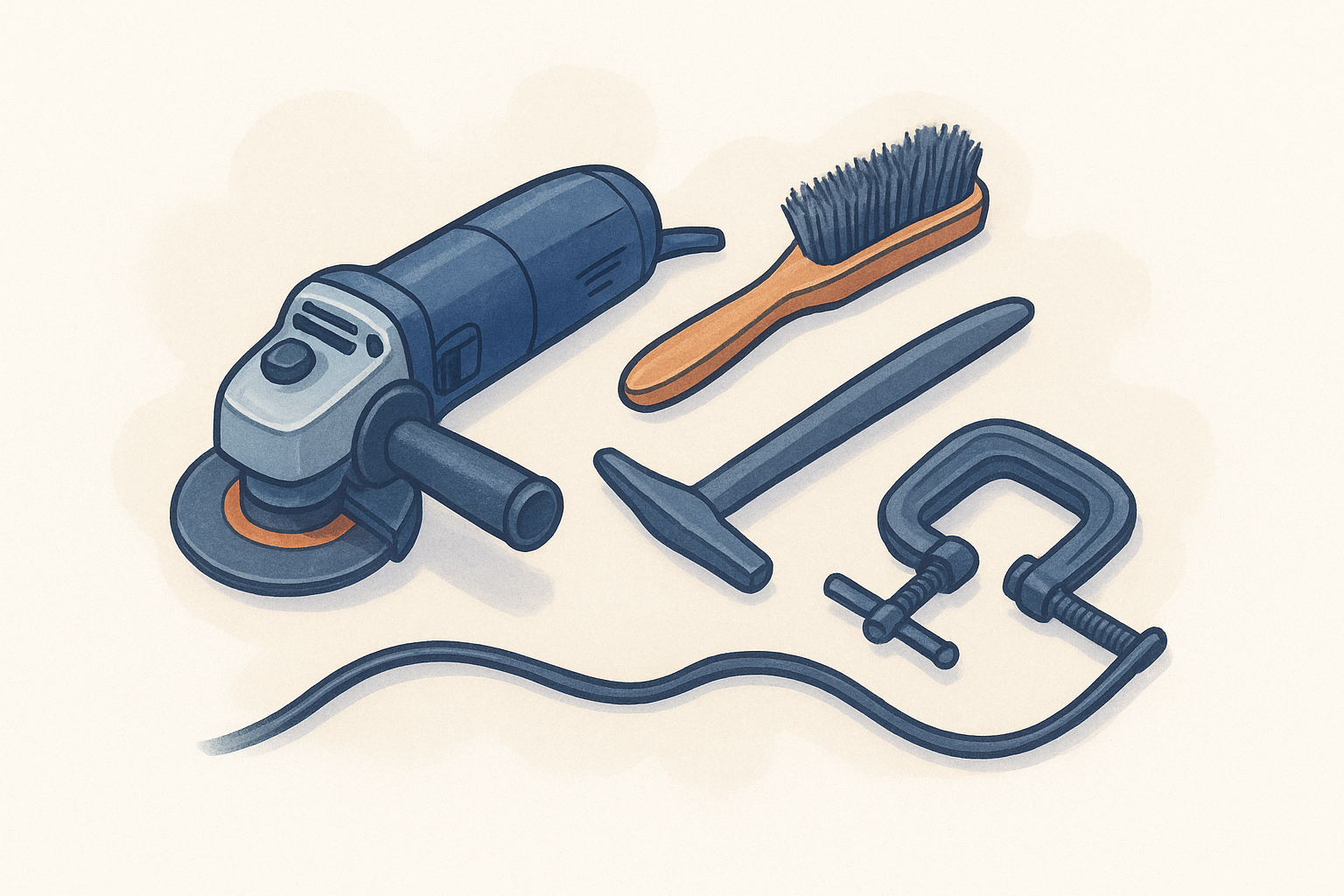
Returning tools to their designated storage locations at the end of every shift prevents delays and equipment damage the next morning.
Materials and consumables you track
Welder helpers are responsible for managing filler rods, wire spools, and shielding gas cylinders throughout the shift. You match consumables to the job spec, confirm gas flow rates before each setup, and swap cylinders before pressure drops too low to maintain a clean arc. Electrode types and gas mixtures vary by material and process, so you need to read labels and work orders carefully rather than guessing.
Work environments you’ll encounter
Welder helper roles span construction sites, manufacturing plants, shipyards, and pipeline corridors. Each environment carries its own physical demands and hazard profile. Outdoor sites expose you to weather, uneven terrain, and direct sun. Indoor manufacturing settings require strict attention to ventilation because fumes accumulate faster in enclosed spaces. Your ability to adapt your safety setup to the specific environment directly affects both your health and the productivity of the crew you support.
Skills and qualifications employers look for
Employers posting welder helper job duties aren’t just looking for someone willing to work hard. They want candidates who already understand the environment, handle tools safely, and communicate clearly on a crew. The stronger your baseline skills before you apply, the faster you become a productive member of the team and the better your shot at moving up.
Physical and safety skills
Your physical readiness is the first thing a supervisor evaluates on a job site. You need to lift and position heavy base materials repeatedly, often in awkward positions or confined spaces. Stamina matters because welding environments are hot, loud, and demanding for the full length of a shift. Beyond physical fitness, safety awareness is non-negotiable. Employers expect you to know how to handle fumes, fire hazards, and electrical equipment without being coached on every step.
OSHA’s 10-hour General Industry or Construction training is one of the most recognized credentials you can bring to an entry-level trade role, and many employers require it before your first day.
Technical knowledge and certifications
You don’t need a welding certification to work as a helper, but you do need basic trade literacy. Understanding the difference between common welding processes like MIG, TIG, and stick welding tells an employer you’ve put in effort before arriving. Knowing how to read a basic work order or blueprint also separates applicants who can integrate quickly from those who need constant direction. Some employers prefer candidates with a high school diploma or GED, and vocational coursework in welding technology is a clear advantage. Hand tool proficiency, especially with angle grinders and clamps, is the practical skill employers test early. If you can demonstrate it, you move ahead of applicants who list it without proof.
Pay, hours, and career growth
Understanding pay and scheduling helps you set realistic expectations before you accept a welder helper position. Entry-level pay for this role reflects the physical demands and trade knowledge required, and it increases quickly once you demonstrate competence on a crew. Knowing the typical career trajectory also helps you evaluate whether a specific employer offers a genuine path to advancement or a role that stalls without structure.
What welder helpers earn
Welder helper pay in the U.S. generally falls between $15 and $22 per hour for entry-level positions, depending on the region, industry, and employer size. Pipeline and industrial plant work tends to pay at the higher end of that range, while general construction sites and smaller contractors typically start lower. Overtime is common in this trade, which means your actual weekly take-home often exceeds what the base hourly rate suggests.
According to the U.S. Bureau of Labor Statistics, welders, cutters, solderers, and brazers earned a median annual wage above $47,000 as of recent data, and helpers who advance quickly can approach that range within a few years.
Hours and shift structure
Most welder helper job duties fall within 8-to-10-hour shifts, Monday through Friday, though industrial and pipeline projects frequently run 6-day schedules during peak production periods. Night shifts exist in manufacturing plants and maintenance operations where downtime windows dictate when welding work gets scheduled.
Career path and advancement
Starting as a helper gives you direct exposure to welding processes, which is the fastest way to build the hands-on knowledge needed to enter a formal apprenticeship. Many helpers transition into apprentice welder roles within one to three years. Earning a welding certification through the American Welding Society significantly accelerates that timeline and raises your earning potential in the process.

Next steps
You now have a complete picture of welder helper job duties, from morning setup through end-of-shift equipment checks, and the pay and advancement potential that comes with the role. Whether you’re preparing to apply or building a job posting, the details in this guide give you a strong foundation to work from.
For job seekers, your immediate focus should be safety training, basic tool proficiency, and trade literacy before your first interview. Those three areas separate candidates who get hired quickly from those who wait. Start with an OSHA 10-hour course and get hands-on time with an angle grinder if you haven’t already.
If you’re an employer filling this role, a clear and specific job posting attracts better applicants faster than a vague listing does. Skip the generic descriptions and spell out exactly what your crew needs. Post your welder helper job today and connect with qualified trade workers who are actively searching.
