
Quality Assurance in Construction: Ensuring Project Success

The Real Impact of Quality Assurance in Construction
Quality assurance (QA) in construction is the cornerstone of successful projects and durable buildings. It’s a proactive approach that establishes systems for achieving quality. This differs from quality control (QC), which focuses on identifying and correcting defects after they appear. This key distinction significantly impacts your budget. Forward-thinking construction companies use QA to minimize costly rework and shorten project timelines, rather than simply reacting to problems.
Why Quality Assurance Matters
The benefits of robust QA are evident throughout every project phase. For example, precisely defined material specifications can prevent the use of inferior concrete. This proactive measure avoids expensive future repairs and ensures structural integrity from the start. Furthermore, standardized construction processes, implemented through QA, ensure consistency and minimize variations in workmanship, leading to a better final product. However, even well-designed QA systems face challenges in the ever-changing construction industry. Adaptability is essential for maintaining quality standards amidst pressures such as tight deadlines and budget constraints.
The Growing Importance of Quality
The construction industry is booming, underscoring the increasing importance of quality assurance. The industry experienced a 10% increase in nominal value added and a 12% increase in gross output in 2024, as reported in Deloitte’s 2025 Engineering and Construction Industry Outlook. This growth necessitates stronger quality assurance measures to handle project complexity and reduce the risks of defects.
Real-World Benefits of Quality Assurance
Effective QA processes yield tangible benefits for everyone involved. These benefits go beyond simple cost savings and include greater stakeholder satisfaction and improved building performance. For example, a comprehensive QA program can guarantee a building’s electrical systems are properly installed and adhere to all safety regulations. Articles like How to Master Top Electrical Interview Questions offer further insights. To foster a quality-focused environment, consider methods like effective security awareness training. This proactive approach minimizes electrical hazards and contributes to the building’s overall functionality and lifespan. Prioritizing quality from the outset allows construction projects to deliver lasting value and satisfy the needs of all stakeholders.
Building Blocks of Exceptional Construction QA Programs

Exceptional construction quality assurance (QA) programs hinge on a network of interconnected elements working in concert. These core components ensure quality is woven into every stage of a project. Let’s delve into these crucial building blocks.
Structuring QA Teams for Maximum Impact
Effective QA teams are strategically structured to minimize bureaucratic hurdles while maximizing their impact. A common approach involves a centralized QA manager responsible for developing and implementing quality standards across all projects. This manager collaborates with project-specific QA personnel embedded within individual project teams. This two-pronged approach ensures both overall consistency and project-specific flexibility.
Documentation That Drives Accountability
Thorough documentation forms the backbone of any successful QA program. This doesn’t necessitate excessive paperwork. Rather, the emphasis is on smart documentation that tracks key performance indicators (KPIs), records design decisions, and logs inspection outcomes. This creates a clear audit trail, promoting accountability at every step. A simple checklist system can streamline inspections, while a centralized digital platform, such as Procore, can manage design revisions and approvals.
To illustrate the types of documentation that drive accountability in a QA program, consider the following table:
Essential QA Documentation That Actually Works: A comprehensive overview of essential quality assurance documentation in construction projects
| Document Type | Purpose | Key Elements | Review Frequency |
|---|---|---|---|
| Quality Management Plan | Outlines the project’s overall QA/QC strategy | Scope, responsibilities, procedures, metrics | Throughout the project lifecycle |
| Inspection Checklist | Guides inspectors during site visits | Specific quality criteria for each inspection point | During each inspection |
| Non-Conformance Report (NCR) | Documents deviations from quality standards | Description of the issue, root cause analysis, corrective actions | As needed, when non-conformances are identified |
| Test Reports | Records results of material and component testing | Test procedures, data, analysis, conclusions | As tests are performed |
| Design Review Minutes | Documents discussions and decisions from design reviews | Attendees, key findings, action items | After each design review |
This table highlights some of the key documents that facilitate effective QA/QC in construction. Regular review and diligent completion of these documents ensures quality is consistently monitored and maintained.
Quality Metrics That Predict Success
Not all metrics are equally valuable. Leading QA programs prioritize metrics directly linked to project success. This can include defect rates, rework costs, and schedule adherence. Monitoring these metrics helps teams identify trends, pinpoint improvement areas, and proactively address potential issues. Tracking the number of Requests for Information (RFIs) related to quality issues can, for example, reveal design ambiguities or communication breakdowns early on.
Verification Protocols: Catching Issues Early
Robust verification protocols are essential for identifying and rectifying deviations from quality standards. These protocols incorporate regular inspections, testing, and reviews at key project milestones. This ensures early problem detection, minimizing costly rework and disruptions. A proactive approach requires clearly defined acceptance criteria and effective communication between the QA team, contractors, and designers.
Supplier Qualification: Ensuring Quality From the Source
Quality starts with the materials and components used. Effective QA programs include stringent supplier qualification processes. These assess potential suppliers based on their quality management systems, track record, and ability to fulfill project requirements. This ensures materials delivered to the site meet quality standards, reducing the risk of delays and defects due to subpar materials.
Design Reviews: Preventing Problems at the Source
Many quality issues stem from the design phase. Consequently, thorough design reviews are a cornerstone of effective QA. These reviews involve multidisciplinary teams scrutinizing designs for potential constructability challenges, code compliance, and adherence to quality standards. This preventative approach stops quality problems from becoming embedded in the project from the outset, resulting in substantial downstream savings and enhanced project outcomes. You might be interested in: Best Paid Blue Collar Jobs.
Technology Transforming Construction Quality Management
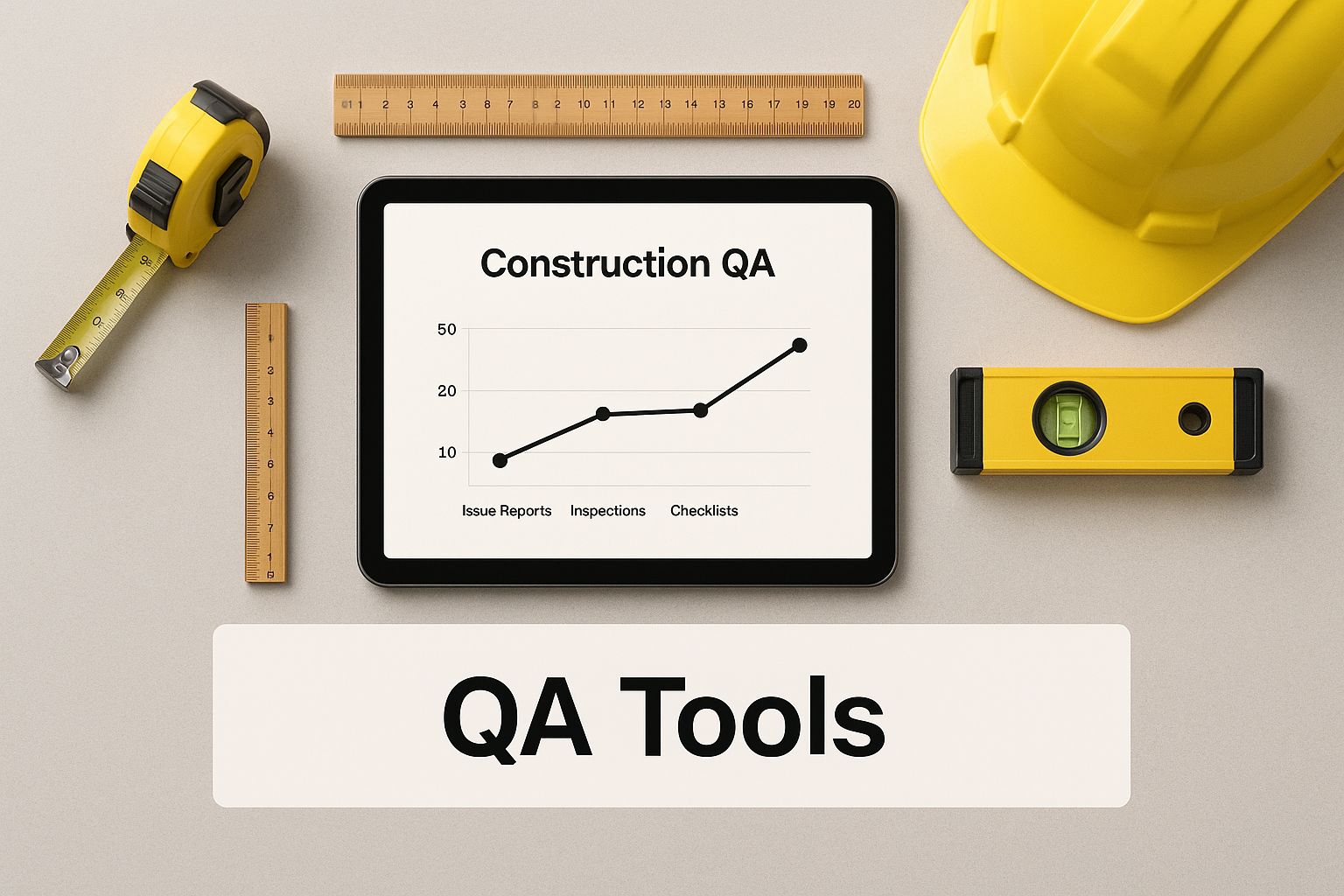
This image depicts a tablet showcasing a construction QA app, placed alongside traditional tools like measuring instruments and a hardhat. It visually represents the growing integration of technology into modern quality assurance practices. This underscores the construction industry’s increasing reliance on digital tools for managing and enhancing project quality. The shift towards digital QA solutions signifies a move toward more efficient and data-driven quality management.
The construction industry is experiencing a significant shift in how quality assurance (QA) is managed. Traditional methods are giving way to technologically advanced solutions. This change is fueled by the integration of technology, offering innovative approaches to ensuring and improving project quality. For instance, Building Information Modeling (BIM) is changing how clash detection and design verification are handled. These processes are becoming more proactive, preventing potential problems before they emerge on-site.
Mobile and Cloud-Based Solutions for Enhanced QA
Mobile inspection platforms are bridging the gap between field teams and office personnel. They facilitate real-time communication and seamless collaboration. This enables faster identification and resolution of quality issues, streamlining the QA process. Cloud-based QA systems also offer unparalleled transparency among stakeholders. This shared access to quality data promotes accountability and encourages a collaborative approach to quality management. These technological advancements are reshaping construction quality assurance practices globally. Learn more about construction technology trends at Autodesk. For those interested in skilled trades, check out The Complete Career Guide to the Highest Paying Skilled Trades.
Emerging Technologies: Drones, AI, and More
Emerging technologies are further amplifying the effectiveness of quality assurance in construction. Drone-based progress monitoring provides a comprehensive overview of the construction site. This allows for efficient progress tracking and early identification of potential deviations from the plan. AI-powered defect prediction is also gaining momentum. By analyzing project data, this technology can predict potential defects, allowing for proactive interventions. These advancements not only lead to measurable quality improvements but also reduce inspection costs. This combination of better quality and cost savings makes these technologies increasingly appealing to construction firms.
To better understand the potential return on investment of these technologies, let’s examine the following comparison:
QA Technology ROI Comparison
Comparison of emerging technologies for quality assurance in construction projects
| Technology | Primary Benefits | Implementation Challenges | ROI Potential |
|---|---|---|---|
| BIM | Improved design coordination, reduced rework | Requires specialized software and training | High, through reduced errors and rework |
| Mobile Inspection Platforms | Real-time data capture, improved communication | Integration with existing systems | Moderate to High, through improved efficiency |
| Cloud-Based QA Systems | Enhanced collaboration, increased transparency | Data security concerns | Moderate to High, through improved accountability |
| Drone-Based Progress Monitoring | Comprehensive site overview, early issue detection | Regulatory restrictions, data processing | Moderate, through reduced site visits and rework |
| AI-Powered Defect Prediction | Proactive defect identification, optimized resource allocation | Data requirements, algorithm training | High, through reduced rework and improved quality |
This table highlights the potential benefits and challenges associated with each technology. While implementation challenges exist, the potential for ROI is significant, making these technologies worth considering for construction projects.
The Future of Quality Assurance in Construction
These technological advancements are collectively driving a fundamental change within the construction industry. They are fostering a shift towards smarter, more data-driven, and reliable quality assurance. This not only elevates the quality of construction projects but also improves overall project efficiency and cost-effectiveness. The future of quality assurance in construction is intrinsically linked to these technologies, helping ensure projects are delivered on time, within budget, and to the highest possible standards.
Conquering Quality Challenges in Modern Building Projects
Maintaining quality in construction demands constant vigilance. Real-world challenges can easily undermine even the most rigorous quality assurance programs. This section explores common obstacles construction teams face, offering practical solutions for upholding high standards amidst the pressures of modern building projects.
The Future of Quality Assurance in Construction
A significant hurdle is the ongoing skilled labor shortage, a global issue affecting both quality and safety. In North America alone, a deficit of approximately 500,000 skilled workers strains project timelines and quality control. This scarcity extends to Europe, Latin America, and Asia, compelling contractors to employ less experienced personnel, potentially jeopardizing quality and safety procedures.
Adapting to Fast-Track and Design-Build Projects
The rising popularity of fast-track and design-build project delivery methods presents another challenge. These methods condense traditional inspection sequences, requiring adaptable quality systems. Quality assurance teams must be proactive and integrated from the initial planning stages.
Close collaboration between design and construction teams is essential to anticipate and mitigate potential issues. Regular design reviews and collaborative digital tools, such as Building Information Modeling (BIM), can help address quality concerns before they become expensive problems.
Managing Mid-Project Changes and Material Substitutions
Mid-project design changes, material substitutions, and coordination issues are common in construction, posing substantial threats to quality. Effective communication is paramount. Clear communication frameworks between design teams, quality personnel, and field supervision ensure alignment on quality expectations. Any changes must be documented and reviewed for their impact on quality standards.
Creating a Unified Quality Culture
Ultimately, successful quality assurance hinges on shared responsibility across the entire project team. A quality-first culture empowers everyone to identify and address potential issues proactively.
This includes providing proper training, recognizing quality achievements, and establishing systems for reporting and resolving concerns without fear of blame. This fosters ownership and pride in delivering high-quality work. This proactive, unified approach is vital for navigating quality challenges and ensuring project success in the demanding environment of modern construction.
Leveraging ISO Standards for Construction Quality Excellence

This image depicts a construction worker carefully examining blueprints on-site. This attention to detail highlights the importance of quality assurance, especially adhering to established standards and specifications. It underscores the vital role of human expertise in maintaining quality, even with the growing use of technology in construction.
Quality assurance is multifaceted, and adhering to International Organization for Standardization (ISO) standards offers a strong framework for achieving construction excellence. Standards like ISO 9001 and ISO 19011 provide practical guidance for creating quality management systems specifically for construction projects. This structured approach improves project results and increases client satisfaction.
Decoding ISO 9001 for Construction
ISO 9001 establishes the basis for a comprehensive quality management system (QMS). In construction, this means creating documented processes for all activities, from material sourcing to site inspections. This documentation isn’t about generating paperwork; it’s about establishing clear, repeatable processes that ensure consistent quality. A defined process for concrete pouring, for example, specifying mix ratios, curing times, and testing procedures, guarantees consistent strength and durability.
The Power of ISO 19011 Auditing Guidelines
ISO 19011 supports ISO 9001 by providing guidance on conducting effective internal and external audits. These audits are essential for verifying the effectiveness of the QMS and identifying areas for improvement. They provide a structured way to assess compliance with ISO 9001 and find potential weaknesses in quality processes. This proactive approach stops minor issues from becoming major problems.
Adapting ISO Standards to Your Construction Projects
While ISO standards offer a solid foundation, successful implementation requires tailoring them to the specific project. Consider factors like project size, complexity, and unique quality needs. A large infrastructure project requires a different approach compared to a small residential project. The key is to maintain flexibility while following the core principles of the standards.
Real-World Examples of ISO Implementation
Many construction firms have successfully integrated ISO standards into their operations. Some have streamlined their documentation processes, reducing administrative overhead while improving quality control. Others have used ISO standards to improve communication and collaboration among project teams, resulting in fewer errors and better project outcomes. These examples show that ISO standards can enhance project execution, not hinder it.
Overcoming Implementation Challenges and Pitfalls
Transitioning to a formal QMS can be difficult. Common challenges include excessive documentation, lack of employee buy-in, and insufficient training. To avoid these, focus on practical application, involve the team in the process, and provide thorough training on new procedures. This ensures the QMS improves efficiency rather than creating more work. It also fosters a culture of quality where everyone is responsible for project excellence.
Building a Quality-First Construction Culture That Sticks
Quality assurance systems, however well-designed, are only effective when embraced by the entire construction team. This section explores how leading construction organizations cultivate a culture where quality becomes a shared responsibility, not just the domain of a specific department. This shift in mindset is crucial for long-term project success.
Fostering Buy-In and Overcoming Resistance
Creating a quality-first culture requires addressing potential resistance to change. Practical approaches include involving team members in the development of quality standards. Demonstrating the tangible benefits of improved quality is also key. Providing opportunities for feedback is another vital component. This participatory approach fosters a sense of ownership and encourages buy-in from workers to management.
Role-Specific Training: Empowering Every Team Member
Equipping individuals with the skills to identify and address quality issues is essential. Role-specific training programs tailor instruction to the unique responsibilities of workers, supervisors, and managers. For example, workers might receive training on proper material handling techniques. Supervisors, on the other hand, learn to conduct effective quality checks. Empowered with the right knowledge and skills, each team member contributes to quality assurance.
Recognition and Communication: Reinforcing Positive Behaviors
Recognizing and rewarding individuals who demonstrate a commitment to quality reinforces positive behaviors. This could involve simple acknowledgements or more formal incentive programs. Clear and open communication regarding quality expectations is also crucial. Constructive feedback, delivered respectfully, helps team members understand their role in maintaining quality standards.
Accountability Frameworks: Balancing Consequences and Improvement
Accountability is essential for driving quality improvement. It’s crucial to strike a balance between consequences and opportunities for growth. Accountability frameworks should focus on identifying the root causes of quality issues, not assigning blame. This fosters a learning environment where mistakes are seen as chances for improvement.
By implementing these strategies, construction organizations can build a lasting culture where quality is valued by everyone. This creates an environment where teams take pride in their workmanship and proactively address potential problems. This proactive approach ultimately benefits everyone, from the construction team to the client.
Are you a skilled trade professional seeking new opportunities? Explore hundreds of full-time and part-time blue-collar jobs across the United States at BlueCollarJobs.com. We connect skilled tradespeople with top employers in various industries, helping you find the perfect role to advance your career.
Want blue collar jobs delivered to your inbox?
Want blue collar jobs delivered to your inbox?
